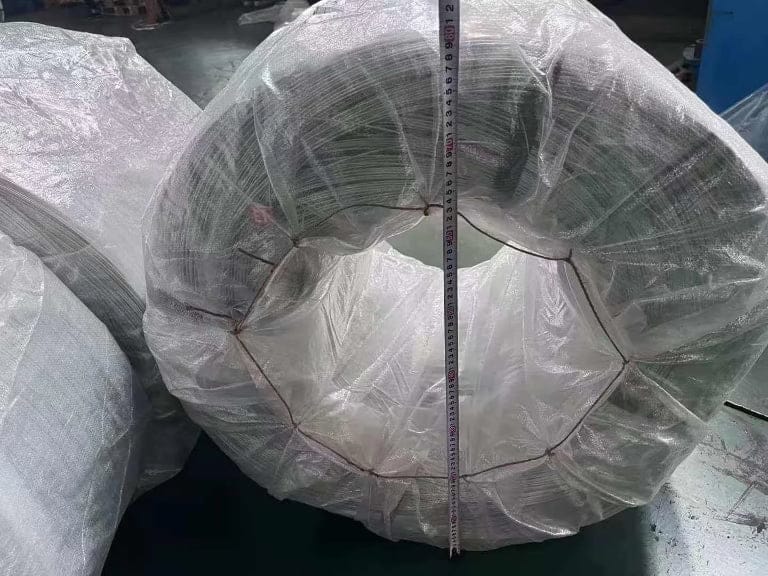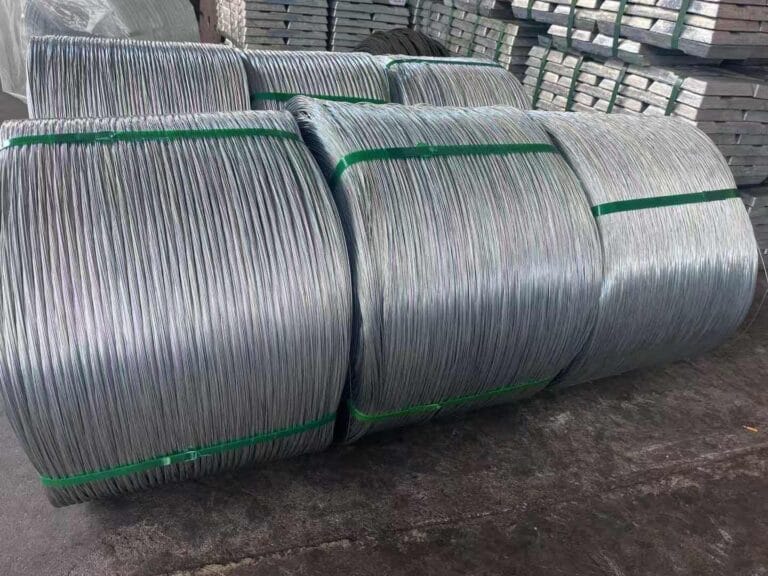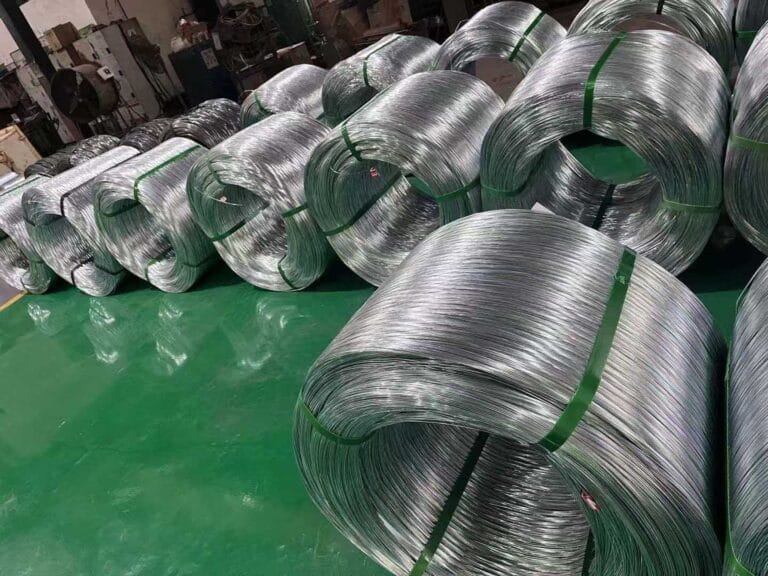



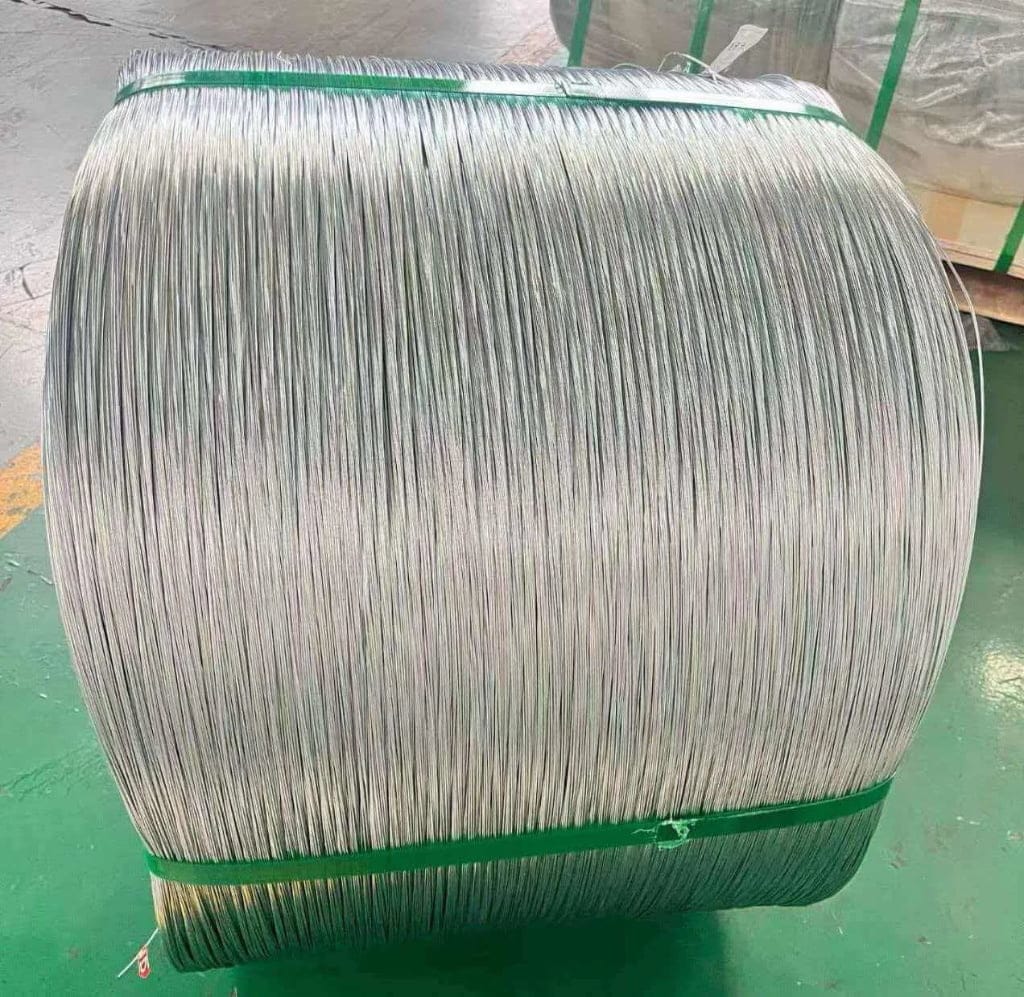
For importers and contractors bringing binding wire into Zambia, understanding the essential documentation requirements — especially the Mill Test Certificate (MTC) and Certificate of Origin — is critical for smooth customs clearance and contract compliance. Those interested in galvanized binding wire for Zambia should ensure their suppliers provide these documents with every shipment.
I'll never forget the panicked WhatsApp call I got from Banda in Kitwe back in December 2025. He'd just won a government supply contract for binding wire at a Copperbelt mine—his biggest deal yet. But there was a catch he hadn't anticipated: every single shipment needed full documentation including an MTC and Certificate of Origin, or the client wouldn't accept delivery. After years of working with traders who kept promising documents "sitting in the office somewhere," he was finally forced to find a manufacturer who could deliver the paperwork along with the product. That conversation taught me something crucial—in Zambia's import market, proper documentation isn't just bureaucracy. It's the difference between getting paid and watching your goods sit in customs limbo.
If you're importing construction materials into Zambia, you need two critical documents: the Mill Test Certificate (MTC) and the Certificate of Origin. The MTC proves your materials meet specified chemical and physical standards, showing composition, coating thickness, and tensile strength. The Certificate of Origin confirms where your goods were manufactured and helps determine duty rates. Without both documents properly prepared, your shipment risks customs delays, project holdups, or outright rejection by end clients—especially on government and mining contracts where compliance verification is mandatory.
Here's what catches most first-time importers off guard: Zambia doesn't require mandatory third-party certification like Pre-Export Verification of Conformity (PVoC) or Certificate of Conformity (CoC) for binding wire and many metal products. That sounds like good news—and it is—but it creates a false sense that documentation doesn't matter. The reality is different. While customs may clear your goods with basic paperwork, your actual customers—contractors, government agencies, mining companies—often have their own compliance requirements written into supply agreements. When Banda's mining client specified MTC and Certificate of Origin in the contract terms, suddenly those "optional" documents became absolutely essential. Let me break down exactly what these documents are, why they matter specifically in Zambia, and how to make sure you get them right the first time.
What Exactly Is an MTC (Mill Test Certificate)?
The Mill Test Certificate is proof that your materials were tested at the factory and meet specific quality standards. For construction materials like binding wire, the MTC shows the chemical composition, physical properties, and manufacturing specifications.
An MTC is a factory-issued document listing the exact chemical analysis (carbon, manganese, zinc content), physical characteristics (tensile strength, elongation, coating thickness), and production batch information for your materials. It's signed by the factory's quality control department and serves as the manufacturer's guarantee that the product meets declared specifications. For binding wire specifically, it typically includes wire diameter measurements, zinc coating weight per square meter, and breaking load test results.
Why Zambian Buyers Specifically Request MTCs
I've worked with dozens of Zambian importers over the past two years, and there's a pattern in who demands MTCs most aggressively. It's not the small retail shops or informal market sellers—they're typically fine with basic inspection. The MTC requirement comes from three specific buyer categories:
Government projects and tenders. Any construction work funded by Zambian government ministries or parastatal organizations usually includes quality documentation requirements in the tender specs. The Roads Development Agency (RDA) projects, National Housing Authority contracts, and Ministry of Infrastructure work all routinely specify that materials must arrive with factory test certificates. This isn't about customs—it's about contract compliance and audit trails.
Mining sector suppliers. Zambia's copper mining industry has strict procurement standards inherited from international mining companies. When you're supplying binding wire to a mine site—whether directly or through a local contractor like Banda—the mine's quality assurance team will often review documentation before accepting materials. They're not interested in knowing you passed customs; they want proof the wire meets their technical specifications for underground support systems or surface construction work.
Commercial construction firms working with international funding. When Zambian contractors win projects backed by World Bank financing, African Development Bank (AfDB) loans, or other multilateral development funding, those projects carry documentary requirements that flow down to every supplier. I've seen projects where the main contractor specifically states in purchase orders: "Supplier must provide MTC showing zinc coating minimum 40g/m² and tensile strength 350-550 Megapascals (MPa)." Without matching documentation, they can't clear their own compliance audits.
The practical reason this matters: Zambia's construction market is relatively small and relationship-driven. Word spreads quickly when a supplier can't deliver proper documentation. Banda now introduces us to other mining contractors specifically mentioning that "these Chinese can actually provide real MTCs from day one." That reputation has been worth more than any advertising budget.
What Information Must Appear on a Valid MTC
Not all MTCs are created equal. I've seen documents from some factories that are essentially worthless—just generic templates with no specific test data. Here's what needs to be on your MTC for it to hold up under scrutiny:
Header information:
- Factory name and full legal address
- Manufacturing date and batch/lot number
- Customer name and purchase order reference
- Product description (e.g., "Galvanized Binding Wire, 0.90mm diameter")
Chemical composition analysis: For galvanized binding wire, this typically includes:
- Carbon (C): usually 0.06-0.12%
- Manganese (Mn): 0.30-0.50%
- Silicon (Si): 0.10-0.15%
- Phosphorus (P): ≤0.035%
- Sulfur (S): ≤0.035%
- Zinc coating: method and thickness in g/m² or microns
Physical and mechanical properties:
- Wire diameter: nominal size and tolerance range
- Tensile strength: measured in MPa or N/mm²
- Elongation: percentage before break
- Zinc coating weight: g/m² for galvanized wire
- Number of twists (for binding wire): before breaking
Quality control signatures:
- Quality Control (QC) inspector name and signature
- QC manager or technical director approval
- Date of testing
- Factory quality control stamp or seal
When our factory produces binding wire for Zambian customers, we follow Chinese national standard GB/T 343 for low carbon steel wire. The MTC clearly states "Manufactured according to GB/T 343-2014" and shows actual test results from that specific production run. This level of detail matters because sophisticated buyers will cross-reference the stated standard with the test results to verify consistency.
How MTCs Differ from Inspection Certificates
This confuses many first-time importers: isn't an MTC basically the same as an SGS inspection certificate? Not at all—and understanding the difference can save you thousands of dollars in unnecessary inspection fees.
An MTC is issued by the manufacturer based on their in-house quality control testing. It covers the entire production batch and reflects the factory's internal quality standards. We can provide MTCs immediately upon production completion at no additional cost because it's part of our standard quality management system.
An inspection certificate (like SGS or Intertek) is issued by an independent third-party inspection company after they physically visit the factory, witness production or inspect finished goods, conduct their own testing, and issue findings. This costs money—typically $300-800 per inspection depending on scope—and adds 3-5 days to your timeline.
For Zambian imports of binding wire and most construction materials, you don't need third-party inspection unless your buyer specifically requests it. Zambia doesn't have mandatory pre-shipment inspection for these products. The MTC from a legitimate manufacturer is legally sufficient for customs clearance. However, if you're a buyer and don't fully trust your new supplier, or if you're fulfilling a contract that specifically mandates third-party verification, then an SGS certificate provides additional assurance.
When Banda first contacted us, he asked if we could arrange SGS inspection. I explained that for binding wire going to Zambia, the MTC would be adequate for both customs and his client's requirements, saving him the inspection fee. He was skeptical—previous suppliers had claimed inspection was "mandatory." After checking with his client and confirming the contract only required "factory test certificates," he agreed to proceed with just the MTC. First shipment cleared customs in three days and was accepted by the mine without any questions about third-party inspection.
Here's my practical advice: start with the MTC from your factory. If customs or your client asks for additional verification, you can always arrange third-party inspection for subsequent shipments. But don't spend money on inspections you don't actually need.
What Is a Certificate of Origin and Why Zambia Requires It?
While the MTC proves your product quality, the Certificate of Origin proves where it came from. This matters for customs duties, trade agreements, and import regulations.
A Certificate of Origin (CO) is an official document issued by a government-recognized authority in the exporting country (in our case, China) that certifies the goods being exported were wholly manufactured, produced, or processed in that country. For Zambia imports, the CO determines applicable duty rates and helps customs verify that goods comply with bilateral trade agreements. It must show the manufacturer's details, product description, shipping information, and an official stamp or seal from the issuing chamber of commerce.
Why Zambian Customs Cares About Country of Origin
Zambia is part of several regional trade agreements that affect import duties based on where goods come from. Understanding this helps explain why the Certificate of Origin isn't just paperwork—it has real financial implications.
Zambia belongs to the Common Market for Eastern and Southern Africa (COMESA), which includes 21 member countries. Goods originating from COMESA member states can enter Zambia with preferential duty rates or even duty-free in some cases. However, China is not a COMESA member, so Chinese-manufactured binding wire doesn't qualify for these preferences.
For goods from China, Zambia applies standard Most Favored Nation (MFN) tariff rates. As of 2025, binding wire typically falls under HS code 7217.10 (iron or non-alloy steel wire, not plated or coated) or 7217.20 (plated or coated with zinc), with import duty rates around 5-15% depending on specific classification. The Certificate of Origin helps Zambia Revenue Authority (ZRA) officers confirm the actual manufacturing country and apply the correct tariff schedule.
Here's where it gets interesting: I've had Zambian buyers ask if we can ship through a third country to get better duty rates. The answer is no—customs officers aren't stupid. The CO must match the actual manufacturing origin, not just the port of export. Trying to falsify origin documentation is customs fraud and will get your goods seized. Besides, on most construction materials, the duty difference between Chinese origin and preferential origin isn't dramatic enough to justify the risk.
Who Issues Certificates of Origin in China
In China, Certificates of Origin are issued by government-authorized bodies, not by manufacturers themselves. There are two main issuing authorities:
China Council for the Promotion of International Trade (CCPIT): This is the most common issuer for commercial transactions. CCPIT is a quasi-governmental organization with local branches in every major city. Their certificates are recognized globally and accepted by Zambian customs without question. For our factory in Hebei Province, we apply through the CCPIT Hengshui branch.
China Customs (General Administration of Customs): Customs can also issue COs, primarily for goods requiring official customs certification. However, for standard commercial shipments like binding wire, CCPIT certificates are more commonly used and equally valid.
When we process Banda's orders, here's our standard procedure:
- Production completes and MTC is issued (Day 0)
- We submit CO application to CCPIT with commercial invoice, packing list, and manufacturing declaration (Day 1)
- CCPIT reviews documents and issues CO with official seal (Day 2-3)
- Original CO document is couriered to our office (Day 4)
- Original CO travels with shipping documents to Zambia
Total timeline: 3-4 working days from production completion to having the physical CO certificate ready to ship. This runs parallel with container loading, so it doesn't delay shipment.
Cost: CCPIT charges approximately 100-120 RMB (roughly $15-18 USD) per certificate. We include this in our quotation, so customers don't face surprise charges.
What Information Must Appear on the Certificate of Origin
A valid CO for Zambian imports must contain specific information clearly stated:
Exporter details:
- Full company name exactly as registered
- Complete business address
- Contact information
Consignee (receiver) details:
- Buyer's company name
- Delivery address in Zambia
- Contact person
Product description:
- Common product name (e.g., "Galvanized Binding Wire")
- Technical specifications (diameter, tensile strength)
- Harmonized System (HS) code classification
- Quantity and weight
- Unit value and total value (FOB or CIF)
Origin declaration:
- Clear statement: "The goods described above originate in China"
- Manufacturing location if different from exporter address
Certification section:
- Date of issue
- Reference number
- Official CCPIT seal or stamp
- Authorized officer signature
Critical detail: The product description on the CO must match your commercial invoice and bill of lading exactly. I've seen shipments delayed in Zambian customs because the invoice said "Binding Wire 0.90mm" but the CO said "Galvanized Iron Wire 0.9mm diameter." Technically the same product, but customs computers flagged it as a discrepancy requiring manual review. This added three days and required the importer to submit explanation letters. Avoid this by ensuring all documents use identical wording.
Form E Certificate of Origin: Special Case for ASEAN
Some exporters mention "Form E" when discussing Certificates of Origin. Form E is specifically for the ASEAN-China Free Trade Agreement and provides tariff preferences when exporting to ASEAN countries (Thailand, Vietnam, Indonesia, etc.). Form E is not applicable for Zambia—it's not an ASEAN member country, so you don't need Form E for Zambian shipments.
For Zambia, you need the general non-preferential Certificate of Origin issued by CCPIT. Don't let suppliers confuse you by mentioning Form E, Form A (Generalized System of Preferences for developed countries), or other preferential COs. These don't apply to China-Zambia trade.
How These Documents Work Together in Zambian Customs Clearance
Understanding individual documents is one thing. Seeing how they function together in the actual clearance process is another.
For successful customs clearance in Zambia, you need a complete document package: the Certificate of Origin proves where your goods were made and determines duty rates; the commercial invoice shows transaction value for duty calculation; the bill of lading or airway bill proves legal title to the goods; the packing list details physical contents for inspection; and the MTC provides technical specifications for verification. Zambian customs first checks the CO to establish origin and applicable duties, then cross-references the invoice value against the CO value, verifies product description across all documents, and may request the MTC if physical inspection is conducted or if the importer's client requires it for contract compliance.
Timeline: From Port Arrival to Final Release
Here's what typically happens when a container of binding wire arrives at a Zambian port (usually routed through Dar es Salaam or Mombasa, then trucked into Zambia):
Day 0: Cargo Arrival
- Container arrives at Dar es Salaam or Mombasa port
- Shipping line notifies freight forwarder
- Freight forwarder notifies Zambian importer
Day 1-2: Document Submission
- Importer or their clearing agent submits documents to ZRA via ASYCUDA World system (Zambia's automated customs management system)
- Documents required: CO, commercial invoice, packing list, bill of lading, import permit (if applicable for restricted goods—binding wire doesn't need this)
- MTC is uploaded as supporting documentation but not always required at this stage
Day 3-4: Document Review and Duty Assessment
- ZRA reviews documents and calculates duties based on HS code classification and CO-verified origin
- System assigns cargo for either green channel (no physical inspection) or red channel (physical inspection required)
- Importer receives duty assessment notice
Day 5: Duty Payment
- Importer pays calculated duties, VAT, and any other applicable charges to ZRA
- Payment confirmation generates release order
Day 6-7: Physical Inspection (if required)
- If assigned red channel, ZRA officers physically inspect container
- They verify: quantity matches packing list, product matches description, condition assessment
- If MTC wasn't reviewed during document submission, officers may request it now to verify specifications
- After satisfactory inspection, final release approval issued
Day 8+: Container Release and Delivery
- Container released from port
- Trucked to Zambian border (Nakonde or Chirundu crossing for landlocked routing)
- Border formalities (typically smoother with complete documentation)
- Final delivery to importer's warehouse
We provide full MTC (Mill Test Certificate) and Certificate of Origin with every shipment. We offer a full range of construction binding wire for African projects, including galvanized iron wire, black annealed iron wire, and 201 stainless steel wire, with mix container loading supported. If you are sourcing construction binding wire for Zambia or any African market, we are happy to provide a specification-based quotation. Contact us via WhatsApp: +86 15383180672.
FAQ: MTC and Certificate of Origin for Zambia Imports
Q1: What is the difference between an MTC and a Certificate of Origin, and do I need both for binding wire imports to Zambia?
A1: Yes, you typically need both for full compliance. The MTC (Mill Test Certificate) proves the quality and specifications of your binding wire — chemical composition, zinc coating thickness, tensile strength, and diameter tolerance. It's issued by the factory's quality control department. The Certificate of Origin proves where your goods were manufactured — it's issued by a government-recognized authority (in China, typically CCPIT) and determines applicable duty rates. Customs needs the CO for duty calculation; your end clients (especially government and mining contracts) need the MTC for quality verification. Without both, you risk customs delays or project rejection.
Q2: Does Zambia require third-party inspection (like SGS or PVoC) for binding wire imports?
A2: No. Unlike some other African countries, Zambia does not mandate Pre-Export Verification of Conformity (PVoC) or mandatory third-party inspection for binding wire and most construction materials. The MTC from a legitimate manufacturer is legally sufficient for customs clearance. Third-party inspection (SGS, Bureau Veritas, Intertek) is optional and typically costs $300-800 per shipment. Only arrange it if your buyer specifically requires it in their contract or if you don't fully trust your supplier's quality control.
Q3: What information must appear on a valid Certificate of Origin for a binding wire shipment to Zambia?
A3: A valid CO must include: exporter details (full company name and address exactly as registered), consignee details (buyer's company name and address in Zambia), product description (must match commercial invoice and bill of lading exactly — use identical wording), technical specifications, HS code classification, quantity and weight, unit and total value (FOB or CIF), clear origin declaration (e.g., "The goods described above originate in China"), date of issue, official CCPIT stamp or seal, and authorized officer signature. Inconsistent product descriptions across documents are a common cause of customs delays.
Q4: How long does it take to get an MTC and Certificate of Origin from a Chinese supplier, and does it delay shipment?
A4: The MTC is issued immediately upon production completion (Day 0) as part of the factory's standard quality control process. The Certificate of Origin application to CCPIT takes 3-4 working days — submit the application (Day 1), CCPIT reviews and issues with official seal (Day 2-3), and the original document is ready to courier (Day 4). This process runs parallel with container loading, so it doesn't delay your shipment. For binding wire, the total timeline from production completion to having all documents ready is approximately 4 working days.
Q5: What happens if my binding wire shipment arrives in Zambia without a Certificate of Origin?
A5: Without a CO, Zambian customs cannot verify the manufacturing origin of your goods. This means they will either: (1) apply the highest possible default duty rate (often 25% for wire products), significantly increasing your tax bill; (2) delay clearance while requiring additional documentation or explanation letters; or (3) in some cases, hold the shipment until you can provide the CO retroactively (which may require couriering the original document from China, adding 1-2 weeks and storage fees). Always ensure your supplier provides the original CO with the shipping documents before the container departs.