


For Zambian contractors preparing for the rainy season, selecting the right binding wire is essential to avoid rust and project delays. Those looking for reliable galvanized binding wire for Zambia need to understand zinc coating specifications and proper storage methods before the rains arrive.
Every November, as dark clouds start gathering over Lusaka, I see the same panic in contractors' eyes — their binding wire is rusting faster than they can use it. Last December, a contractor named Kunda called me three weeks into the rainy season, his voice tight with frustration. The "hot-dip galvanized wire" he'd bought from a local trader two months earlier was covered in rust spots. His supplier had promised him quality material, but the zinc coating was barely 20g/m² — far below what Zambia's humid season demands.
Zambia's rainy season runs from November to April, with peak rainfall between December and February. During these months, humidity levels exceed 80%, and any binding wire with insufficient zinc coating will start corroding within weeks. The solution is selecting properly galvanized binding wire (45-60g/m² zinc coating) and implementing moisture-control storage methods that keep wire elevated at least 30cm above ground level with waterproof covering.
What many contractors don't realize until it's too late is that rainy season preparation isn't just about buying "galvanized wire" — it's about understanding exactly which specifications protect against Zambia's specific climate conditions. In this guide, I'll walk you through everything I've learned from 25 years of supplying binding wire to African markets, including the exact zinc coating thresholds that determine whether your wire survives the season or becomes an expensive pile of scrap metal.
Why Does Binding Wire Rust So Quickly in Zambia's Rainy Season?
When Kunda showed me photos of his rusted wire, I immediately recognized the problem. The surface had that characteristic orange-brown discoloration that happens when cheap zinc coating fails under sustained moisture exposure.
Zambia's rainy season creates the perfect storm for metal corrosion. Humidity levels consistently stay above 75-80%, temperatures range between 20-28°C (ideal for accelerated oxidation), and moisture sits on exposed metal surfaces for extended periods. This combination attacks binding wire through a process called galvanic corrosion — where the protective zinc layer gradually dissolves to shield the steel underneath.
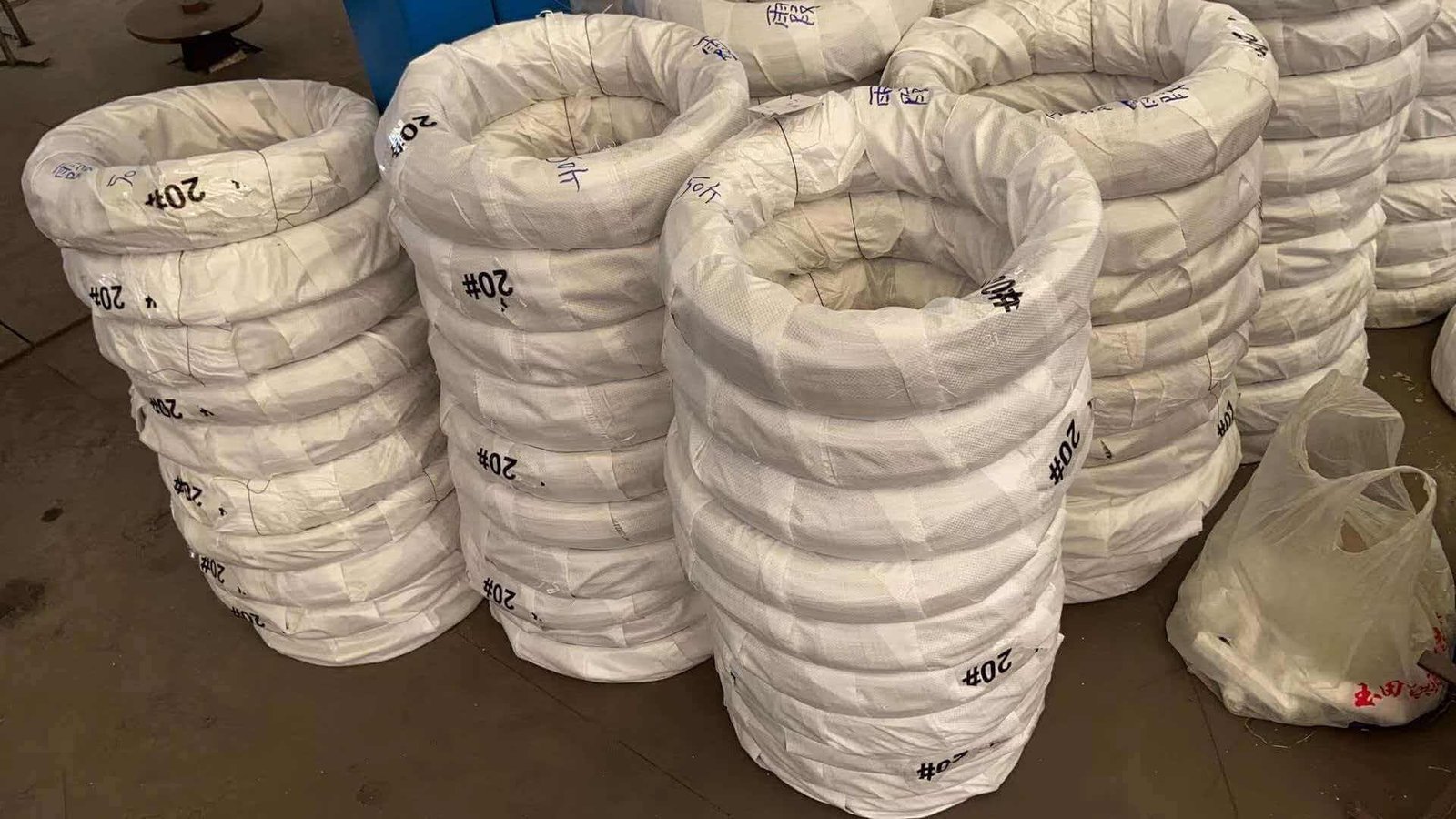
The Science Behind Wire Corrosion
Galvanized binding wire relies on a sacrificial protection mechanism. The zinc coating corrodes first, preventing oxygen and moisture from reaching the steel core. But here's what most contractors miss: this protection only works if the zinc layer is thick enough to last through your storage period plus the construction timeline.
In dry conditions, even a thin 20g/m² coating might survive for months. But Zambia's rainy season accelerates zinc consumption by 3-4 times the normal rate. A wire that would stay bright for six months in dry storage might start showing rust spots in just four to six weeks when exposed to rainy season humidity.
When I visited Kunda's warehouse, I brought a simple magnetic thickness gauge. We measured the failed wire at various points — the zinc coating ranged from 15-22g/m², well below the 40-45g/m² minimum I recommend for rainy season use. The inconsistency told me his supplier had used an electro-galvanizing process rather than proper hot-dip galvanizing.
Material Quality Indicators
| Coating Type | Zinc Thickness | Rainy Season Survival | Cost Difference |
|---|---|---|---|
| Electro-galvanized | 10-20g/m² | 2-4 weeks before rust | Baseline price |
| Light hot-dip | 30-40g/m² | 6-10 weeks protected | +15-20% |
| Standard hot-dip | 45-60g/m² | Full season protection | +25-35% |
| Heavy hot-dip | 80-100g/m² | Multi-year protection | +50-70% |
The coating weight directly correlates with both cost and protection duration. For Zambian contractors working through rainy season, that 25-35% premium for proper hot-dip galvanizing (45-60g/m²) is actually cheaper than replacing rusted wire mid-project — not to mention avoiding construction delays.
Here's the critical insight: rust doesn't just make wire look bad. Once the zinc layer fails and rust starts forming, the steel core loses tensile strength rapidly. Workers struggle to twist rusty wire without it breaking. The rough, flaking surface tears through gloves and cuts hands. Project inspectors reject it for reinforcement work. What started as a small quality compromise becomes a complete material failure.
What Zinc Coating Thickness Actually Protects Against Zambia's Humidity?
After arranging emergency replacement wire for Kunda — 20 tons of proper 45g/m² galvanized binding wire shipped via air freight and sea consolidation — I sat down with him to explain the zinc coating specifications that actually matter for Zambian conditions.
The construction industry uses several confusing terms: "hot-dip galvanized," "galvanized iron wire," "zinc-coated wire." But none of these terms tell you whether the wire will survive your specific climate. What matters is the measurable zinc weight per surface area, expressed as grams per square meter (g/m²).
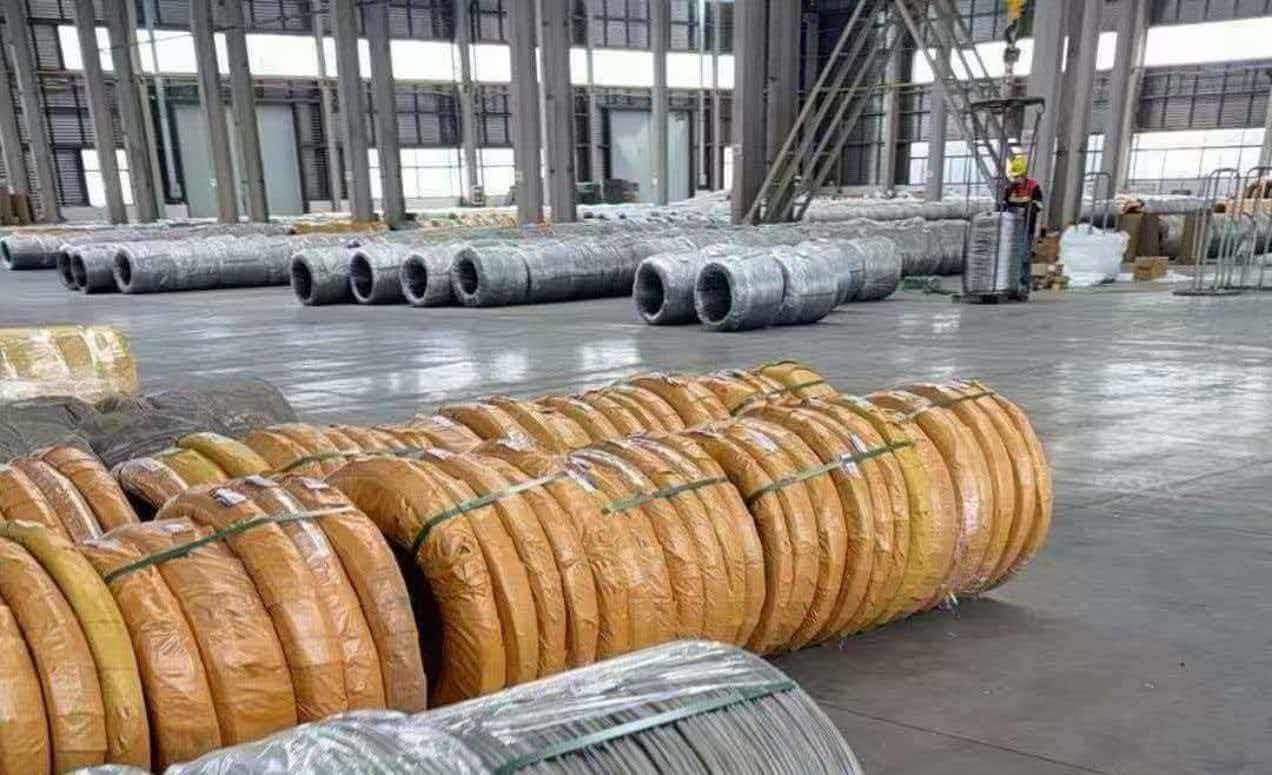
Understanding Zinc Coating Standards
Most international standards like ASTM A641 or BS 443 specify minimum zinc coatings between 40-50g/m² for construction applications. But these standards were developed for temperate climates with 40-60% average humidity — dramatically different from Zambia's rainy season conditions.
Through practical experience supplying wire to Lusaka, Kitwe, and Ndola over the past decade, I've observed that wire performs reliably during rainy season when it meets these minimum thresholds:
Light construction use (residential framing, temporary structures):
- Minimum zinc coating: 40-45g/m²
- Expected protection: 3-4 months in rainy season storage
- Best for: Projects with rapid material turnover, short construction timelines
Standard construction use (commercial buildings, infrastructure projects):
- Minimum zinc coating: 45-55g/m²
- Expected protection: 6-8 months including full rainy season
- Best for: Most contractors, balanced cost-performance ratio
Heavy-duty applications (permanent infrastructure, coastal proximity):
- Minimum zinc coating: 60-80g/m²
- Expected protection: 12+ months all-weather exposure
- Best for: Government projects, critical infrastructure with strict quality requirements
The math is straightforward. Zambia's rainy season humidity causes zinc to corrode at approximately 5-8g/m² per month when wire is stored properly (elevated, covered, ventilated). Wire with only 20g/m² coating will fail in 2-4 weeks. Wire with 45g/m² coating survives the entire 5-6 month rainy season with protective capacity remaining.
How to Verify Zinc Coating Before Purchase
When Kunda's emergency shipment arrived at his warehouse, I showed him a simple field test. We selected random coils and used a magnetic coating thickness gauge (you can buy one for $50-100) to measure the zinc layer. Every measurement read between 43-52g/m², averaging 47g/m² — exactly within specification.
But most contractors don't have measuring equipment. Here are practical verification methods anyone can use:
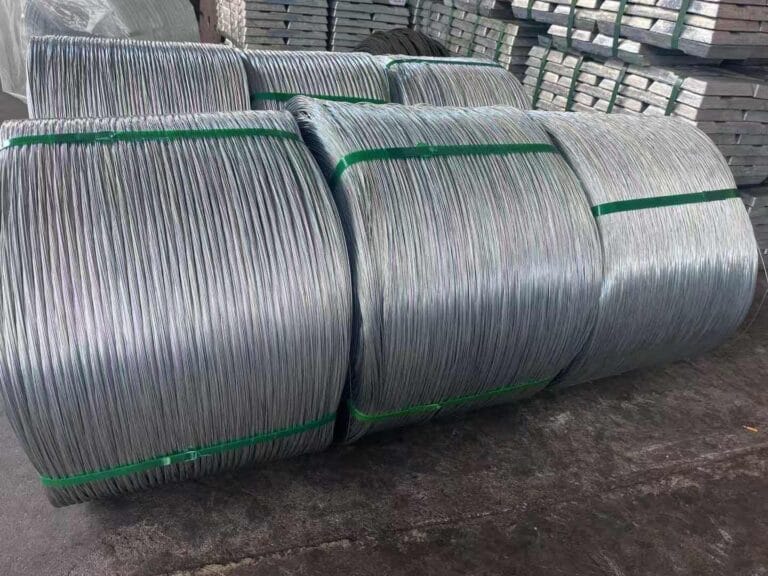
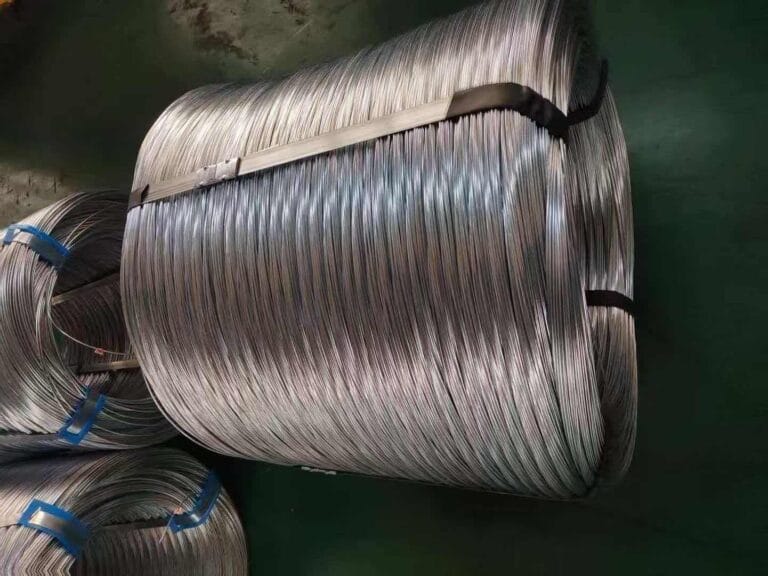
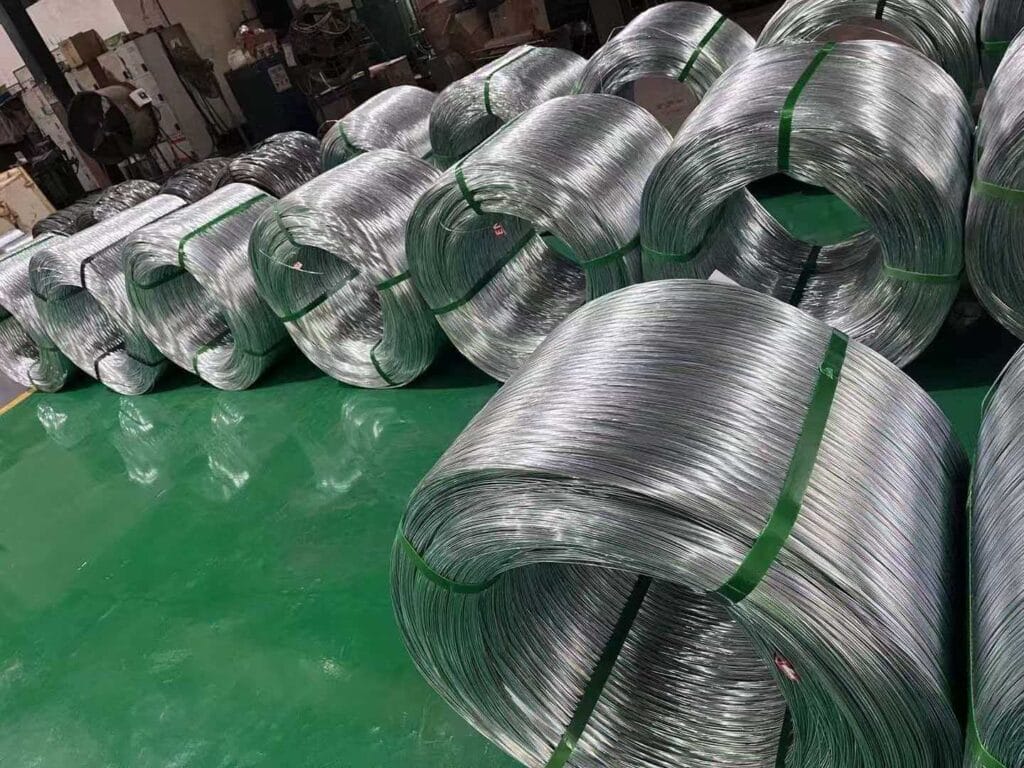
Visual inspection: Proper hot-dip galvanized wire has a bright, silvery surface with a slightly rough crystalline pattern called "spangle." The coating should be even and continuous without bare spots. Electro-galvanized wire looks smoother and darker grey.
Weight comparison: Thicker zinc coatings add measurable weight. A 25kg coil of 2.0mm wire with 20g/m² coating weighs noticeably less than the same coil with 50g/m² coating (approximately 0.8-1.2kg difference per coil depending on wire diameter).
Bend test: Take a 30cm length of wire and bend it sharply 180°. Proper hot-dip coating should remain adhered to the steel without flaking off. If the zinc coating cracks and falls away, it's either too thin or improperly applied.
Supplier documentation: Request a Mill Test Certificate (MTC) showing zinc coating weight measured by the manufacturer. Legitimate factories test coating thickness regularly and record results. We provide MTC with every shipment showing actual measured values, not just nominal specifications.
The Hidden Cost of Inadequate Protection
By February 2026, when I visited Kunda during the peak of rainy season, he showed me both wire batches side by side. The original 20g/m² wire he'd bought from the trader was completely rusted — orange-brown surface, rough texture, breaking when bent. He'd spent $2,400 on 15 tons that were now scrap metal worth maybe $600 at the recycling yard.
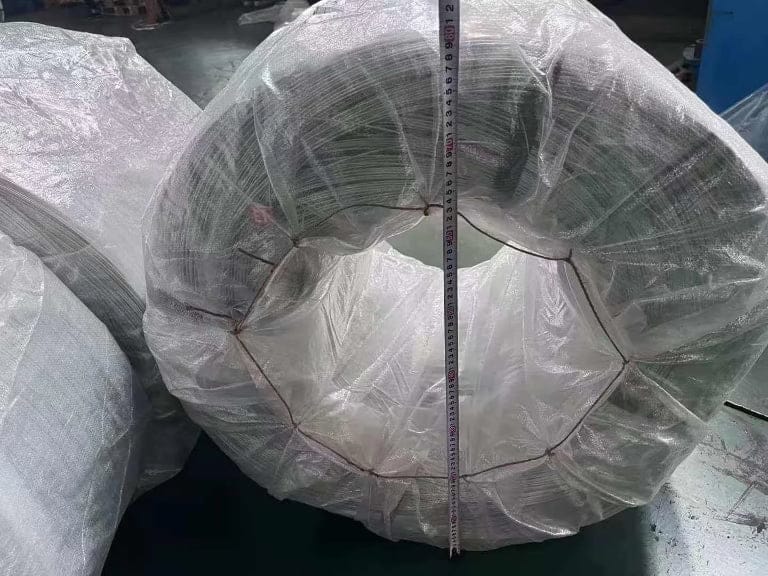
The replacement wire we'd supplied sat on wooden pallets 40cm above ground, covered with heavy-grade plastic sheeting. We lifted the covering and examined random coils. The surface remained bright and smooth. Workers were using it daily without complaints. "It twists easily, doesn't hurt their hands," Kunda told me.
The price difference? The trader's wire had cost $160 per ton. Our 45g/m² material was $210 per ton. That extra $50 per ton saved Kunda from project delays, worker injuries, and complete material replacement. His emergency shipment cost him an additional $3,000 in air freight — money he could have saved entirely by specifying proper zinc coating from the beginning.
How Should You Store Binding Wire During Rainy Season?
Getting the right zinc coating solves half the problem. The other half is storage management. Even properly galvanized wire will corrode faster if stored incorrectly, and I learned this lesson the expensive way during my first year exporting to African markets.
When Kunda asked me for storage advice after his replacement wire arrived, I shared the exact system we've refined through feedback from contractors across Zambia, Rwanda, and Uganda. These aren't theoretical recommendations — they're practical methods that workers can implement with basic materials available at any Lusaka hardware store.
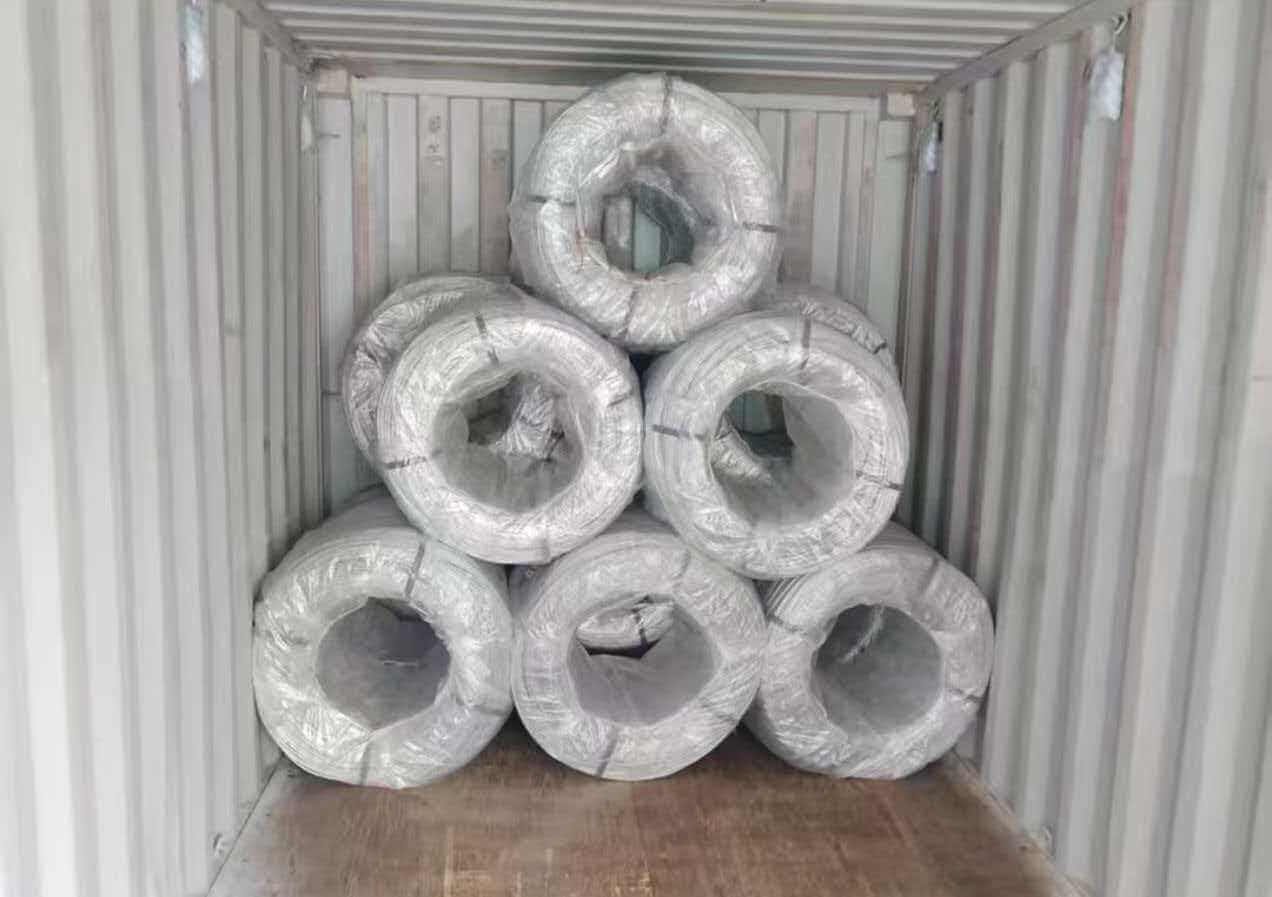
The Elevation Principle
The single most important rule: never store binding wire directly on concrete floors during rainy season. Concrete acts like a moisture sponge, absorbing water from the ground and slowly releasing it upward through capillary action. Any wire sitting directly on concrete will experience constant moisture exposure from below, even if the warehouse roof doesn't leak.
Kunda's original mistake was stacking coils directly on his warehouse floor. Zambian warehouses, especially older structures, often have concrete slabs poured without proper moisture barriers. During heavy rains, these floors can feel damp to the touch even days after the rain stops.
We implemented this storage system at Kunda's warehouse:
Foundation layer: Place sturdy wooden pallets or thick timber planks (minimum 5cm × 10cm dimension) across the storage area. Space them approximately 50cm apart to create an air gap beneath the wire.
Elevation height: The bottom of the wire coils should sit at least 30-40cm above the concrete floor. This height creates sufficient airspace for ventilation and prevents ground moisture from reaching the wire.
Load distribution: Don't stack coils more than 1.5 meters high. Excessive weight compresses lower coils, deforming the wire and potentially damaging the zinc coating where coils press against each other.
Creating a Protective Microclimate
After elevation comes moisture control. Even with wire 40cm off the ground, ambient humidity in an enclosed warehouse can still accelerate corrosion. The goal is creating a protective microclimate around your wire storage that minimizes moisture exposure.
We draped heavy-duty plastic sheeting (minimum 200 micron thickness) over Kunda's wire stack, ensuring the covering extended down the sides but didn't touch the ground. This creates a tent-like structure that sheds water while allowing some air circulation at the base.
Critical details that many contractors miss:
Don't seal completely: If you wrap wire too tightly in plastic with no ventilation, you trap moisture inside. The plastic should shed rain from above while allowing air movement from below.
Avoid afternoon covering: In Zambia's climate, mornings are often humid even during dry spells. If you cover wire early in the day, you trap moisture underneath. The best practice is covering wire in late afternoon after the sun has warmed and dried the warehouse interior.
Regular inspection: Once every two weeks, lift the covering and visually inspect random coils. Look for any signs of condensation, rust spots, or moisture accumulation. Early detection allows you to adjust storage conditions before significant damage occurs.
Warehouse Location Matters
Not all warehouse spaces are equal during rainy season. When I visited Kunda's facility, I noticed his wire storage area was in a corner section with poor ventilation — one side against an exterior wall that had visible moisture staining from rain runoff.
Ideal wire storage locations within your warehouse:
Center of the building: Interior locations maintain more stable temperature and humidity compared to exterior walls.
Away from doors and loading bays: These areas experience dramatic humidity swings when opened during rainstorms, exposing wire to moisture surges.
Under sound roof sections: Obvious, but I've seen contractors store wire under sections with minor leaks, thinking "it's just a small drip." Any water exposure ruins galvanized wire.
Good cross-ventilation: Areas with airflow from multiple directions help dissipate humidity. Stagnant air pockets promote condensation.
After reorganizing Kunda's storage layout, we moved his wire to a central warehouse section with good cross-ventilation, elevated it properly, and implemented the covering system. By February 2026, when I returned during peak rainy season, that wire looked as fresh as the day it arrived. Workers reported no handling issues, no rust staining their gloves, no breakage during twisting.
What About Black Annealed Wire vs. Galvanized for Rainy Season?
During discussions with Kunda about his replacement order, he asked a question I hear frequently: "Should I just use black annealed wire? It's cheaper, and if I coat it with oil, won't that protect it?"
This reflects a common misconception in African construction markets. Let me address this clearly, based on both material science and practical field experience.
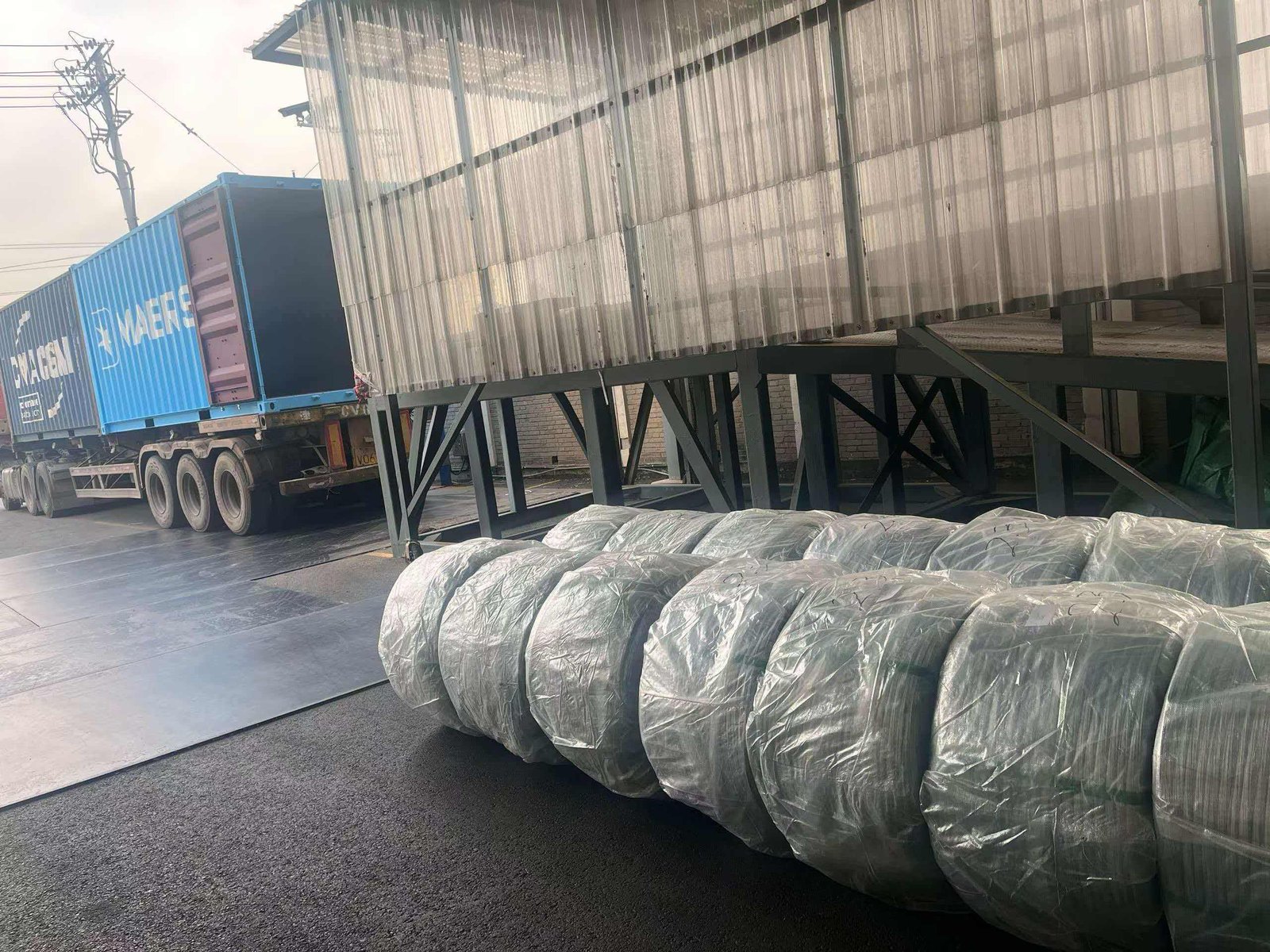
Understanding Black Annealed Wire
Black annealed wire is steel wire that's been heat-treated to make it soft and pliable, then cooled without any protective coating. The "black" color comes from the thin layer of iron oxide (essentially controlled rust) that forms during the annealing process. This wire offers excellent flexibility and is very popular for manual binding because it twists easily without breaking.
However, black annealed wire has zero rust protection in its standard form. The iron oxide surface layer provides no moisture barrier. In Zambia's rainy season, unprotected black annealed wire will develop surface rust within 3-7 days of exposure to humidity levels above 70%.
Some contractors try to compensate by coating black annealed wire with oil. I've seen this attempted with used motor oil, vegetable oil, even diesel fuel. While oil does temporarily displace moisture, this approach has serious drawbacks:
Short-term protection only: Oil coatings break down quickly under ultraviolet (UV) exposure, physical handling, and rain. Protection lasts days or weeks, not months.
Application inconsistency: Manual oil coating by dipping or spraying creates uneven coverage with bare spots that rust first.
Worker safety concerns: Oil-coated wire is slippery to handle, transfers oil to skin and clothing, and creates slip hazards on construction sites.
Concrete contamination: Oil from wire can stain concrete during rebar tying work, potentially affecting concrete bonding and appearance in exposed applications.
When Black Annealed Wire Makes Sense
I'm not saying black annealed wire is never the right choice for Zambian contractors. It has legitimate applications where its benefits outweigh the rust concerns:
Immediate-use scenarios: If you're buying wire for a project starting within 1-2 weeks and using it continuously with no storage period, black annealed wire's lower cost (typically 10-20% cheaper than galvanized) can be economically justified.
Dry season procurement: For work scheduled during May through October, when Zambia's humidity drops to 30-50%, black annealed wire performs adequately with basic storage practices.
Interior applications: When binding work occurs inside enclosed structures away from weather exposure, the rust protection advantage of galvanized wire matters less.
But for rainy season work, these scenarios are the exception, not the rule. Most contractors buy wire in advance, store it for weeks or months, and need material that maintains quality throughout the construction timeline.
The Total Cost Comparison
Let's examine the real economics using Kunda's project as a case study. His initial order was 15 tons of black annealed wire at $160/ton = $2,400. When that wire rusted, he needed 15 tons of replacement galvanized wire at $210/ton = $3,150. Plus emergency freight: $3,000. Plus project delay costs: estimated $2,000 in idle labor. Total cost of his "cheaper" wire: $10,550. By contrast, if he'd bought proper galvanized wire initially: $3,150. The difference: $7,400 saved by choosing the right wire the first time.
We provide full MTC (Mill Test Certificate) and Certificate of Origin with every shipment. We offer a full range of construction binding wire for African projects, including galvanized iron wire, black annealed iron wire, and 201 stainless steel wire, with mix container loading supported. If you are sourcing construction binding wire for Zambia or any African market, we are happy to provide a specification-based quotation. Contact us via WhatsApp: +86 15383180672.
FAQ: Zambia Rainy Season Binding Wire Selection and Storage
Q1: What zinc coating thickness do I need for binding wire to survive Zambia's rainy season?
A1: For reliable protection during Zambia's rainy season (November-April), you need galvanized binding wire with zinc coating of 45-60g/m². Wire with only 20g/m² will start rusting within 2-4 weeks when humidity exceeds 80%. Standard hot-dip galvanizing at 45-60g/m² provides full season protection (6-8 months) and is the minimum I recommend for any construction work that will extend into or through the rainy season.
Q2: How should I store binding wire during the rainy season to prevent rust?
A2: Follow the elevation principle: never store wire directly on concrete floors. Place coils on wooden pallets at least 30-40cm above ground level to prevent moisture wicking. Cover with heavy-duty plastic sheeting (minimum 200 microns) that sheds water but allows some air circulation at the base. Don't seal completely—trapped moisture accelerates corrosion. Store in central warehouse locations away from exterior walls and loading bays that experience humidity swings.
Q3: Can I use black annealed wire during the rainy season if I coat it with oil?
A3: While oil coating does offer temporary protection, it's not reliable for rainy season work. Oil breaks down within days to weeks under UV exposure and handling, provides uneven coverage, creates safety hazards (slippery wire, oil on workers' hands), and can contaminate concrete. Black annealed wire is best reserved for dry season work, interior applications, or projects using material within 1-2 weeks of delivery without storage.
Q4: How can I verify zinc coating thickness before purchasing binding wire?
A4: Request the Mill Test Certificate (MTC) from the supplier showing actual zinc coating weight measurements—not just nominal specifications. You can also perform simple field tests: proper hot-dip galvanized wire has a bright silvery surface with crystalline "spangle" pattern; bend a 30cm sample 180°—coating shouldn't crack or flake; use a magnetic thickness gauge ($50-100) for accurate measurement. We provide MTC with every shipment showing verified coating thickness.