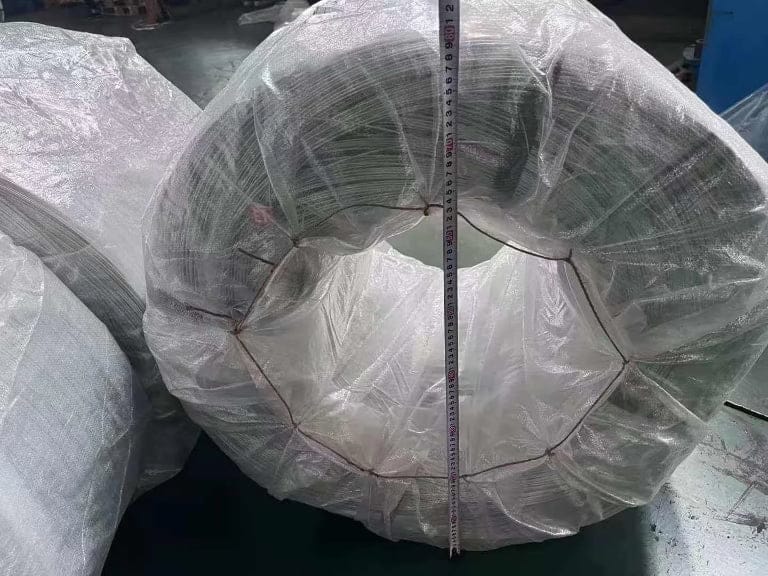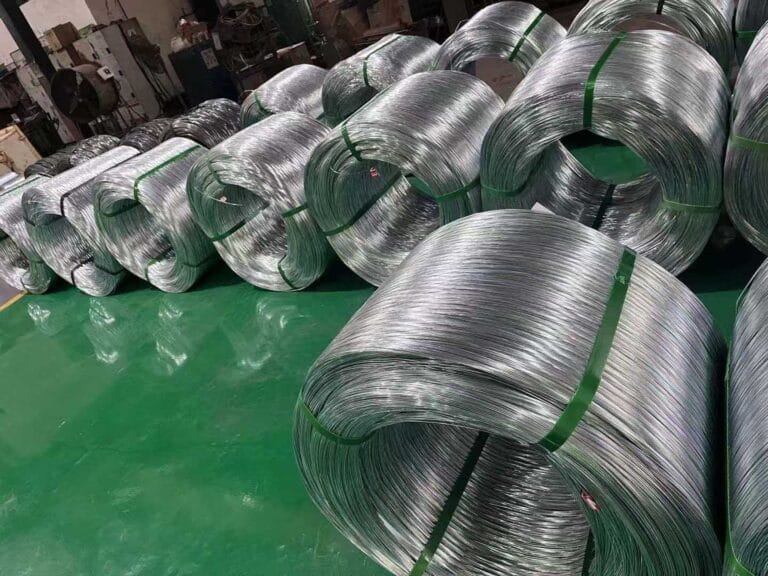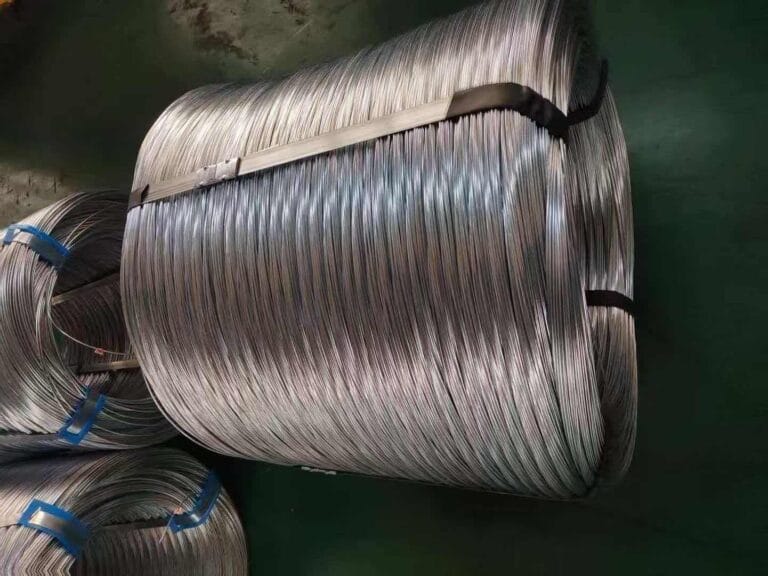



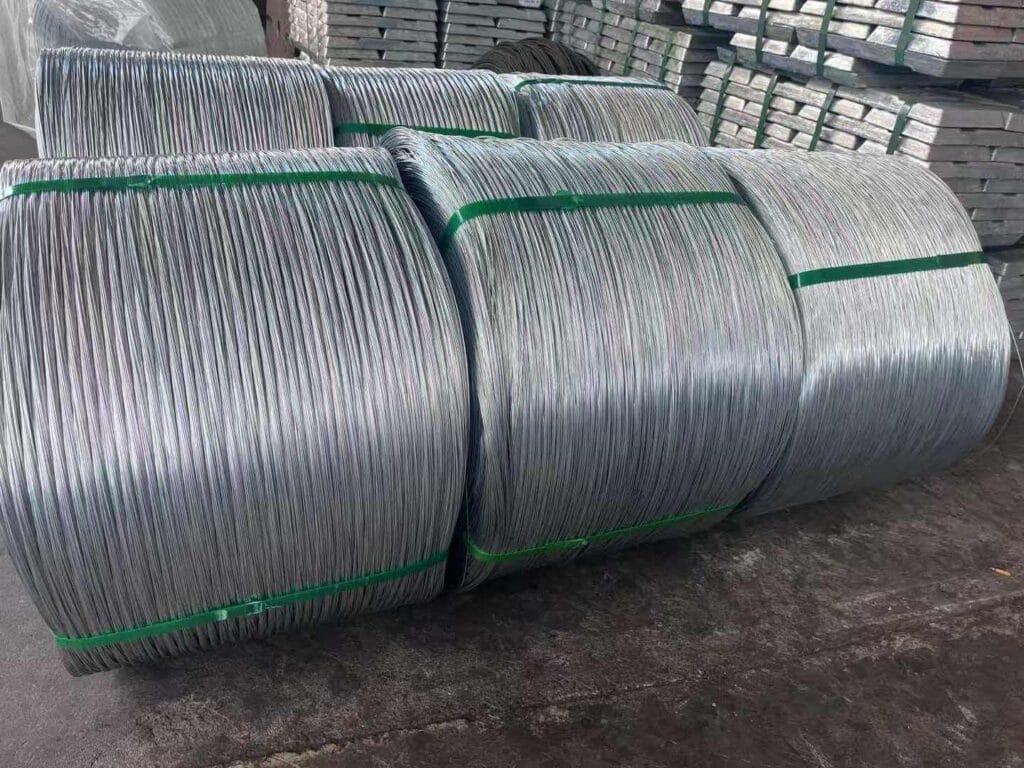
For Zambian distributors looking to optimize their bulk ordering strategy, understanding the cost differences between 25kg packaging and large coils is essential. Those interested in galvanized binding wire for Zambia can benefit from a detailed cost breakdown before placing their next order.
I've watched countless Zambian distributors struggle with the same question: Should they stick with large coil binding wire or switch to 25kg packaging for retail? In September 2025, a building materials wholesaler from Lusaka told me: "We're comfortable with retail, but whenever a customer wants 20 tons or more, we hesitate because we don't know how to price it." That conversation led to a complete cost breakdown that transformed his business model and profit margins.
For bulk orders in Zambia, 25kg binding wire packaging typically adds $8-12 per ton in production costs compared to large coils, but the retail price premium of $5-8 per coil creates a 4-6% higher profit margin. The landed cost breakdown includes: base wire price ($580-720/ton Free On Board (FOB)), packaging differential ($8-12/ton for 25kg format), ocean freight to Dar es Salaam ($80-120/ton), and inland transport to Lusaka ($60-100/ton). Total delivered cost for 25kg packaged binding wire ranges from $728-952/ton, with final retail prices of $16-22 per coil depending on wire diameter and zinc coating thickness.
The key to profitable bulk ordering isn't just knowing the base wire price—it's understanding how packaging format affects your total landed cost and retail pricing power. Let me break down every cost component so you can make data-driven purchasing decisions that actually improve your bottom line.
What Makes 25kg Packaging More Expensive Than Large Coils?
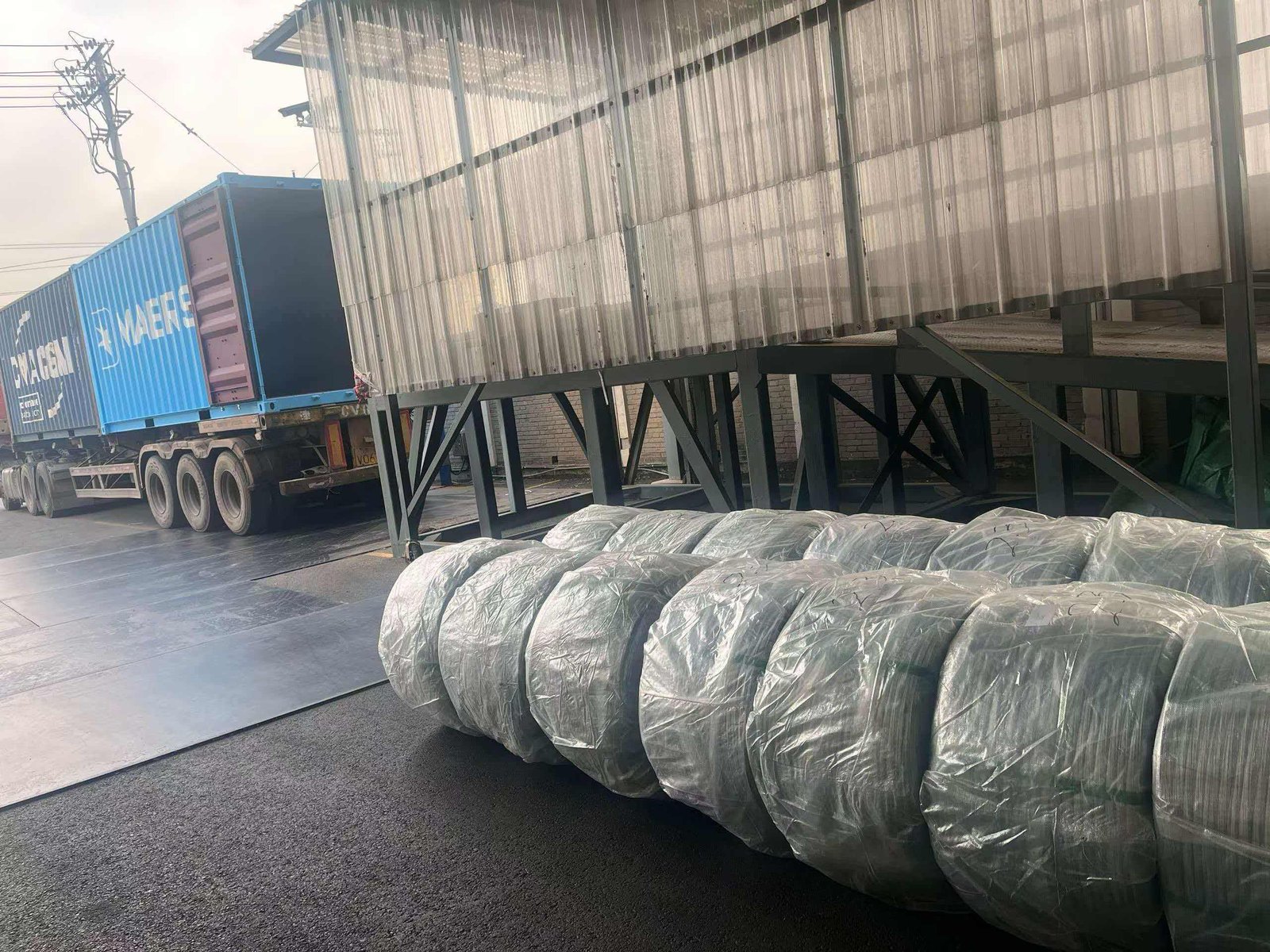
Small package binding wire requires additional labor-intensive processing at the factory level. Every 25kg coil must be precisely measured, cut, wound into a tight bundle, secured with wire ties, and wrapped in protective materials.
The packaging differential for 25kg binding wire costs an additional $8-12 per ton compared to 50kg large coils. This includes extra labor for coil cutting ($3-4/ton), individual coil wrapping materials ($2-3/ton), and increased handling during container loading ($3-5/ton). For a 20-ton container order, this translates to $160-240 in additional packaging costs.
Here's the detailed cost breakdown I use when quoting 25kg package orders:
| Cost Component | Large Coil (50kg) | Small Package (25kg) | Difference |
|---|---|---|---|
| Wire cutting labor | $0/ton | $3-4/ton | +$3-4 |
| Individual wrapping | $1/ton | $3-4/ton | +$2-3 |
| Pallet arrangement | $2/ton | $5-7/ton | +$3-5 |
| Loading efficiency | Standard | 15% more time | +$2-3 |
| Total packaging cost | $3-4/ton | $11-16/ton | +$8-12/ton |
Why Small Package Format Commands Higher Retail Prices
The wholesaler I mentioned earlier discovered something counterintuitive: spending more on packaging actually increased his profit margins. Small contractors and hardware stores preferred 25kg coils because:
- Easier handling: Two workers can move a 25kg coil without equipment
- Retail-friendly sizing: Small shops don't need to break down 50kg coils
- Faster inventory turnover: Customers buy complete packages rather than partial coils
- Reduced waste: Construction sites can order precise quantities without leftovers
This convenience premium lets you price 25kg packages $5-8 higher per coil than equivalent wire sold from large coils. On a per-ton basis, that's approximately $200-320 in additional revenue—far exceeding the $8-12 packaging cost increase.
My Lusaka client now sells 25kg galvanized binding wire coils at $18 each. If he had purchased 50kg coils and broken them down himself, he would price at roughly $16 per 25kg equivalent. That $2 difference across 800 coils (20 tons) generates an extra $1,600 in revenue, minus the $160-240 packaging differential—a net gain of $1,360-1,440 on one container.
Container Loading Efficiency Considerations
One factor many first-time importers overlook: 25kg packages affect how much wire fits in your container. Standard 20-foot containers hold approximately:
- Large coils (50kg): 20-22 tons depending on wire diameter
- Small packages (25kg): 18-20 tons due to less efficient stacking
This 1-2 ton reduction means your per-ton ocean freight cost increases slightly. If your freight quote is $2,000 per container, that breaks down to:
- Large coil: $90.90-100/ton
- Small package: $100-111/ton
Factor this $10-20/ton freight premium into your calculations when comparing packaging formats.
How Do Base Wire Prices Vary for Bulk Orders in Zambia?
The foundation of your total cost analysis starts with understanding factory pricing for different binding wire specifications. After sourcing for East African distributors for three years, I've identified clear pricing patterns based on wire diameter and surface treatment.
Base FOB prices for binding wire in bulk quantities (20+ tons) range from $580/ton for black annealed iron wire to $720/ton for hot-dip galvanized binding wire with heavy zinc coating. Mid-range electro-galvanized binding wire sits at $620-680/ton. Price breaks typically occur at 20 tons (5% discount), 40 tons (8% discount), and 100+ tons (10-12% discount) compared to small-order pricing.
Wire Type and Specification Impact on Pricing
Here's the current pricing structure I use for Zambian market orders:
Black Annealed Binding Wire (No Coating)
- 0.7mm-1.0mm diameter: $580-600/ton FOB
- 1.2mm-1.6mm diameter: $590-610/ton FOB
- 1.8mm-2.0mm diameter: $600-620/ton FOB
Best for: Indoor construction, temporary binding, cost-sensitive projects
Advantage: Lowest price point, soft and easy to twist
Disadvantage: Rusts quickly in Zambia's wet season, not suitable for long-term outdoor use
Electro-Galvanized Binding Wire (Thin Zinc Layer)
- 0.7mm-1.0mm diameter: $620-650/ton FOB
- 1.2mm-1.6mm diameter: $640-670/ton FOB
- 1.8mm-2.0mm diameter: $660-690/ton FOB
Best for: General construction, indoor/covered storage areas
Advantage: Balanced price and rust protection (zinc layer 8-15g/m²)
Disadvantage: Zinc coating wears off with heavy handling, moderate durability
Hot-Dip Galvanized Binding Wire (Heavy Zinc Coating)
- 0.7mm-1.0mm diameter: $680-700/ton FOB
- 1.2mm-1.6mm diameter: $690-710/ton FOB
- 1.8mm-2.0mm diameter: $700-720/ton FOB
Best for: Outdoor construction, long-term projects, rainy season work
Advantage: Superior rust protection (zinc layer 40-80g/m²), longest lifespan
Disadvantage: Slightly stiffer wire, harder to twist by hand
Quantity Break Points and Negotiation Leverage
The pricing I listed above reflects 20-ton minimum orders—standard for one 20-foot container. Here's how unit prices drop as volume increases:
| Order Quantity | Price Adjustment | Example (1.6mm Galvanized) |
|---|---|---|
| 5-10 tons | Base retail price | $720/ton FOB |
| 20 tons (1 container) | -5% | $684/ton FOB |
| 40 tons (2 containers) | -8% | $662/ton FOB |
| 60 tons (3 containers) | -10% | $648/ton FOB |
| 100+ tons | -12% | $634/ton FOB |
When I helped that Lusaka wholesaler negotiate his first bulk order, he was ordering 20 tons every three months. After six months of consistent orders (totaling 40 tons), I renegotiated his contract to the 40-ton pricing tier even though individual shipments remained at 20 tons. That single conversation saved him approximately $440 per container—$1,760 annually.
How Wire Diameter Affects Your Cost Structure
Thicker wire costs more per ton because the wire drawing process becomes more expensive and time-consuming. However, your customers don't always need the thickest option. Here's my practical guide to matching diameter to use case:
0.7mm-1.0mm (Extra Fine)
- Price: Lowest in each category
- Application: Tying reinforcement mesh, light-duty binding
- Target buyers: Plastering contractors, mesh installers
- Market demand: 15-20% of total binding wire sales
1.2mm-1.6mm (Standard)
- Price: Mid-range
- Application: General construction rebar tying, standard building projects
- Target buyers: General contractors, building material shops
- Market demand: 60-70% of total binding wire sales
1.8mm-2.0mm (Heavy Duty)
- Price: Highest in each category
- Application: Heavy rebar binding, bridge construction, high-stress applications
- Target buyers: Infrastructure contractors, specialized construction firms
- Market demand: 10-15% of total binding wire sales
The 1.2mm-1.6mm range represents your volume driver. When planning bulk orders, allocate 60-70% of your container to these popular sizes to ensure fastest inventory turnover.
What Are the Complete Logistics Costs to Lusaka?
Understanding your total landed cost means tracking every expense from the Chinese factory to your Lusaka warehouse. Too many new importers focus only on FOB price and ocean freight, then get surprised by inland transport and clearing charges.
Complete logistics costs for binding wire from China to Lusaka typically add $140-220 per ton to your base FOB price. This includes ocean freight to Dar es Salaam port ($80-120/ton), Tanzanian port charges and clearing ($15-25/ton), and inland trucking from Dar es Salaam to Lusaka ($60-100/ton depending on border conditions and fuel prices). For a 20-ton container, expect total logistics costs of $2,800-4,400.
Let me walk you through each component with current 2025 rates:
Ocean Freight: Factory to Dar es Salaam
Ocean freight is your largest single logistics expense. Rates fluctuate based on shipping line, season, and global container availability. Current rates from major Chinese ports (Shanghai, Ningbo, Qingdao) to Dar es Salaam:
Peak Season (December-March)
- 20-foot container: $2,200-2,800
- Per-ton cost for 20-ton load: $110-140/ton
- Per-ton cost for 18-ton load (25kg packaging): $122-155/ton
Regular Season (April-November)
- 20-foot container: $1,600-2,200
- Per-ton cost for 20-ton load: $80-110/ton
- Per-ton cost for 18-ton load (25kg packaging): $89-122/ton
Dar es Salaam Port Charges and Clearing
Once your container arrives at Dar es Salaam, you'll encounter several fees before the container leaves the port. Here's the typical cost breakdown:
- Port handling charges: $120-150 per container
- Documentation fees: $80-120 per container
- Storage (if delayed): $15-25 per day after 5 free days
- Customs clearing agent fee: $150-200 per container
- Average total: $350-500 per container ($15-25/ton for 20 tons)
Most experienced Zambian importers use clearing agents who handle the entire Tanzanian port process. Budget $350-500 and ensure your agent can retrieve containers within the 5-day free storage window.
Inland Transport: Dar es Salaam to Lusaka
The longest and most variable cost component is the 2,000+ kilometer journey from Tanzania's coast to Zambia's capital. Your trucking costs depend on:
Route Efficiency
- Direct route via Tanzam Highway: $1,200-1,600 per container
- Alternative routing (if border delays): $1,400-1,800 per container
Border Crossing Conditions
- Smooth crossing (well-prepared documentation): No additional costs
- Delayed crossing (missing paperwork, inspections): $100-300 in waiting fees
Fuel Price Fluctuations
- Stable fuel environment: Base rate
- High fuel costs: +10-15% surcharge
Seasonal Road Conditions
- Dry season (May-October): Standard rates
- Rainy season (November-April): +15-20% due to road conditions
For planning purposes, I recommend budgeting $1,400-1,800 per container for inland transport. That breaks down to $70-90 per ton for a full 20-ton load, or $78-100 per ton for an 18-ton load.
Total Landed Cost Example
Let's calculate the complete landed cost for 20 tons of 1.6mm electro-galvanized binding wire in 25kg packaging:
| Cost Component | Rate | Amount |
|---|---|---|
| Base wire (FOB) | $660/ton × 20 tons | $13,200 |
| 25kg packaging premium | $10/ton × 20 tons | $200 |
| Ocean freight (regular season) | $2,000 per container | $2,000 |
| Dar port charges | $400 per container | $400 |
| Dar to Lusaka trucking | $1,600 per container | $1,600 |
| Total delivered cost | $17,400 | |
| Cost per ton delivered | $870/ton | |
| Cost per 25kg coil | $21.75 |
This $870/ton delivered cost becomes your break-even baseline. Add your desired profit margin to determine retail pricing. If you're targeting wholesale distribution, add 15-20% ($1,000-1,044/ton). If selling direct retail, add 30-40% ($1,131-1,218/ton).
That Lusaka wholesaler I mentioned earlier operates on a 25% markup strategy. At $870/ton delivered cost, he prices at $1,087.50/ton wholesale, which translates to $27.18 per 25kg coil for round figures. He sells at $18 per coil (actually $720/ton) for quick turnover, accepting a lower 20% margin in exchange for faster inventory rotation.
How Should You Structure Pricing for Different Customer Types?
Not all binding wire buyers are the same, and your pricing strategy shouldn't treat them equally. After working with dozens of Zambian distributors, I've identified three distinct customer segments, each requiring different pricing approaches.
Effective bulk binding wire pricing requires tiered strategies: Large contractors buying 10+ tons deserve cost-plus pricing at 8-12% markup ($15-17/coil for 25kg packages); medium distributors ordering 2-5 tons work with wholesale pricing at 15-20% markup ($17-19/coil); small retail customers and walk-ins pay full retail at 30-40% markup ($20-23/coil). This segmentation protects profit margins while maintaining competitive pricing for volume buyers.
Tier 1: Large Construction Companies and Project Buyers
These customers order 10+ tons at once for major construction projects. They're sophisticated buyers who compare multiple suppliers and focus heavily on total delivered cost.
Pricing Strategy: Cost-Plus Minimal Markup
- Target margin: 8-12%
- Per-ton wholesale price: $940-975/ton
- Per-25kg-coil price: $23.50-24.40
- Round to: $23-24/coil
Why Low Margins Work Here:
Large orders mean lower per-ton acquisition costs (you get volume discounts from your supplier), reduced administrative overhead per ton sold, and guaranteed payment terms (usually better-capitalized companies). These customers also provide steady, predictable demand—valuable for inventory planning and supplier relationship building.
We provide full MTC (Mill Test Certificate) and Certificate of Origin with every shipment. We offer a full range of construction binding wire for African projects, including galvanized iron wire, black annealed iron wire, and 201 stainless steel wire, with mix container loading supported. If you are sourcing construction binding wire for Zambia or any African market, we are happy to provide a specification-based quotation. Contact us via WhatsApp: +86 15383180672.
FAQ: Zambia Binding Wire Bulk Order Pricing and Cost Analysis
Q1: How much more does 25kg packaging cost compared to large coil binding wire in bulk orders?
A1: 25kg packaging adds $8-12 per ton to your total cost compared to 50kg large coils. This includes additional labor for coil cutting ($3-4/ton), individual wrapping materials ($2-3/ton), and increased handling during container loading ($3-5/ton). For a 20-ton container, the additional packaging cost is $160-240. However, the retail price premium of $5-8 per coil creates higher profit margins that far outweigh the packaging cost increase.
Q2: What is the base FOB price range for binding wire ordered in bulk quantities from China to Zambia?
A2: Base FOB prices for bulk orders (20+ tons) range from $580/ton for black annealed iron wire to $720/ton for hot-dip galvanized binding wire. Electro-galvanized wire sits at $620-680/ton. Quantity discounts kick in at 20 tons (5% off), 40 tons (8% off), and 100+ tons (10-12% off). Wire diameter also affects pricing—0.7mm-1.0mm is cheapest, while 1.8mm-2.0mm commands a premium.
Q3: What are the complete logistics costs to deliver binding wire from China to Lusaka?
A3: Complete logistics costs add $140-220 per ton to your base FOB price. This includes ocean freight to Dar es Salaam ($80-120/ton), Tanzanian port charges and clearing ($15-25/ton), and inland trucking from Dar to Lusaka ($60-100/ton). For a 20-ton container using 25kg packaging, expect total delivered cost of $870/ton, breaking down to approximately $21.75 per 25kg coil.
Q4: How should I price 25kg binding wire coils for different customer types?
A4: Use tiered pricing strategy: Large contractors buying 10+ tons pay $23-24/coil (8-12% markup); medium distributors ordering 2-5 tons pay $24-26/coil (15-20% markup); small retail customers and walk-ins pay $26-30/coil (30-40% markup). This segmentation protects your profit margins while maintaining competitive pricing for volume buyers. The key is understanding each segment's price sensitivity and ordering patterns.