


When it comes to binding wire for mining operations in Zambia's Copperbelt, the specifications go far beyond typical construction standards. Those looking for reliable galvanized binding wire for Zambia need to understand the specialized requirements for underground applications before placing their next order.
Back in June 2025, I received a call that changed how I think about binding wire specifications. A procurement manager from a major Copperbelt copper mine needed 20 tons of wire for underground shaft reinforcement cages. The catch? Standard building wire wouldn't cut it. Underground humidity hovers above 90% year-round, and regular galvanized wire rusts within three months. This conversation taught me that mining sector binding wire demands go far beyond typical construction specs.
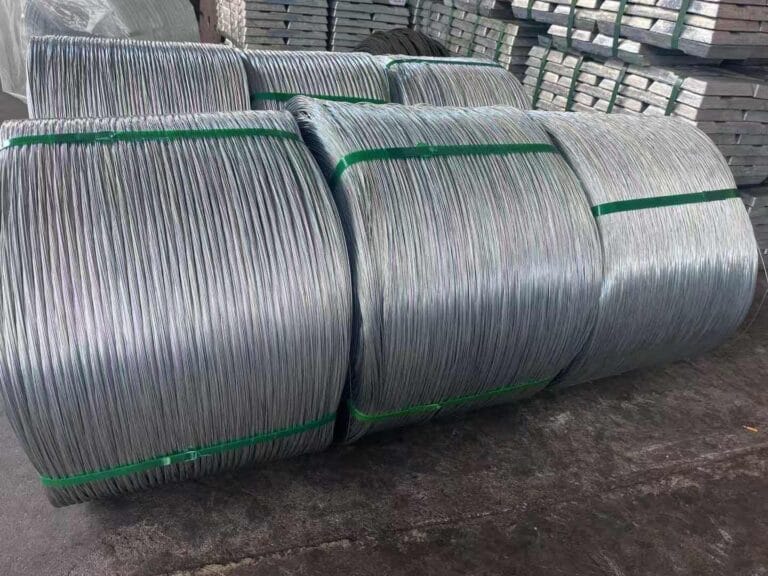
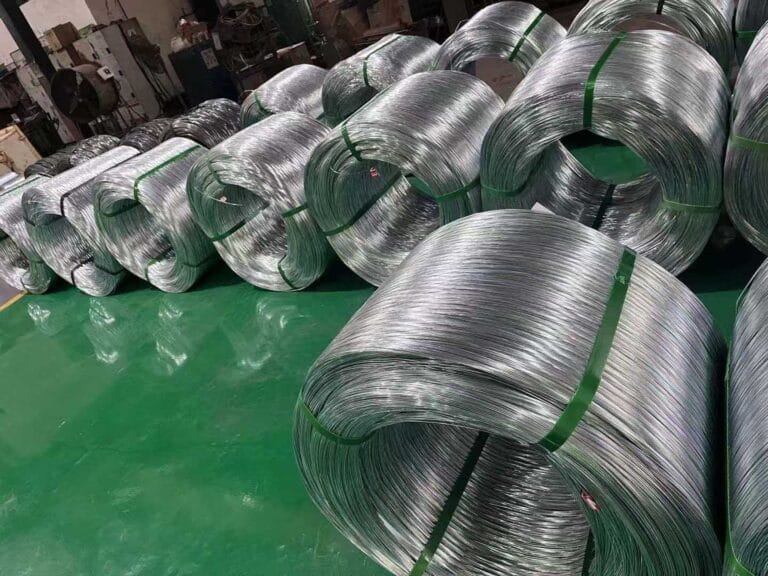
Mining binding wire for Zambia's Copperbelt requires specialized specifications: 2.2mm wire diameter (±0.02mm tolerance), zinc coating thickness minimum 50g/m², tensile strength 420 Megapascals (MPa), and corrosion resistance testing for 90%+ humidity environments. These specs ensure wire durability in underground mining conditions where standard construction-grade wire fails within 90 days.
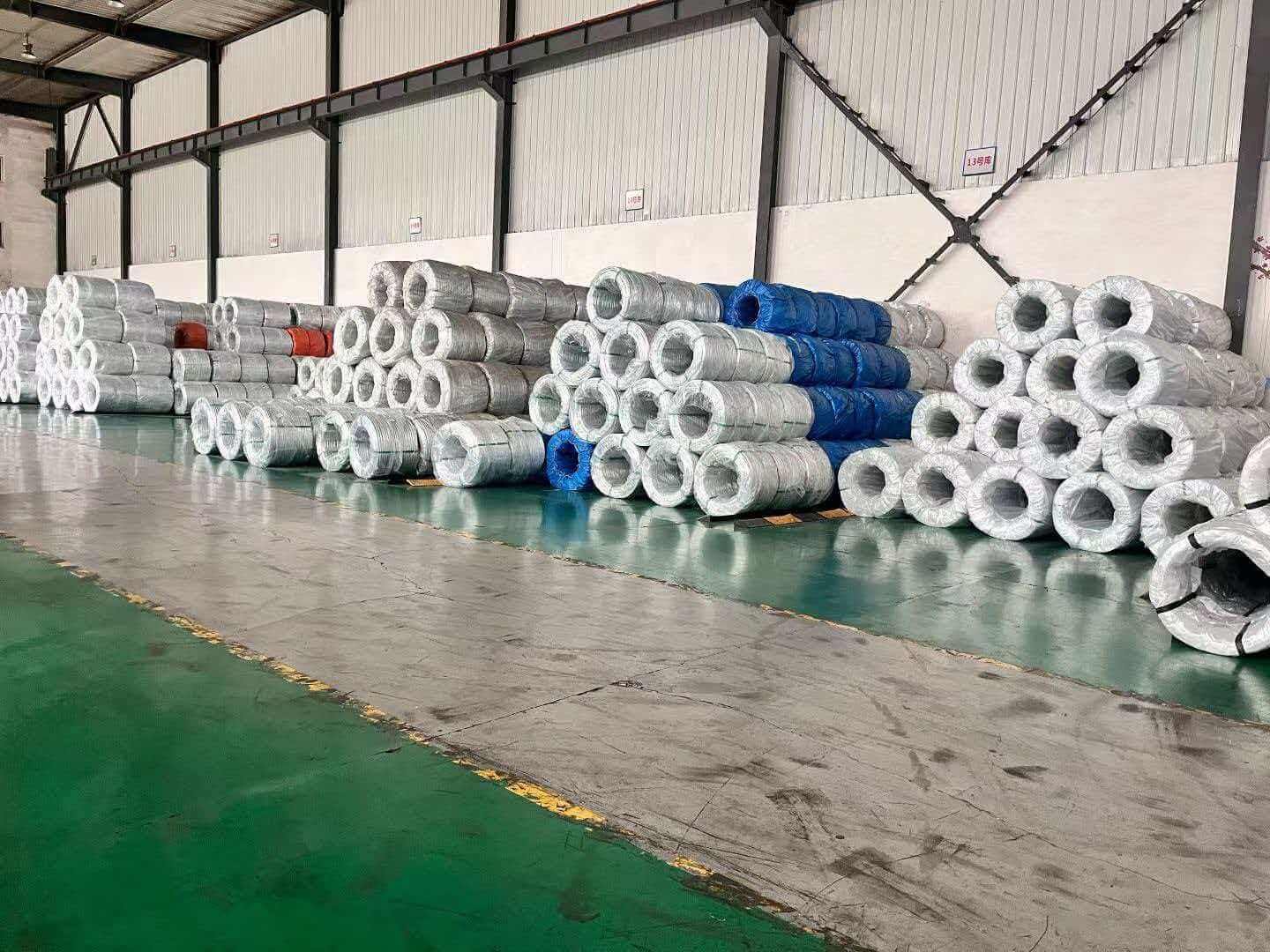
Mining operations in Zambia's Copperbelt face unique challenges that most building contractors never encounter. When I first started working with mining clients, I underestimated how harsh underground conditions really are. The humidity alone accelerates corrosion faster than any surface environment. Then there's the mechanical stress from rock movement, the chemical exposure from ore processing, and the safety requirements that make every specification non-negotiable. Let me walk you through exactly what makes mining-grade binding wire different.
Why Do Copperbelt Mines Need Special Binding Wire Specifications?
The Copperbelt mining environment destroys ordinary binding wire through three simultaneous attack vectors: constant moisture, chemical exposure, and mechanical stress.
Underground mining shafts maintain 85-95% relative humidity throughout the year. Surface water seepage, condensation from temperature differentials, and ventilation system moisture create a perpetually damp environment. Standard galvanized wire with 30-40g/m² zinc coating develops surface rust within 60-90 days. Once rust penetrates the zinc layer, corrosion accelerates exponentially. I've seen binding wire samples from failed installations where the wire diameter had reduced by 15% after just six months underground.
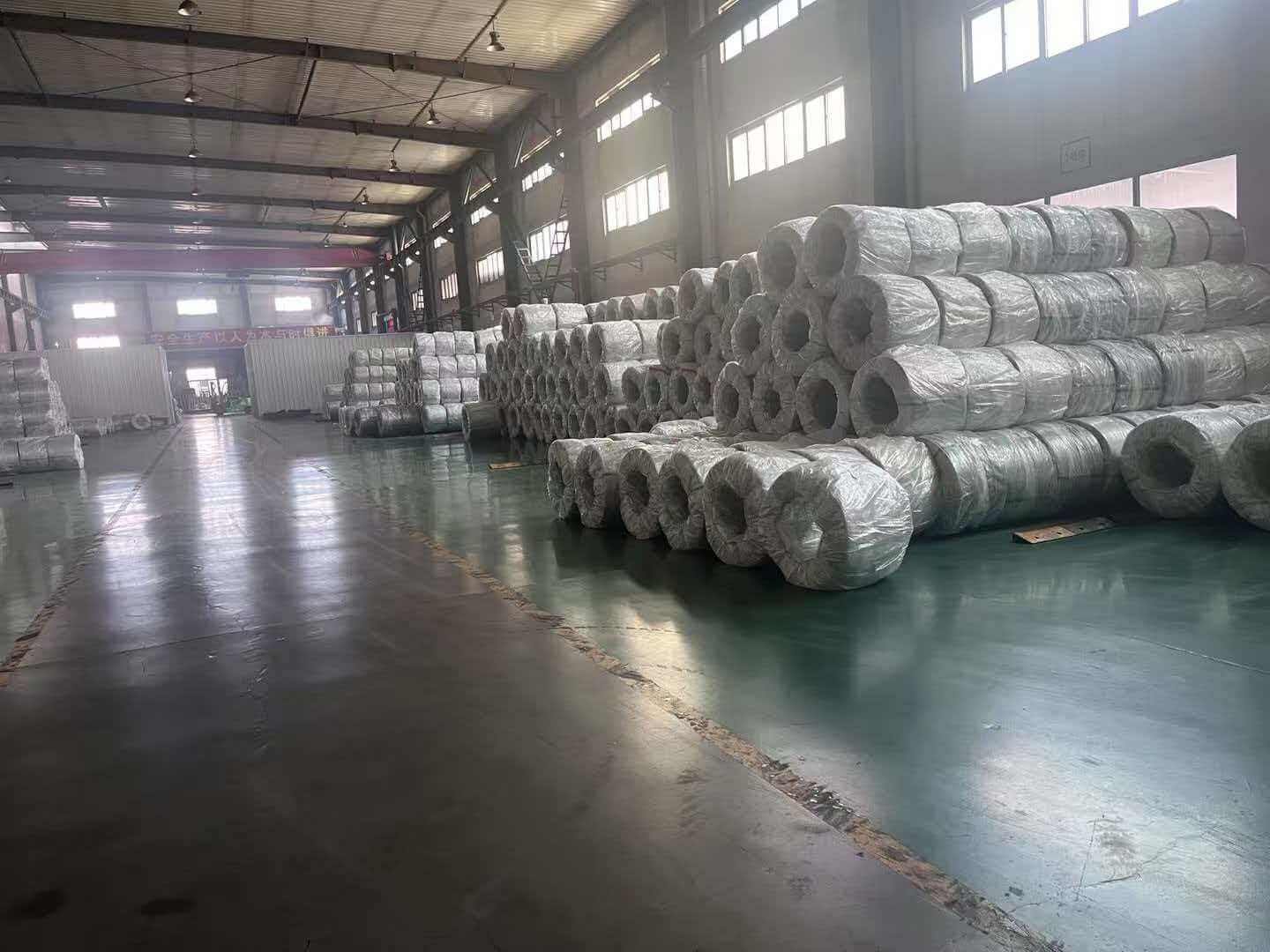
Beyond moisture, mining operations expose wire to sulfuric acid mist from ore processing, alkaline dust from rock crushing, and salt spray in ventilation systems. The Copperbelt's copper-cobalt ore bodies contain sulfide minerals that oxidize into acidic compounds. When ventilation circulates this contaminated air through underground tunnels, it creates a corrosive atmosphere that attacks any exposed metal surface.
Mechanical stress adds the third failure factor. Underground reinforcement cages shift as surrounding rock settles. Seismic activity from blasting operations creates vibration stress. Workers tightening wire with manual tools apply inconsistent tension forces. Mining specifications typically require binding wire to withstand 350-450MPa tensile strength—roughly 40% higher than construction-grade wire.
Here's what happens when mines use construction-grade binding wire:
- Month 1-2: Surface rust appears at wire bends and twisted joints
- Month 3-4: Zinc coating fails, exposing base metal to direct corrosion
- Month 5-6: Wire diameter reduces by 10-15%, compromising structural integrity
- Month 7-8: Wire breaks under normal operational stress, requiring emergency repairs
Mining operations can't afford these failures. A collapsed reinforcement cage in an active shaft means production shutdown, worker safety risks, and repair costs exceeding $50,000 per incident. This explains why Copperbelt mines pay 15-20% premium for specialized binding wire specifications.
Critical Mining Wire Specifications vs. Standard Construction Wire
| Specification | Standard Construction Wire | Mining-Grade Wire | Why It Matters |
|---|---|---|---|
| Wire Diameter | 2.0mm (±0.05mm) | 2.2mm (±0.02mm) | Tighter tolerance ensures consistent strength; thicker diameter resists corrosion penetration |
| Zinc Coating | 30-40g/m² | 50-60g/m² | Doubled coating life from 90 days to 6+ months in underground conditions |
| Tensile Strength | 350-380MPa | 420-450MPa | Handles rock settlement stress and vibration from blasting operations |
| Elongation Rate | 8-12% | 6-8% | Lower elongation prevents wire stretching under sustained load |
| Salt Spray Test | 72 hours | 240+ hours | Validates corrosion resistance in chloride-contaminated ventilation air |
The diameter tolerance deserves special attention. Construction wire tolerates ±0.05mm variation because builders tie rebar by hand feel. Mining operations specify ±0.02mm because automated binding tools require consistent wire diameter. When wire diameter varies beyond tolerance, binding machines jam or create weak joints.
Our technical team had to recalibrate wire drawing dies and implement three-stage quality inspection to achieve ±0.02mm consistency. First inspection happens at the wire drawing machine, second after annealing, third before packaging. Any spool showing diameter variance outside ±0.02mm gets rejected and reprocessed.
How Do You Calculate Mining Wire Requirements for Copperbelt Projects?
Mining project wire calculations follow a completely different methodology than surface construction because underground reinforcement patterns account for rock pressure distribution.
Standard building construction calculates binding wire quantity based on rebar intersection count multiplied by wire length per tie. Mining calculations add three additional factors: reinforcement cage geometry, rock pressure zones, and safety redundancy requirements.
Basic Mining Wire Calculation Formula:
Total Wire (kg) = (Primary Ties + Secondary Ties + Safety Redundancy) × Wire Weight per Meter × Safety Factor
Breaking this down with a real project example:
A typical Copperbelt shaft reinforcement cage measures 4 meters diameter, 6 meters height, with #12 rebar (12mm diameter) spaced 200mm vertically and horizontally.
Step 1: Calculate primary intersection points
- Vertical rebar count: (4000mm ÷ 200mm spacing) × π ≈ 63 bars
- Horizontal rings: 6000mm ÷ 200mm = 30 rings
- Total intersections: 63 × 30 = 1,890 primary ties
Step 2: Calculate wire length per tie
- Standard tie requires 250mm wire (3 wraps + twist tail)
- Mining spec requires 350mm (4 wraps + longer twist tail for vibration resistance)
- Primary tie wire: 1,890 × 0.35m = 661.5 meters
Step 3: Add secondary reinforcement ties Mining specs require diagonal cross-ties at 1-meter intervals to prevent cage deformation:
- Diagonal ties per level: 12 ties × 6 levels = 72 ties
- Diagonal wire length: 800mm per tie
- Secondary tie wire: 72 × 0.8m = 57.6 meters
Step 4: Apply safety redundancy Mining regulations require 20% extra wire for:
- Retying broken or improperly twisted joints
- Additional reinforcement at high-stress zones (near blast areas)
- Emergency repairs during installation
Safety wire: (661.5m + 57.6m) × 1.2 = 862.9 meters
Step 5: Convert to weight 2.2mm diameter wire weighs approximately 0.03 kg/meter Total weight: 862.9m × 0.03 kg/m ≈ 26 kg per cage
For the project I mentioned earlier with 20 tons total order, the mine was installing approximately 770 reinforcement cages across multiple shaft levels. They added 15% buffer for long-term maintenance inventory.
Rock Pressure Zone Adjustments
Not all shaft sections require identical binding wire density. Mining engineers classify underground sections into three pressure zones:
Low Pressure Zones (0-50m depth, stable granite formations)
- Standard 200mm tie spacing
- Basic calculation formula applies
- Typical in Copperbelt near-surface operations
Medium Pressure Zones (50-200m depth, fractured rock)
- Reduced tie spacing to 150mm
- Increases wire requirement by 35%
- Most common in active Copperbelt mining levels
High Pressure Zones (200m+ depth, fault zones, near active stopes)
- Tie spacing reduced to 100mm
- Double-wrap requirement at all intersections
- Wire requirement increases by 120%
- Critical areas near Konkola, Nchanga, and Nkana deep mines
I worked with a project engineer at Konkola Copper Mines who showed me their pressure zone mapping. They color-code shaft sections based on geotechnical surveys. High-pressure zones marked in red require double the binding wire quantity of green low-pressure zones. Their procurement system automatically adjusts wire orders based on these zone classifications.
What Testing Standards Apply to Mining Binding Wire in Zambia?
Zambia's mining sector follows a hybrid standard system combining International Organization for Standardization (ISO) specifications, South African mining standards (SANS), and company-specific technical requirements developed by major mining houses.
The Zambia Bureau of Standards (ZABS) references ISO 14737 for metallic wire specifications, but Copperbelt mines typically enforce stricter requirements. When I supply to mining clients, they request test certificates covering six critical parameters.
Mandatory Testing Requirements
1. Tensile Strength Testing (ISO 6892-1)
Mining wire must demonstrate minimum 420MPa ultimate tensile strength with testing performed on five random samples per production batch. Test procedure requires:
- Sample length: 500mm minimum
- Testing speed: 10mm/minute strain rate
- Temperature: 20°C ±5°C ambient
- Pass criteria: All five samples must exceed 420MPa; none can fall below 410MPa
Our quality control lab tests every batch before shipment. We've rejected batches where four samples passed but one tested at 408MPa. Mining clients don't accept any variance below specification minimums.
2. Zinc Coating Thickness (ISO 1460)
The gravimetric method measures zinc coating weight per square meter. Standard procedure:
- Cut three 100mm wire samples
- Weigh samples precisely (±0.001g accuracy)
- Dissolve zinc coating in hydrochloric acid solution
- Reweigh base wire after zinc removal
- Calculate coating weight: (Initial Weight - Final Weight) ÷ Surface Area
Mining specifications require 50-60g/m² zinc coating. Our production targets 52-55g/m² to ensure no sample falls below minimum.
3. Salt Spray Corrosion Test (ASTM B117)
This test simulates years of underground exposure in 240 hours. Test chamber maintains:
- 5% sodium chloride solution spray
- 35°C constant temperature
- 95% relative humidity
- Continuous 240-hour exposure
Pass criteria: No red rust (iron oxide) appearance on wire surface. White rust (zinc oxide) is acceptable as it forms protective layer.
Construction-grade wire typically fails this test within 72-96 hours. Mining-grade wire must survive full 240 hours without red rust formation.
4. Wire Diameter Consistency (ISO 16120-1)
Mining operations require ±0.02mm tolerance verification. Testing protocol:
- Measure 20 random points along 10-meter wire length
- Use calibrated digital micrometer (±0.001mm accuracy)
- Record all measurements
- Calculate standard deviation
All measurements must fall within 2.18mm-2.22mm range. Standard deviation cannot exceed 0.008mm. This tight tolerance requirement forces manufacturers to use precision wire drawing equipment—most small wire factories can't achieve this consistency.
5. Torsion Test (Underground Ductility Verification)
Mining wire must withstand twisting stress without brittle fracture. Test procedure:
- Clamp 200mm wire sample in torsion machine
- Apply 360° twists at 60rpm
- Continue until wire fractures
- Count total rotations before failure
Mining specifications require minimum 15 rotations before fracture. Wire failing below 12 rotations indicates insufficient annealing or carbon content problems.
I remember testing a competitor's sample that fractured after just 7 rotations. The procurement manager immediately disqualified that supplier. Underground workers twist binding wire manually with pliers—brittle wire breaks during installation, creating safety hazards.
6. Coating Adhesion Test (Manual Bend Verification)
Simple but critical field test that mine inspectors perform on-site:
- Bend wire sample 180° around 5mm diameter rod
- Visually inspect bent section for zinc coating cracks or flaking
- Reverse bend back to straight position
- Re-inspect for coating damage
Pass criteria: No visible zinc coating cracks, flaking, or separation from base wire. This test validates that zinc adheres properly to base wire through proper galvanizing process.
Documentation Requirements
Every wire shipment to mining clients must include:
- Mill Test Certificate (MTC): Shows chemical composition of base wire (carbon content, sulfur, phosphorus levels)
- Galvanizing Certificate: Documents zinc bath temperature, immersion duration, coating thickness results
- Tensile Test Report: Includes test machine calibration date and operator signature
- Batch Traceability Report: Links production date, batch number, raw material suppliers
- Third-Party Inspection Certificate: Société Générale de Surveillance (SGS), Bureau Veritas, or Intertek validation (for first-time suppliers)
The copper mine I mentioned earlier required SGS inspection for our first shipment. SGS inspector spent two days at our factory, witnessed production process, supervised testing, and sealed sample containers. This added $1,800 to inspection costs, but it established credibility that led to repeat orders worth over $180,000 annually.
How Does Packaging Impact Mining Wire Performance Underground?
Mining wire packaging requirements differ dramatically from construction wire because underground storage conditions accelerate corrosion if packaging fails.
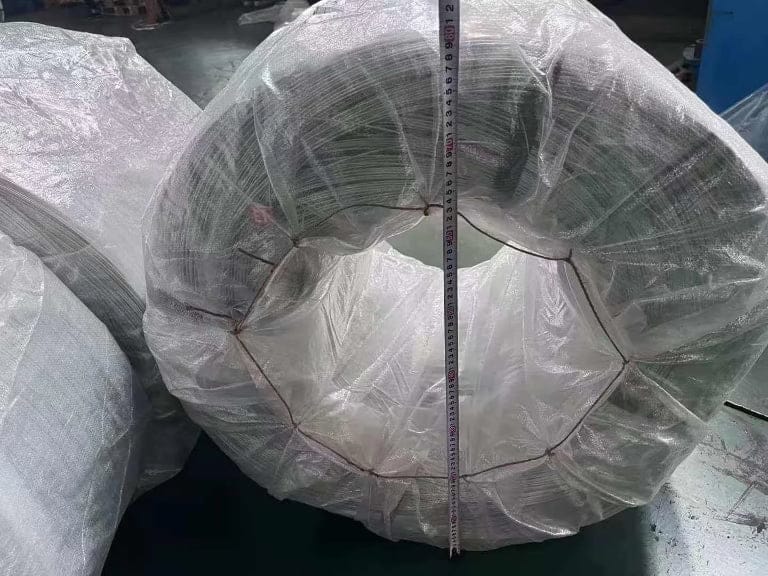
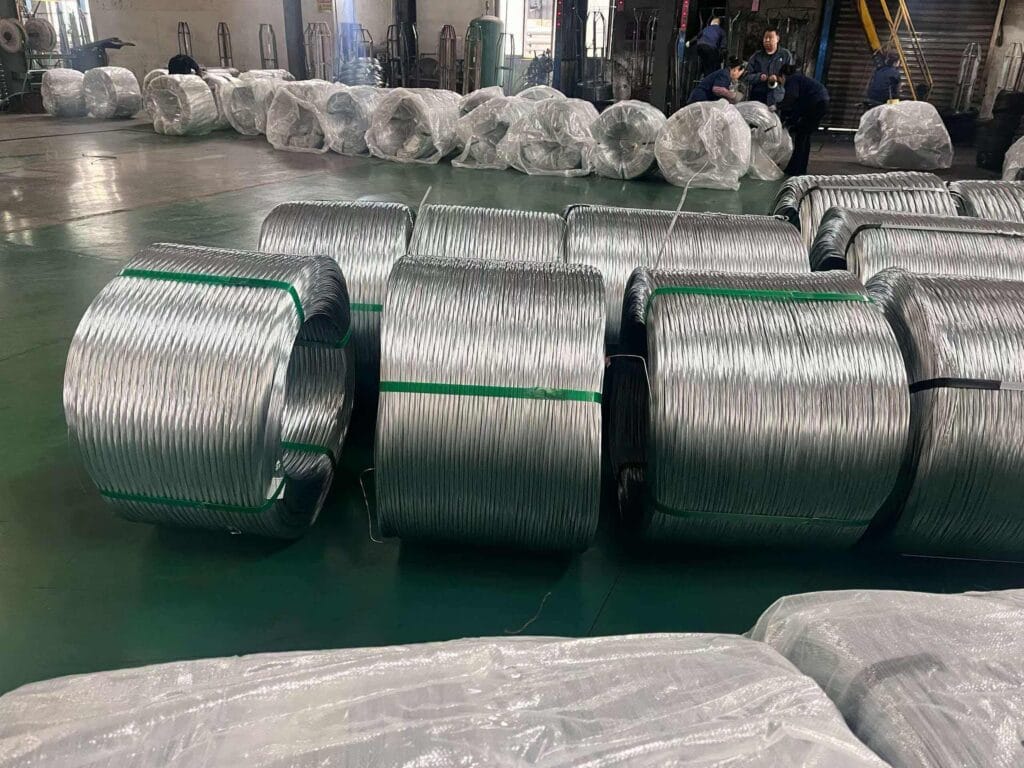
Standard construction wire ships in basic plastic film with paper labels. Mining wire requires triple-layer protection: rust-preventive oil coating, heavy-duty polyethylene (PE) film, and moisture-proof outer wrapping.
When we prepared that first 20-ton mining order, our standard packaging team wrapped coils in single-layer PE film like construction orders. The technical manager caught this before shipping and rejected the entire batch. Here's what I learned about proper mining wire packaging.
Three-Layer Protection System
Layer 1: Rust-Preventive Oil Coating
Before wire leaves the galvanizing line, we apply petroleum-based rust inhibitor through spray nozzles. This creates microscopic oil film that displaces moisture from zinc surface. Two oil types work for mining applications:
- Solvent-based oil: Evaporates within 48 hours after opening package (preferred for immediate use)
- Semi-permanent oil: Remains on wire surface for 6+ months (used for long-term inventory)
Mining clients specify which oil type based on their inventory turnover. Fast-moving projects prefer solvent-based. Maintenance inventory requires semi-permanent oil.
Layer 2: Heavy-Duty Polyethylene Film
Construction wire uses 80-micron PE film. Mining wire requires 200-micron UV-resistant film with heat-sealed edges. Heat sealing prevents moisture infiltration at packaging seams—the most common failure point.
Our packaging line uses impulse heat sealer that creates 10mm wide seal strip. Quality control tests seal strength by attempting to peel apart sealed edges. Proper seal requires 50+ newtons force to separate.
Layer 3: Moisture-Proof Outer Layer
Two outer layer options depending on storage environment:
Option A: Woven Polypropylene Bags (for covered warehouse storage)
- 120-gram weight polypropylene (PP) fabric
- Water-resistant but allows some vapor transmission
- Protects against dust and physical damage
- Lower cost option ($2.50 per coil)
Option B: Aluminum Foil Laminate (for outdoor or high-humidity storage)
- PE film + aluminum foil + kraft paper composite
- Complete moisture barrier with <0.01g/m²/24hr transmission rate
- Ultraviolet (UV)-resistant outer surface
- Premium option ($5.80 per coil)
The mine we supplied stores wire underground near shaft bottom for quick access. They specified aluminum foil laminate because temporary storage areas maintain 95% humidity. After four months underground storage, they reported zero rust appearance when opening packages.
Coil Size and Weight Specifications
Mining operations prefer smaller coil sizes than construction projects for three practical reasons:
Underground Transport Constraints: Shaft cages and mine tunnels have size restrictions. Standard 500kg construction coils don't fit in 2m × 2m × 2m shaft cages. Mining wire ships in 25kg or 50kg coils maximum.
Manual Handling Requirements: Underground workers manually transport wire to reinforcement locations. 50kg coils represent maximum weight two workers can safely carry through narrow tunnels.
Inventory Control: Smaller coils allow precise quantity tracking. Mines track wire consumption per shaft section to calculate actual usage rates versus engineering estimates.
Our standard packaging configuration for mining clients:
- 25kg coils: 400mm outer diameter × 220mm inner diameter × 150mm width
- 50kg coils: 550mm outer diameter × 300mm inner diameter × 200mm width
- Wire wound in single continuous length
We provide full MTC (Mill Test Certificate) and Certificate of Origin with every shipment. We offer a full range of construction binding wire for African projects, including galvanized iron wire, black annealed iron wire, and 201 stainless steel wire, with mix container loading supported. If you are sourcing construction binding wire for Zambia or any African market, we are happy to provide a specification-based quotation. Contact us via WhatsApp: +86 15383180672.
FAQ: Mining-Grade Binding Wire for Copperbelt Projects
Q1: Why does mining binding wire need to be thicker (2.2mm) than standard construction wire (2.0mm)?
A1: The 2.2mm diameter provides two critical advantages for underground mining: increased corrosion resistance (more metal to withstand rust penetration) and higher load-bearing capacity for reinforcement cages that must withstand rock settlement and blasting vibration. The tighter tolerance of ±0.02mm (versus ±0.05mm for construction wire) ensures compatibility with automated binding machines used in large-scale mining operations.
Q2: What zinc coating thickness is required for Copperbelt underground mining conditions?
A2: Mining-grade binding wire requires minimum 50-60g/m² zinc coating — significantly more than the 30-40g/m² used in construction. This doubled coating thickness extends wire life from 90 days to 6+ months in the 90%+ humidity found in underground shafts. Standard construction wire with 30-40g/m² starts rusting within 2-3 months when exposed to Copperbelt underground conditions.
Q3: What testing standards apply to mining binding wire imported to Zambia?
A3: Copperbelt mines typically require six mandatory tests: tensile strength (ISO 6892-1, minimum 420MPa), zinc coating thickness (ISO 1460, 50-60g/m²), salt spray corrosion test (ASTM B117, 240 hours minimum), diameter consistency (ISO 16120-1, ±0.02mm tolerance), torsion test for ductility (minimum 15 rotations), and coating adhesion test (180° bend without flaking). Third-party inspection by SGS, Bureau Veritas, or Intertek is often required for first-time suppliers.
Q4: How should mining binding wire be packaged differently from construction wire?
A4: Mining wire requires triple-layer protection: rust-preventive oil coating applied to the wire surface, heavy-duty 200-micron polyethylene film with heat-sealed edges, and either woven polypropylene bags (for covered storage) or aluminum foil laminate (for high-humidity underground storage). Standard 80-micron PE film used for construction shipments is insufficient for mining applications where humidity exceeds 90%.
Q5: How do you calculate binding wire quantity for a Copperbelt shaft reinforcement project?
A5: Mining calculations use: Total Wire (kg) = (Primary Ties + Secondary Ties + Safety Redundancy) × Wire Weight per Meter × Safety Factor. Key differences from construction: mining requires 350mm wire per tie (vs 250mm construction), diagonal cross-ties at 1-meter intervals, and 20% safety redundancy. Rock pressure zones also affect wire quantity: medium-pressure zones require 35% more wire, high-pressure zones require 120% more. For a typical 4m diameter × 6m height cage, approximately 26kg of 2.2mm wire is needed, versus about 14kg for construction-grade 2.0mm wire.