


Choosing the right binding wire in Zambia means understanding the differences between galvanized and black annealed wire. Each type has its place on the construction site, and matching the right wire to the right task saves money and prevents rework. Here is a practical guide based on a Lusaka wholesaler’s experience.
Banda had always stocked galvanized wire until a mining project required both types. Buyers like him, who need clear guidance on construction binding wire for Zambia’s growing infrastructure market, can find detailed specifications on our product page: https://mfgwiremesh.com/metal-wire/galvanized-iron-wire/
Last month, I got a call from Banda, a building materials distributor in Lusaka. He landed a project supplying wire for a copper mine workers’ accommodation block. He sounded confused. The contractor gave him a list – galvanized wire for the main structure, black annealed wire for internal partitions and pipe fixing. He asked me: “How do I actually choose the right binding wire?”
**Choose binding wire based on three factors: construction environment, binding method, and budget. Galvanized wire works for outdoor structural steel tying in rainy conditions. Black annealed wire suits indoor manual binding where rust exposure is minimal. Match wire diameter to rebar size – 2.0mm for main structures, 1.6mm for light fixing.**
I have been exporting construction materials to East Africa for three years now. I see the same questions from Zambian buyers every rainy season. They want to know which wire type prevents rust during the long wet months from November to April.
## What Makes Galvanized Wire the Preferred Choice for Zambian Construction Projects?
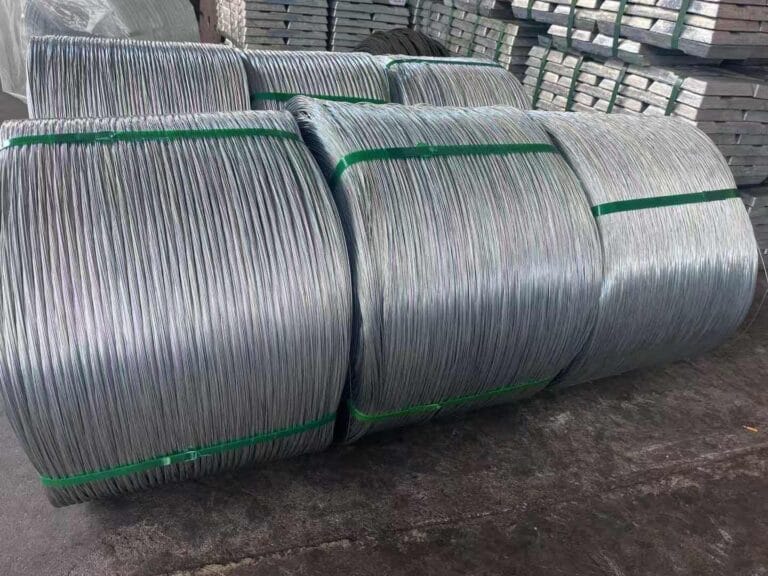
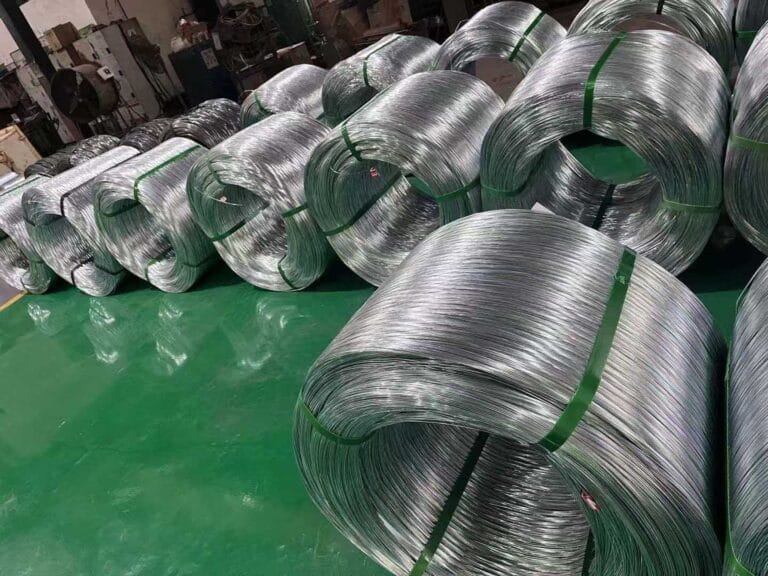
Galvanized wire dominates Zambia’s construction market. The zinc coating is your first line of defense against rust. I see most structural steel binding projects using galvanized wire.
**Galvanized wire has a protective zinc layer that resists corrosion during Zambia’s six-month rainy season. The 2.0mm diameter is the market standard for main structure rebar binding. Choose wire with both adequate zinc coating and proper annealing to balance rust protection with workability.**

### Why Galvanized Wire Works for Zambian Climate
Zambia’s climate creates specific challenges. The rainy season runs from November to April. That is half the year with moisture exposure. I shipped a container to a client in Ndola last year. He called me two months later. The galvanized wire still looked new in his outdoor storage yard.
The zinc coating thickness matters. Standard galvanized wire has 20-30 grams of zinc per square meter. Some cheap suppliers offer thinner coatings. These fail during the first rainy season. I always tell buyers to check coating weight specifications before ordering.
| Wire Type | Zinc Coating (g/m²) | Rust Resistance | Typical Use |
|———–|———————|—————–|————-|
| Standard Galvanized | 20-30 | 6-12 months outdoor | Main structure binding |
| Heavy Galvanized | 40-60 | 12-24 months outdoor | Coastal or high-humidity areas |
| Light Galvanized | 10-20 | 3-6 months outdoor | Temporary construction |
### The Annealing Factor Most Buyers Overlook
Banda mentioned his workers complained about hard wire. This is common. Galvanized wire needs proper annealing after the galvanizing process. Without it, the wire stays stiff. Workers get hand injuries trying to twist hard wire around rebar.
I test wire softness before shipping. Take a 30cm piece. Wrap it around your finger three times. It should bend without breaking. If it snaps or feels rigid, the annealing is insufficient. Many Zambian workers do manual binding. They need wire soft enough to twist by hand but strong enough to hold steel bars together.
The breaking load should match application needs. For 2.0mm galvanized wire, I recommend 400-500 Newton breaking strength. This gives enough holding power while allowing manual twisting. Some suppliers ship wire with 600+ Newton strength. It holds well but workers hate using it.
## When Should You Choose Black Annealed Wire Instead of Galvanized?
Black annealed wire serves a different purpose. It has no zinc coating. The black color comes from the annealing process. Many Zambian contractors use it for indoor applications where rust is less of a concern.
**Black annealed wire offers superior softness for manual binding tasks. It costs 15-20% less than galvanized wire. Use it for indoor partitions, pipe fixing, and temporary binding where direct weather exposure is minimal. The lack of zinc coating makes it unsuitable for outdoor structural applications.**

### Where Black Annealed Wire Performs Best
Banda’s project needed wire for internal partition walls. These walls sit inside the building. They never see direct rain. Black annealed wire works perfectly here. The soft texture speeds up manual binding. Workers finish the job faster.
I see black annealed wire used for several applications in Zambia. HVAC contractors use it to fix pipes to walls. Electricians use it to secure conduit runs. Small residential builders use it for temporary formwork binding. All these applications happen indoors or get covered by concrete.
The price difference matters for large projects. A 20-foot container holds about 18 tons of wire. If you pay $100 per ton less for black annealed wire, you save $1,800 per container on portions of the project that do not need galvanized protection.
### Understanding the Rust Limitation
I always warn buyers about the rust issue. Black annealed wire starts showing rust spots within weeks if exposed to moisture. I shipped a container to a client in Livingstone. He stored some coils outdoors. After one month, surface rust appeared. The wire still functioned but looked poor.
Use black annealed wire only where you can protect it from weather. If your project timeline means wire might sit exposed for weeks, choose galvanized instead. The extra cost prevents material waste from rusted wire that workers refuse to use.
| Application | Galvanized Wire | Black Annealed Wire | Recommended Choice |
|————-|—————-|———————|——————-|
| Outdoor rebar binding | Excellent | Poor | Galvanized |
| Indoor partition walls | Good | Excellent | Black annealed |
| Pipe fixing (indoor) | Good | Excellent | Black annealed |
| Temporary formwork | Good | Good | Black annealed (cost savings) |
| Foundation work | Excellent | Poor | Galvanized |
## What Wire Diameter Should You Order for Different Construction Tasks?
Wire diameter determines both strength and workability. I see buyers order the wrong diameter because they do not match wire size to rebar size. This creates problems on site.
**Choose 2.0mm diameter wire for main structural rebar (12-25mm diameter bars). Use 1.6mm wire for light fixing and smaller bars (8-12mm). Select 2.5mm wire for heavy construction with large diameter rebar (25mm+). Thicker wire provides stronger binding but requires more effort to twist manually.**

### Matching Wire to Rebar Size
The general rule is simple. Use wire that is roughly 1/10 the diameter of your rebar. For a 20mm rebar, 2.0mm wire works well. For a 16mm rebar, 1.6mm wire suffices.
I helped a contractor in Kitwe last year. He ordered 1.6mm wire for a project with 25mm rebar. His workers could not get tight bindings. The thin wire stretched under tension. He ended up reordering 2.0mm wire mid-project. This delayed his schedule by two weeks.
Thicker wire means fewer binding failures. But it also means slower work. A worker can tie 100 joints per hour with 1.6mm wire. The same worker manages only 60-70 joints per hour with 2.5mm wire. Calculate your labor costs against material costs when choosing diameter.
### Standard Sizes in Zambian Market
Zambian construction uses three common diameters. The 2.0mm size accounts for 60% of market volume. Most structural projects specify this size. The 1.6mm size serves light construction and finishing work. The 2.5mm size appears in heavy industrial projects.
| Wire Diameter | Breaking Strength | Typical Rebar Size | Applications |
|—————|——————-|——————-|————–|
| 1.6mm | 300-350N | 8-12mm | Light binding, partitions |
| 2.0mm | 400-500N | 12-25mm | Main structures, columns |
| 2.5mm | 600-700N | 25mm+ | Heavy foundations, bridges |
Some suppliers offer 1.2mm wire. I do not recommend it for structural binding. It breaks too easily. Use it only for temporary bundling of materials in storage.
## How Do You Calculate the Right Quantity of Binding Wire for Your Project?
Quantity calculation confuses many buyers. They either order too little and face delays or order too much and tie up cash in excess inventory.
**Calculate wire quantity by estimating binding points and wire length per joint. A typical rebar joint uses 25-30cm of wire. Count all intersection points in your rebar layout. Add 20% waste factor for cutting and handling losses. One ton of 2.0mm wire provides approximately 50,000 meters of usable length.**

### The Basic Calculation Formula
Start with your rebar layout drawings. Count every point where two bars cross and need binding. A typical column might have 40-50 binding points. A beam has 20-30 points per meter length.
Multiply binding points by wire length per joint. For manual binding with 2.0mm wire, use 25cm per joint as a baseline. Add 5cm for waste in cutting and twisting. This gives you 30cm per joint.
A practical example: You have a project with 10,000 binding points. Each point needs 30cm of wire. Total wire needed is 10,000 × 0.3m = 3,000 meters. One ton of 2.0mm wire contains about 50,000 meters. You need 3,000 ÷ 50,000 = 0.06 tons, or 60 kilograms. Add 20% waste factor. Final order quantity is 72 kilograms.
### Understanding Waste Factors
The 20% waste factor covers several losses. Workers cut wire to working lengths. Each cut wastes 2-3cm. Some joints need retying due to poor initial binding. This doubles wire consumption for those points.
I tracked actual consumption on a Lusaka project last year. The engineer calculated 2 tons needed. Workers used 2.4 tons. The extra 0.4 tons came from three sources. Damaged wire from improper storage used 0.1 tons. Extra-tight binding on critical joints used 0.2 tons. Training new workers who wasted material used 0.1 tons.
| Project Type | Base Calculation | Recommended Waste Factor | Final Order Multiplier |
|————–|——————|————————-|———————-|
| Simple residential | Accurate count | +15% | 1.15x |
| Commercial building | Accurate count | +20% | 1.20x |
| Industrial/complex | Accurate count | +25% | 1.25x |
| First-time buyer | Accurate count | +30% | 1.30x |
Order wire in full coil units. Standard coils come in 25kg or 50kg weights. Do not break coils for small quantities. Broken coils tangle easily and increase waste.
## What Quality Standards Should You Demand from Your Binding Wire Supplier?
Quality standards protect you from material failures and worker injuries. I see too many buyers focus only on price and ignore quality specifications.
**Demand Material Test Certificates (MTC) showing wire composition and mechanical properties. Verify zinc coating weight for galvanized wire (minimum 20g/m²). Check tensile strength matches diameter specifications. Request sample coils before placing full orders. Test wire softness manually by bending samples.**

### Critical Quality Specifications
Start with the material certificate. The MTC should show carbon content, tensile strength, and coating weight. For galvanized wire, zinc coating should meet 20-30g/m² minimum. Lower coating means early rust.
Wire diameter tolerance matters. A 2.0mm wire should measure 2.0mm ± 0.05mm. Some cheap suppliers deliver 1.9mm wire labeled as 2.0mm. This reduces breaking strength by 10%. Your workers will notice when joints fail under load.
I always test wire softness on sample coils. Take a 50cm length. Twist both ends in opposite directions. Good annealed wire completes 10 full rotations before breaking. Poor annealing breaks the wire after 3-4 rotations. This test takes 30 seconds but saves you from hard wire complaints later.
### Red Flags in Wire Supply
Watch for suppliers who cannot provide MTCs. This usually means they bought wire from unknown sources. You have no guarantee of composition or strength.
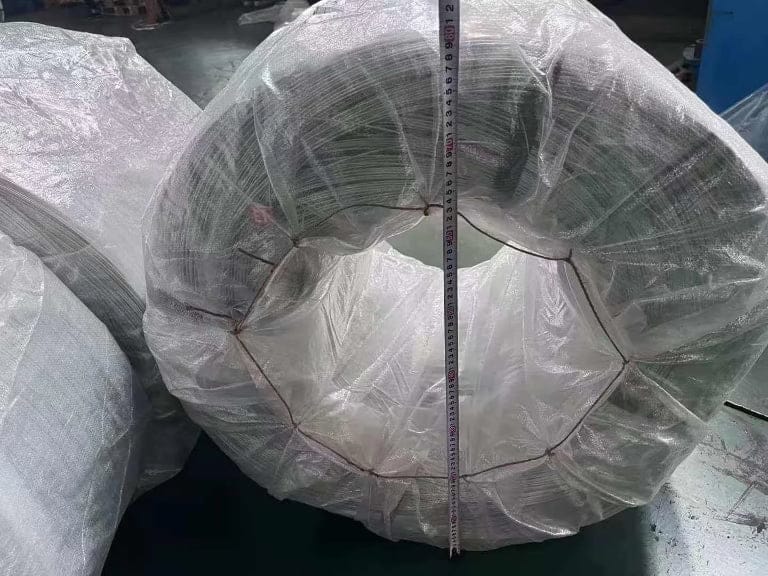
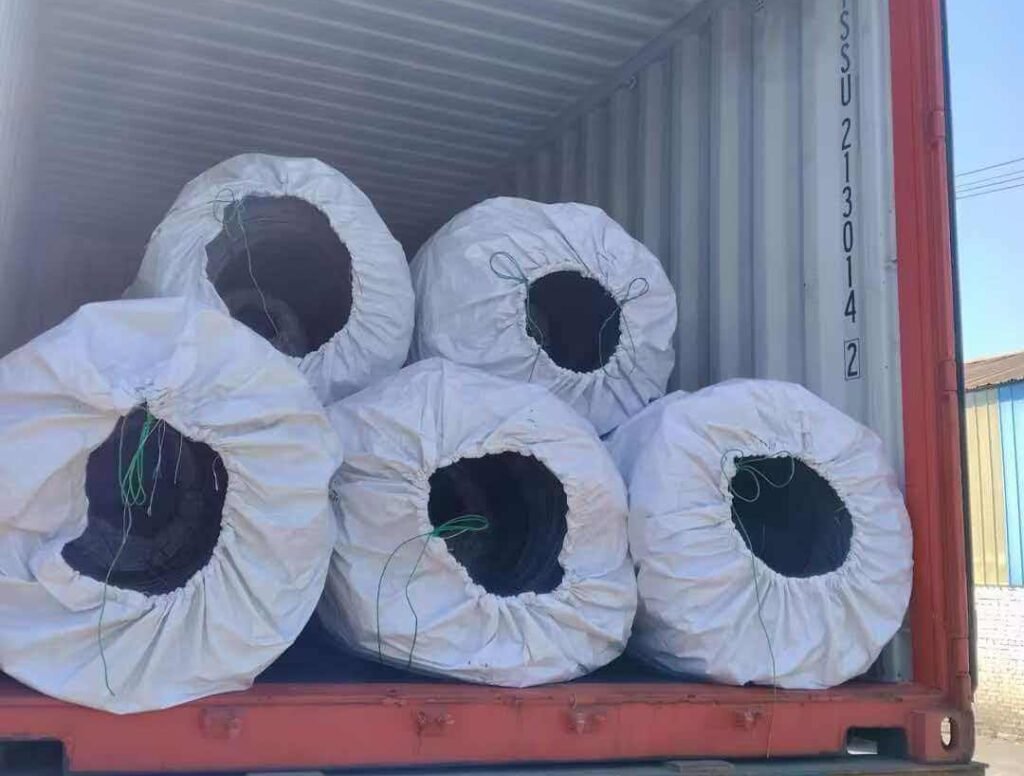
Inspect coil packaging carefully. Good suppliers wrap coils in waterproof plastic with desiccant packs. Poor suppliers use thin plastic that tears during shipping. Water penetration starts rust before the wire reaches your warehouse.
Check coil weight against declared weight. Standard practice allows ±1% variance. I caught a supplier delivering 24kg coils labeled as 25kg. Over a full container, this shortfall cost my client two full coils worth of wire.
| Quality Factor | Good Standard | Warning Sign | Impact if Ignored |
|—————-|—————|————–|——————-|
| MTC Availability | Provided with shipment | “Can provide later” | No recourse for quality issues |
| Diameter Tolerance | ±0.05mm | ±0.1mm or more | Reduced strength, joint failures |
| Coil Weight | ±1% | ±3% or more | Quantity shortage |
| Packaging | Waterproof + desiccant | Thin plastic only | Rust before use |
## How Should You Store and Handle Binding Wire in Zambian Climate?
Proper storage extends wire life and reduces waste. Zambia’s rainy season creates storage challenges that many buyers underestimate.
**Store wire coils off the ground on wooden pallets in covered, ventilated areas. Keep galvanized wire dry to preserve zinc coating. Stack coils no more than 4 high to prevent bottom coil deformation. Rotate stock using first-in-first-out method. Cover outdoor storage with waterproof tarps during rainy season.**

### Creating the Right Storage Environment
I visited a distributor in Kabwe who stored wire outdoors with no cover. After two months of rainy season, 30% of his galvanized wire showed rust staining. He could not sell it at full price. The loss cost him more than renting proper storage space would have.
Raise coils off the ground. Concrete floors hold moisture. This moisture transfers to bottom coils. I recommend wooden pallets with at least 15cm height. This allows air circulation underneath.
Ventilation prevents condensation. A sealed storage room traps moisture from temperature changes. I saw a warehouse in Ndola where morning condensation dripped onto wire coils. The owner added roof vents and wall fans. The condensation problem disappeared.
### Handling Wire to Minimize Damage
Train workers in proper coil handling. A wire coil weighs 25-50kg. Dropping it damages the wire and creates tangles. Use coil hooks or carry bars designed for wire handling.
Do not uncoil wire by pulling from the center. This creates tangled nests that waste time and material. Unroll wire from the outside of the coil instead. Mount coils on dispensing stands if you use large volumes daily.
Cut wire to working lengths before taking it to the construction area. Pre-cut pieces of 50cm reduce waste compared to workers cutting pieces on demand from a full coil.
## What Payment Terms and Shipping Options Work Best for Zambian Importers?
Payment and logistics determine whether your wire arrives on time and at the right cost. I work with Zambian buyers who range from first-time importers to experienced distributors. Each needs different arrangements.
**New buyers typically pay 30% deposit and 70% before shipping. Established buyers negotiate 30-60 day payment terms after proving track record. Sea freight to Dar es Salaam or Mombasa takes 25-30 days. Add 7-10 days for inland transport to Lusaka. Budget $80-100 per ton for freight to Zambian inland locations.**

### Understanding Payment Structures
I started requiring deposits after two buyers disappeared after receiving pro forma invoices. The 30% deposit protects both parties. It commits you to the order and covers my material costs. The 70% balance before shipping ensures I do not carry credit risk with new relationships.
Banda now stocks both galvanized and black annealed wire and recommends them by application. Read more Zambia construction supply guides on our blog https://mfgwiremesh.com/blog/ or reach out via https://mfgwiremesh.com/contact/.
We provide full MTC (Mill Test Certificate) and Certificate of Origin with every shipment.
We provide a full range of construction binding wire for African projects. Galvanized Iron Wire: https://mfgwiremesh.com/metal-wire/galvanized-iron-wire/ Black Annealed Iron Wire: https://mfgwiremesh.com/metal-wire/black-annealed-iron-wire/ 201 Stainless Steel Wire: https://mfgwiremesh.com/metal-wire/201-stainless-steel-wire/ Mix container loading supported.
If you are sourcing construction binding wire for Zambia or any African market, we are happy to provide a specification-based quotation. Contact us via WhatsApp: +86 15383180672.
FAQ:
Q1: What is the main difference between galvanized binding wire and black annealed wire?
A1: Galvanized binding wire has a zinc coating that provides rust protection, making it the standard choice for structural rebar tying and outdoor applications. Black annealed wire has no zinc coating but is significantly softer due to the annealing process, making it ideal for manual tying where speed and ease of handling matter more than long-term corrosion resistance. In Zambia, galvanized wire is used for main structural work, while black annealed wire is often used for internal partitions, conduit fixing, and smaller-scale construction.
Q2: Why does annealing matter for construction binding wire?
A2: Annealing determines how soft and flexible the wire is. Wire that is insufficiently annealed will be too hard, causing workers to struggle with manual tying and increasing the risk of snapping. Wire that is properly annealed ties quickly and holds tight without breaking. This matters especially in Zambia, where most construction sites rely on manual labor rather than automated tying tools. Banda’s clients consistently report that well-annealed wire improves site productivity.
Q3: What packaging standards should Zambian importers expect for binding wire?
A3: Zambian-bound binding wire must withstand ocean freight from Tianjin Port to Dar es Salaam, followed by inland trucking to Lusaka. Standard export packaging includes inner plastic film for moisture protection, an outer woven bag for physical durability, and steel strapping to keep coils secure. Loose or poorly packed coils can shift during transport, causing tangling and waste. Banda confirms that properly packed wire arrives in usable condition even after the long inland transit from port to warehouse.