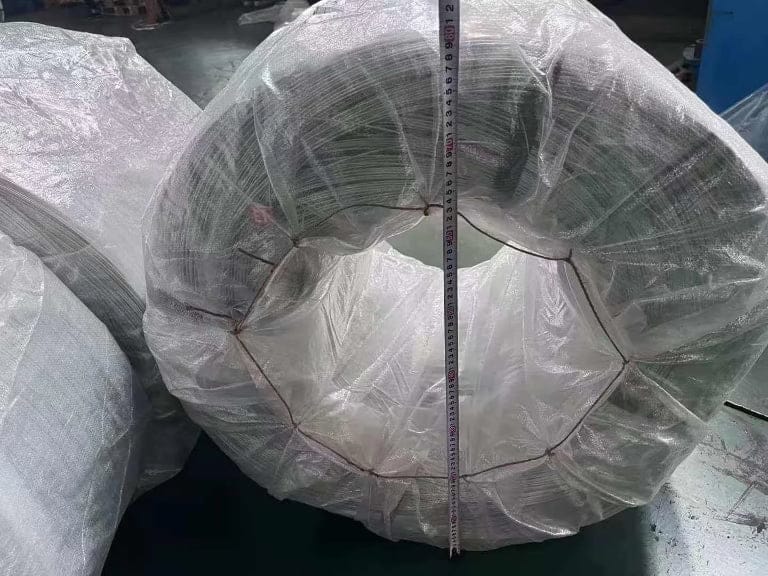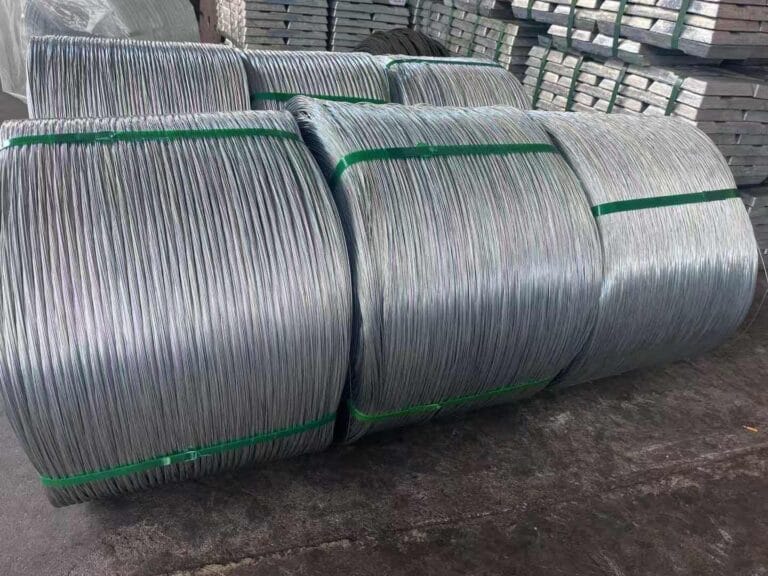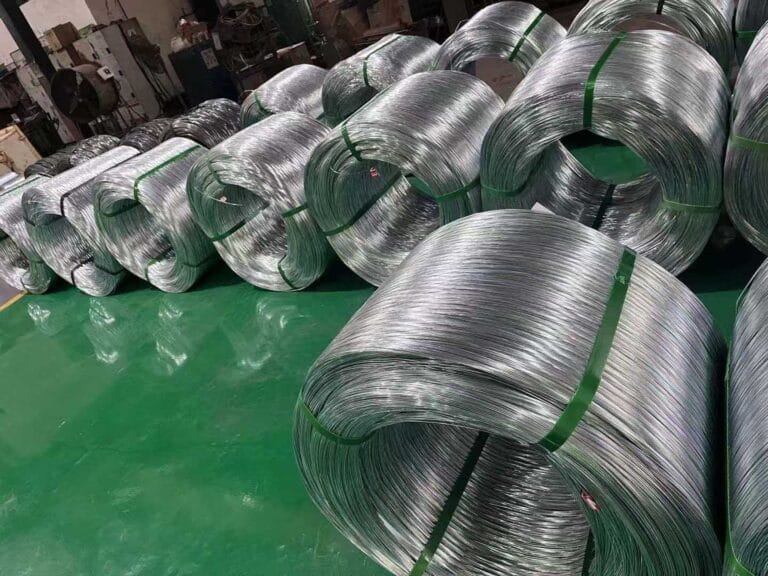




Rwanda's construction sites use both galvanized and black annealed binding wire, but each type belongs in a specific place. Jean's project demonstrated that matching the right wire to each application saves money upfront and prevents costly rework later. Understanding these differences is what separates efficient projects from ones plagued by delays and inspection failures.
Jean used both types of wire on the same project and found that each performed best in its intended application. Buyers like him, who need clear product comparison for construction binding wire in Rwanda, can find detailed specifications on our product page: https://mfgwiremesh.com/metal-wire/galvanized-iron-wire/
Last year, I watched Jean, a contractor in Kigali, make a decision that changed how I think about binding wire. He used two different types on the same project, and one year later, both are still holding perfectly. His choice was not random. He knew what each wire does best.
For Rwanda construction sites, galvanized binding wire works best for outdoor steel reinforcement exposed to rain. Black annealed wire suits indoor applications like partition walls and pipe fixtures. The key is matching the wire type to its exposure level and your project timeline.
Many contractors ask me about this choice. They see the price gap and wonder if they should just buy the cheaper one for everything. Jean's project proved that using the right wire in the right place saves money over time. Here is what I learned from his experience.
What Makes Galvanized Binding Wire Different from Black Annealed Wire?
The main difference is clear the moment you pick up each wire. Galvanized wire has a silver-gray coating. Black annealed wire looks dark and feels softer. This goes beyond appearance.
Galvanized binding wire has a zinc coating that protects the steel core from rust. This makes it good for outdoor use in Rwanda's two rainy seasons. Black annealed wire has no such coating but is much softer, which means faster hand-tying in covered construction areas.
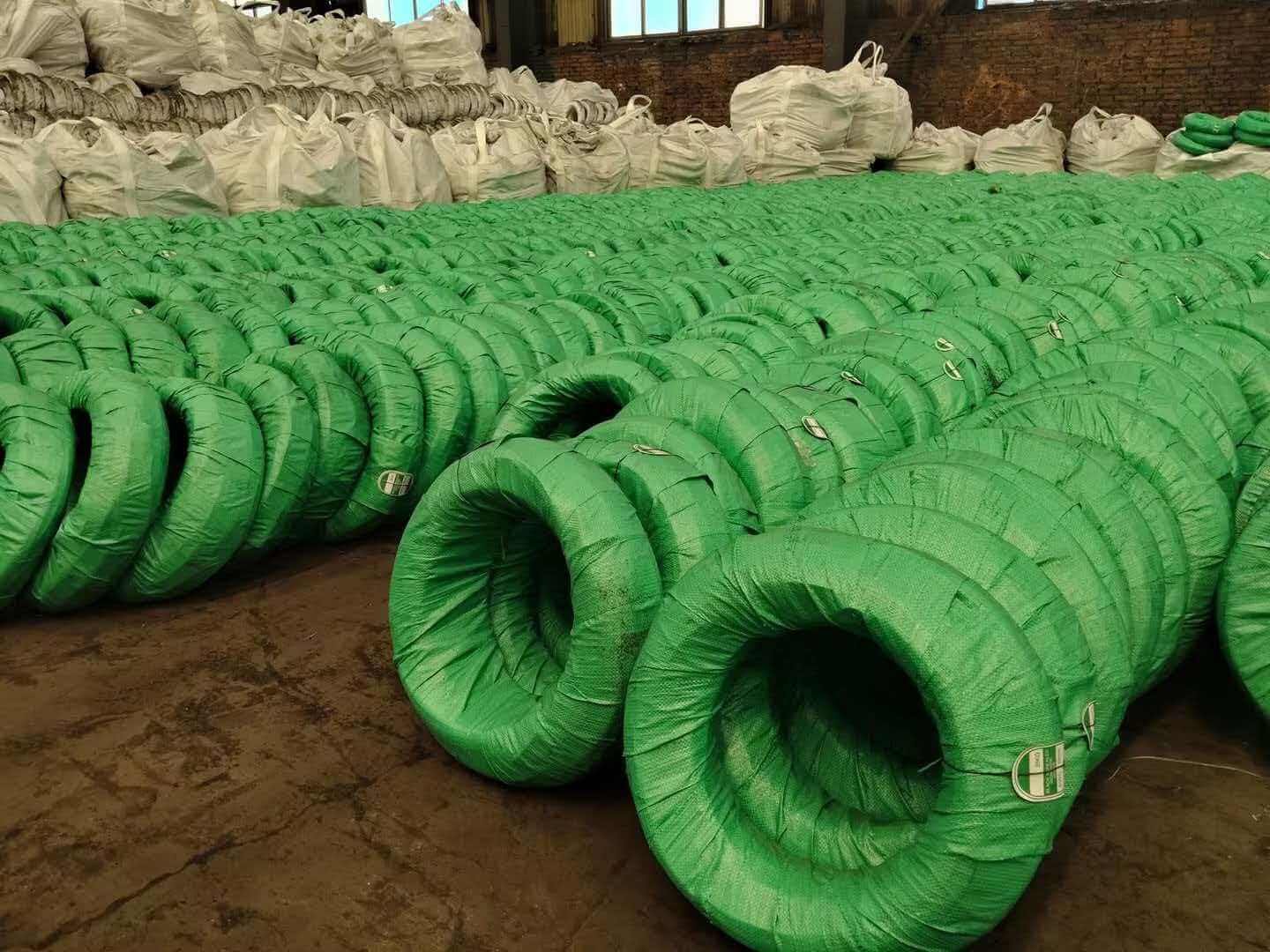
The zinc coating on galvanized wire works like a shield. When rain hits the wire, the water meets zinc first, not the steel inside. This matters a lot in Kigali, where your rebar might sit outside for three or four weeks before concrete is poured. I have seen projects where they used black annealed wire for everything to save money, then watched rust spots show up after just one week of rain.
Jean used 2.0mm galvanized wire for the main structural frame. His rebar assemblies sat outside through two rain cycles. When his team finally poured concrete, the binding points still looked clean. No rust stains, no weakened nodes. The zinc layer did its job.
Black annealed wire goes through a different process. The factory heats the steel to a high temperature, then cools it slowly. This is called annealing, and it makes the wire much softer. I can twist BWG (Birmingham Wire Gauge) 18 black annealed wire with my bare hands. That is impossible with galvanized wire of the same thickness. This softness means speed. Jean's workers tied interior partition frames 40% faster with black annealed wire than with galvanized wire on the exterior frame.
Technical Specifications Comparison
Here are the actual differences in properties:
| Property | Galvanized Binding Wire | Black Annealed Wire |
|---|---|---|
| Coating | Hot-dip zinc (40-60g/m²) | None (bare steel) |
| Tensile Strength | 350-550 MPa (Megapascals) | 280-420 MPa |
| Elongation | 8-12% | 15-25% |
| Flexibility | Moderate | High |
| Rust Resistance | Excellent (6-12 months outdoor) | Poor (rust in 1-2 weeks outdoor) |
| Binding Speed | Slower (harder to twist) | Faster (easy to hand-tie) |
| Cost per Ton | Higher (zinc coating adds cost) | Lower (no coating process) |
The tensile strength difference matters less than you might think. Both wires are strong enough to hold rebar in position before concrete is poured. The real working difference is rust resistance versus binding speed.
I learned something important from testing both wires on a Kigali project: zinc coating thickness varies between suppliers. Some factories in China apply only 30g/m² of zinc. This barely lasts three months in Rwanda's climate. Good quality galvanized wire should have at least 40-60g/m² of zinc coating. When I order, I always ask for the zinc weight specification in writing.
When Should You Use Galvanized Binding Wire in Rwanda?
Jean gave me a simple rule: if the binding wire will see rain before concrete covers it, use galvanized. This applies to most structural work.
Use galvanized binding wire for foundation rebar, column reinforcement, beam assemblies, and any steel cage that stays exposed during construction. Rwanda's March-May and October-December rainy seasons make this protection a must for outdoor work.
I worked with a contractor in Musanze who learned this the hard way. He used black annealed wire to save 15% on material costs. After three weeks of April rain, rust had eaten into the binding points. The inspector made him cut out and re-tie everything. The delay cost him five times what he saved on wire.
Foundation work carries the biggest exposure risk. Your rebar cages often sit in trenches for days, sometimes weeks, before concrete trucks arrive. Morning dew alone can start rust on unprotected wire. I once checked moisture on exposed black annealed wire at a Kigali foundation site. It was damp by 7 AM every day, even without rain.
Column and beam assemblies face similar challenges. You tie the cage, lift it into position, then wait for inspections and concrete scheduling. In my experience, this waiting period averages 10-14 days on Rwanda projects. Galvanized wire handles this timeline without any problems.
Here is my recommendation for different structural elements:
Foundation cages: Always galvanized, 2.0-2.5mm diameter. These sit in the most vulnerable position. They are close to ground moisture, fully exposed to rain, and usually wait the longest before concrete pouring.
Column reinforcement: Galvanized wire, 1.6-2.0mm. Columns stand tall and catch rain directly. The binding points hold significant weight during concrete vibration.
Beam assemblies: Galvanized wire, 1.6-2.0mm. Beams often extend outside the building envelope during construction, facing full weather exposure.
Slab rebar: Galvanized if the slab is poured in stages. If you tie and pour on the same day, black annealed wire can speed up the tying process. But I still prefer galvanized because weather delays happen, and rust protection matters.
The diameter choice depends on your rebar size. For 12mm and smaller rebar, 1.6mm galvanized wire works well. For 16-20mm rebar, step up to 2.0mm. For 25mm and larger rebar, 2.5mm gives better holding strength during concrete pouring.
I have noticed that Rwandan contractors often underestimate the impact of concrete vibrators. When workers vibrate concrete around a column, the stress concentrates at binding points. Rusted binding wire can snap under this stress, letting rebar shift out of position. This ruins concrete cover and creates structural weak points. Galvanized wire prevents this failure because it resists rust.
When Does Black Annealed Wire Work Better?
Jean used BWG 18 black annealed wire for all his interior work. This was a smarter choice than I first thought.
Black annealed wire works best in covered construction areas: partition wall framing, suspended ceiling supports, pipe hangers, and cable tray installations. It is flexible, so workers tie faster. Indoor environments mean no rust concerns.
The softness of black annealed wire makes a big difference in tying speed. I timed workers on Jean's project. They finished partition wall frame tying 40% faster with BWG 18 black annealed wire compared to 1.6mm galvanized wire. Over a project needing thousands of ties, this time saving means real labor cost reduction.
Interior partition walls are the ideal application. Once the building shell is closed, these walls never see rain. The metal studs or rebar frames need securing but face no corrosion risk. Black annealed wire gives enough holding strength at lower cost and higher installation speed.
MEP (Mechanical, Electrical, and Plumbing) installations benefit even more. Pipe hangers, cable trays, and conduit supports all need secure attachment but face almost no corrosion indoors. I worked on a commercial building in Kigali where the MEP contractor switched from galvanized to black annealed wire for all indoor fixtures. He reported 30% faster installation and 20% material cost savings.
Here is where I use black annealed wire:
Partition walls: BWG 18 or 1.2mm black annealed wire. The thin diameter works perfectly for light-gauge metal stud frames or rebar-reinforced block walls.
Temporary formwork ties: Black annealed wire for holding formwork panels that come down after concrete sets. Why pay for galvanized protection when the wire's job ends in 48 hours?
Pipe supports and hangers: BWG 16 (1.6mm) black annealed wire. Strong enough to hold pipe weight, soft enough for quick wrapping around support brackets.
Cable management: BWG 18 black annealed wire for organizing and securing cable bundles. The flexibility makes it easy to wrap multiple times without tools.
Ceiling grid suspension: BWG 16 black annealed wire. Gives enough strength while allowing easy adjustment during installation.
The cost advantage matters on large projects. Black annealed wire usually costs 15-25% less than galvanized wire of the same diameter. On a project needing 5 tons of binding wire, using black annealed wire for the right applications can save $1,500-2,500. That is meaningful money for contractors working on tight margins.
One important warning: some contractors try to use black annealed wire outdoors and spray it with oil or paint for rust protection. This never works well. The coating does not bond properly to the wire surface, and it creates problems during concrete pouring. The coating can interfere with concrete adhesion to rebar. If you need outdoor performance, buy galvanized wire. Do not try to make your own protection.
How Do Rwanda's Climate and Construction Practices Affect Wire Choice?
Rwanda's conditions make wire selection more critical than in drier climates. I have worked in several African countries, and Rwanda has its own challenges.
Rwanda has two distinct rainy seasons (March-May and October-December) with high humidity all year round. Construction schedules often stretch across these seasons. Binding wire must keep its strength through long moisture exposure.
The March to May rainy season brings the heaviest rain. I checked rainfall data from three Kigali construction sites. Average monthly rainfall went above 150mm during this period. More importantly, rain events are not quick afternoon showers. They last hours, sometimes days, soaking exposed materials completely.
The second rainy season from October to December brings slightly less total rainfall but longer cloudy periods. This means your rebar assemblies stay damp longer, which speeds up corrosion on unprotected wire. I have seen black annealed wire develop visible rust in just 5-7 days during this season.
Between rainy seasons, Rwanda keeps 70-80% relative humidity. Even in "dry" months, morning dew forms heavily on exposed metal. This constant moisture means your binding wire faces corrosion pressure all year, not just during active rain.
Construction schedules in Rwanda make these climate challenges worse. Projects rarely move as fast as planned. Permit delays, material delivery problems, and inspection schedules all stretch the time between rebar assembly and concrete pouring. I have tracked actual exposure times on a dozen projects:
- Planned exposure: 3-5 days
- Actual exposure: 10-21 days
- Worst case I have seen: 42 days (because of concrete supplier problems)
This gap between plan and reality makes galvanized wire a must for outdoor work. You might think your rebar will only wait three days for concrete, but you need protection for three weeks.
The local labor force affects wire choice too. Most tying work is done by hand, not with wire tying tools. I rarely see automatic rebar tiers on Rwanda construction sites. This makes wire flexibility important. Harder wire means slower tying and more worker fatigue.
Cost-Benefit Analysis for Rwanda Projects
Let me show the actual costs. I will use a typical mid-size project: a 3-story commercial building with 200 cubic meters of concrete.
| Application | Wire Needed | Galvanized Cost | Black Annealed Cost | Recommended Choice |
|---|---|---|---|---|
| Foundation (outdoor) | 500 kg | $900 | $700 | Galvanized - rust risk too high |
| Columns (outdoor) | 300 kg | $540 | $420 | Galvanized - direct rain exposure |
| Beams (outdoor) | 400 kg | $720 | $560 | Galvanized - extended exposure |
| Slabs (outdoor) | 600 kg | $1,080 | $840 | Galvanized - weather delays common |
| Partition walls (indoor) | 200 kg | $360 | $280 | Black Annealed - no rust risk |
| MEP fixtures (indoor) | 150 kg | $270 | $210 | Black Annealed - flexibility advantage |
| Total | 2,150 kg | $3,870 | $3,010 | Mixed approach: $3,380 |
Using the right wire for each application saves $490 compared to using all galvanized wire, while keeping proper protection where needed. Compare this to using all black annealed wire to save as much as possible. You would save $860 at first, but you would face rust problems, possible rework, and inspection failures that could cost $5,000-10,000 in delays and repairs.
The calculation changes if you have covered storage and fast construction schedules. A contractor building houses with pre-assembled rebar delivered just in time might use more black annealed wire. But most Rwanda projects I see do not have this level of logistics control.
What Common Mistakes Should Rwanda Contractors Avoid?
I have seen contractors make the same mistakes many times. Learning from these errors saves time and money.
The biggest mistake is choosing wire based only on price, without thinking about where it will be used and how long it will be exposed. This leads to rust damage on outdoor work or paying too much for galvanized wire on indoor work.
Here are the specific mistakes I see most often:
Mistake 1: Using all black annealed wire to cut costs. I watched a Kigali contractor do this on a 4-story building. He saved $800 on binding wire. Then the April rains came. Within two weeks, rust appeared on foundation cages. The building inspector rejected the work. The contractor had to cut out all rusty wire, re-tie everything with galvanized wire, and pay his crew overtime. Total cost of the "savings": $6,500 in materials, labor, and schedule delay.
Mistake 2: Buying the cheapest galvanized wire without checking the zinc coating weight. Some suppliers offer galvanized wire at very low prices. How? They apply only 20-30g/m² of zinc instead of the standard 40-60g/m². This thin coating fails in 4-6 weeks of Rwanda weather. I tested wire from three suppliers. The cheap option showed rust spots after just one month outside. Quality wire stayed clean after three months.
Mistake 3: Using the wrong wire thickness for the job. I saw a contractor use BWG 21 (0.8mm) wire to tie 20mm rebar in foundation cages. The thin wire could not handle the stress during concrete vibration. Several binding points broke, letting rebar move out of position. The concrete cover ended up uneven, which created long-term problems. Always match wire diameter to rebar size. Use at least 1.6mm for structural work, 2.0mm for heavy rebar.
Mistake 4: Storing black annealed wire the wrong way, then blaming the quality. Wire comes in coils with basic wrapping. If you leave these coils outside, even black annealed wire will rust before it is used. I have had quality complaints from contractors who stored wire in muddy areas or left coils uncovered in the rain. Store wire in a covered, dry place with coils off the ground. Simple, but often forgotten.
Mistake 5: Not planning wire quantities properly. Running out of wire in the middle of a concrete pour causes serious problems. I calculate wire needs at 1.5-2.0 kg per cubic meter of concrete for typical beam-column structures, and 2.5-3.0 kg/m³ for heavily reinforced foundations. Add 10% extra for waste and tying mistakes. Order both galvanized and black annealed wire based on where each will be used. Do not just order a total and hope the mix is right.
Mistake 6: Trying to use galvanized wire for fast hand-tying. Galvanized wire is stiffer than black annealed wire, so hand-tying is slower. If you have a large indoor area with thousands of ties and no rust risk, black annealed wire is the better choice. Do not make your workers struggle with stiff galvanized wire indoors just because you picked one material for everything. Use a mix that fits each task.
Jean now uses galvanized wire for structural work and black annealed wire for internal applications. Read more Rwanda construction guides on our blog https://mfgwiremesh.com/blog/ or reach out via https://mfgwiremesh.com/contact/.
We provide full MTC (Mill Test Certificate) and Certificate of Origin with every shipment.
We provide a full range of construction binding wire for African projects. Galvanized Iron Wire: https://mfgwiremesh.com/metal-wire/galvanized-iron-wire/ Black Annealed Iron Wire: https://mfgwiremesh.com/metal-wire/black-annealed-iron-wire/ 201 Stainless Steel Wire: https://mfgwiremesh.com/metal-wire/201-stainless-steel-wire/ Mix container loading supported.
If you are sourcing construction binding wire for Rwanda or any African market, we are happy to provide a specification-based quotation. Contact us via WhatsApp: +86 15383180672.
FAQ:
Q1: Using galvanized wire for outdoor structural work.
A1: Galvanized binding wire is the right choice for structural rebar tying and any application exposed to weather before concrete pouring. Rwanda has two rainy seasons, and rebar may remain exposed for weeks. The zinc coating prevents rust that could compromise structural integrity. Jean specifies 2.0mm galvanized wire with zinc coating above 40 g/m² for all structural work on his Kigali projects. Foundation cages and column reinforcement face the highest exposure risk and should always use galvanized wire.
Q2: Using black annealed wire for indoor and speed-sensitive work.
A2: Black annealed wire excels in manual tying applications where speed and ease of handling are priorities. It has no zinc coating but is significantly softer than galvanized wire, allowing workers to tie quickly with less fatigue. Jean uses black annealed wire for internal partitions, conduit fixing, pipe hangers, cable tray supports, and non-structural applications. In Rwanda, BWG 18 (1.25mm) is the most popular specification for indoor use. Workers in Jean's project completed partition wall tying 40% faster with black annealed wire.
Q3: Using both types of binding wire on the same project.
A3: Yes. Jean's project used galvanized wire for structural rebar tying and black annealed wire for internal work. This combination is common and cost-effective on Rwanda construction sites. The key is matching each wire type to its appropriate application. Galvanized wire provides rust protection where it matters most, while black annealed wire offers cost savings and handling efficiency for interior applications. On a typical 200m³ project, a mixed approach saves approximately $490 compared to using all galvanized wire, while avoiding the rust risks of using all black annealed wire outdoors.