

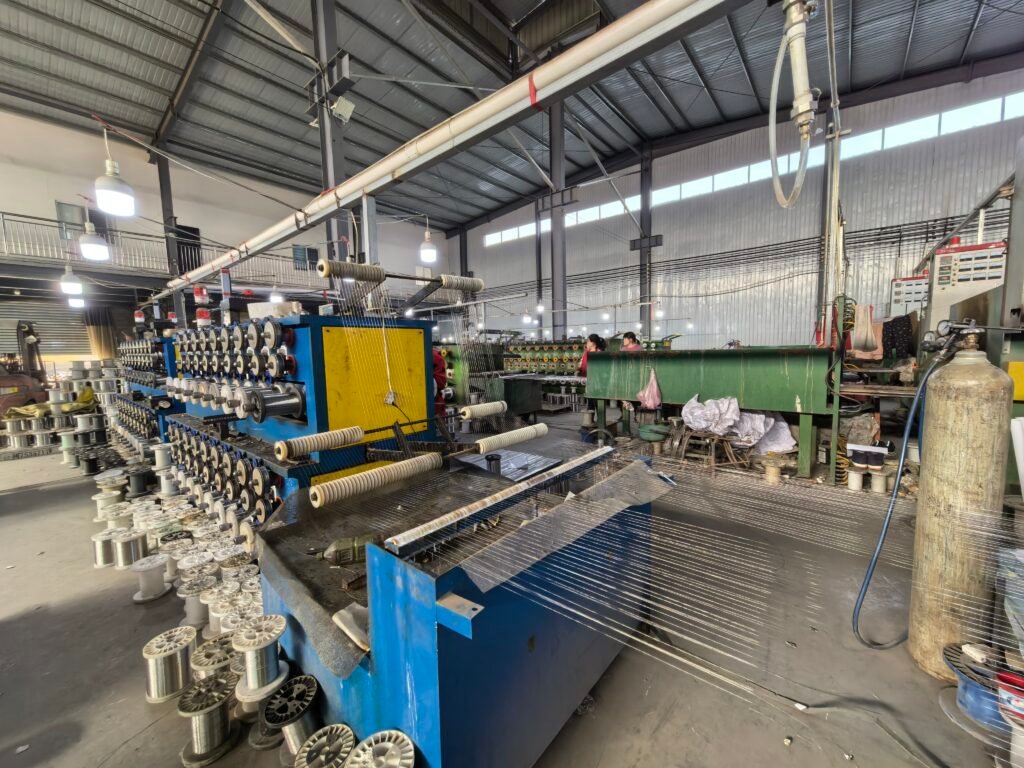
Running a factory means every day is a mix of routine and surprise. Production delays from quality issues can cost you time and money. We will show you how a real factory day, even with problems, ensures your order is perfect.
A typical production day for 201 drawing steel wire involves inspecting raw materials, setting up drawing machines, and continuous quality checks. Even when unexpected issues arise, a coordinated team effort ensures that production gets back on track quickly to meet delivery deadlines without compromising quality.
It seems straightforward, but a single day is full of small details and potential challenges. Let me walk you through what an "ordinary" day in our factory really looks like. It's a story of precision, teamwork, and overcoming the unexpected. Let's start from the beginning.
What Are the Key Steps in a Normal Day of 201 Steel Wire Production?
Managing a complex production process seems daunting. One missed step can lead to product failure and project delays. We follow a strict, multi-stage process to guarantee quality from start to finish.
The key steps are raw material inspection, machine setup and calibration, the cold drawing process, and continuous in-process quality control. Each stage is crucial. Our team meticulously checks everything from material hardness to wire diameter to ensure the final product meets exact specifications.
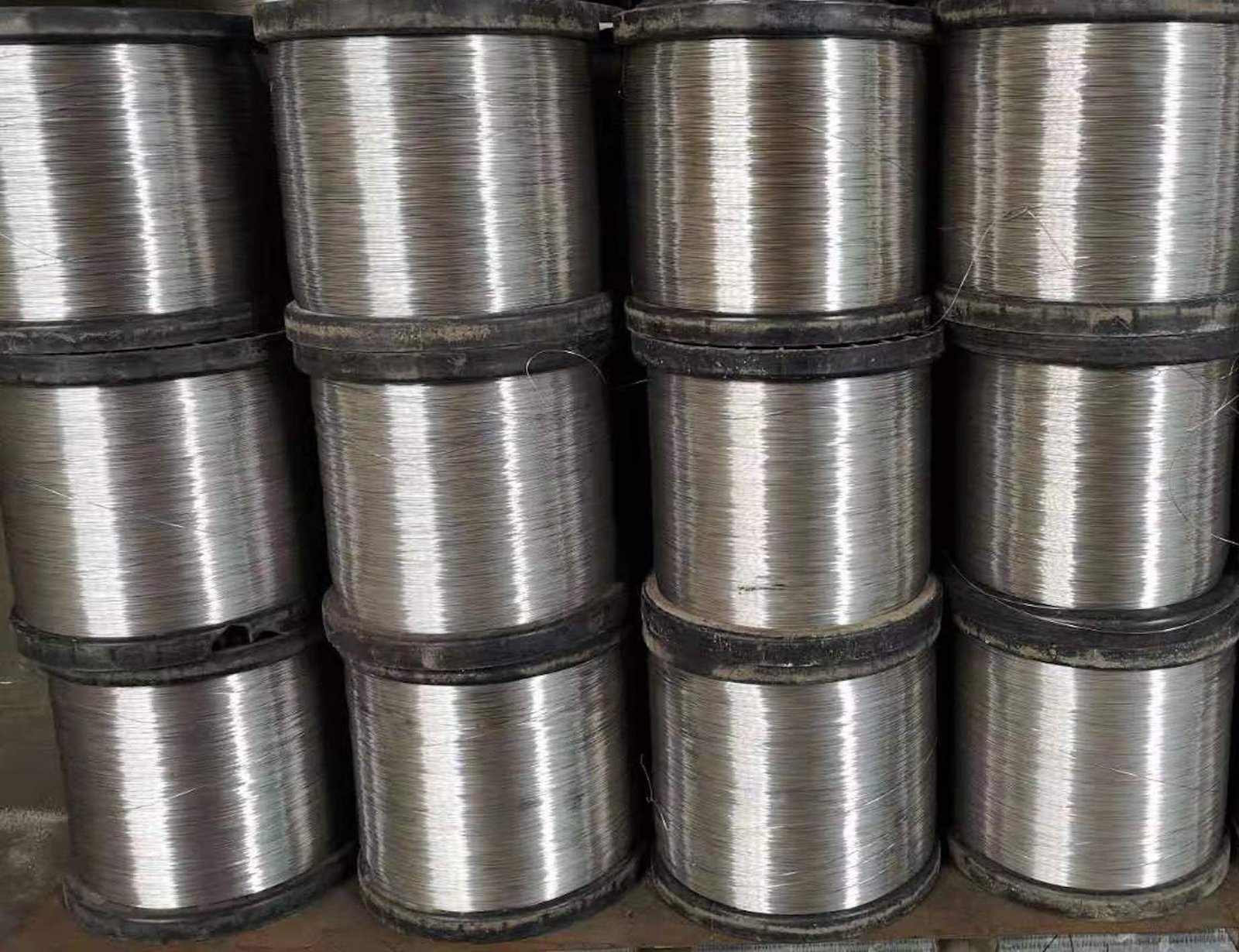
Our day doesn't just start with turning on a machine. It begins with a plan. Every morning, the production team gathers for a quick briefing. We review the orders for the day, focusing on the specific requirements for each batch of 201 steel wire. This includes the required diameter, tensile strength, and any special surface treatments.
The Production Workflow
Once the plan is clear, the real work begins. The process is a chain of events where each link is as important as the last. A failure at any point can compromise the entire batch. We break it down into clear stages, each with its own set of checks and standards. Our 25+ years of experience have taught us that this disciplined approach is the only way to guarantee consistent quality for our customers.
| Stage | Action | Key Metric |
|---|---|---|
| 1. Incoming Inspection | Check raw 201 steel rods. | Chemical composition, hardness. |
| 2. Machine Calibration | Set up the drawing machines. | Die size, drawing speed, temperature. |
| 3. Cold Drawing | Pull the wire through dies. | Diameter reduction, surface smoothness. |
| 4. In-Process QC | Monitor wire during production. | Diameter tolerance (±0.01mm). |
| 5. Final Treatment | Annealing or polishing. | Mechanical properties, surface finish. |
What Happens When Raw Materials Don't Meet Our Standards?
Have you ever received a batch of materials that wasn't up to spec? It can halt your entire operation and threaten your deadlines. Our rapid response protocol turns a potential disaster into a demonstration of our commitment.
When raw materials fail our initial inspection, we immediately stop production. Our purchasing team contacts the supplier for replacement, while our technicians adjust parameters if possible. This teamwork minimizes delays and ensures only compliant materials are used for your order.
I remember one day clearly when this exact situation happened. We were working on a large order of 201 drawing steel wire for a client in the automotive industry. The schedule was tight, but everything was running smoothly. That is, until our incoming quality control team flagged an issue.
The Red Flag: A Failed Hardness Test
The report came to my desk: a portion of the raw 201 steel rods had a hardness level outside our required specification. Using this material would mean the final wire might not have the correct tensile strength, a critical failure for our client. We had a choice: risk it or stop. The decision was easy. We immediately halted production on the affected line. The entire team understood that quality comes first. There was a brief moment of tension in the workshop, but then everyone shifted into problem-solving mode. It was a true test of our process and our people.
A Coordinated Response
Our purchasing department was on the phone with the supplier within minutes, arranging an emergency shipment of replacement materials. At the same time, our senior technicians got to work. They analyzed the off-spec material to see if any of it could be salvaged by adjusting our drawing and annealing process parameters. It was a race against the clock. After several hours of intense collaboration and testing, the new, qualified raw materials arrived. We got the line back up and running, and because of the team's quick action, we still managed to complete the entire order on time. That day reinforced a core belief for me: a good process is important, but a great team that can handle the unexpected is what truly makes a reliable manufacturer.
How Do We Ensure Precision During the Wire Drawing Process Itself?
You need steel wire with an exact diameter and strength. Even tiny variations can cause failures in your final application. Our automated lines and experienced QC staff monitor every meter of wire being produced.
We use 10 automated production lines equipped with precision sensors. Our QC staff, each with over 8 years of experience, constantly monitors key metrics like diameter tolerance (±0.01mm) and tensile strength. This combination of technology and human expertise ensures consistent quality.
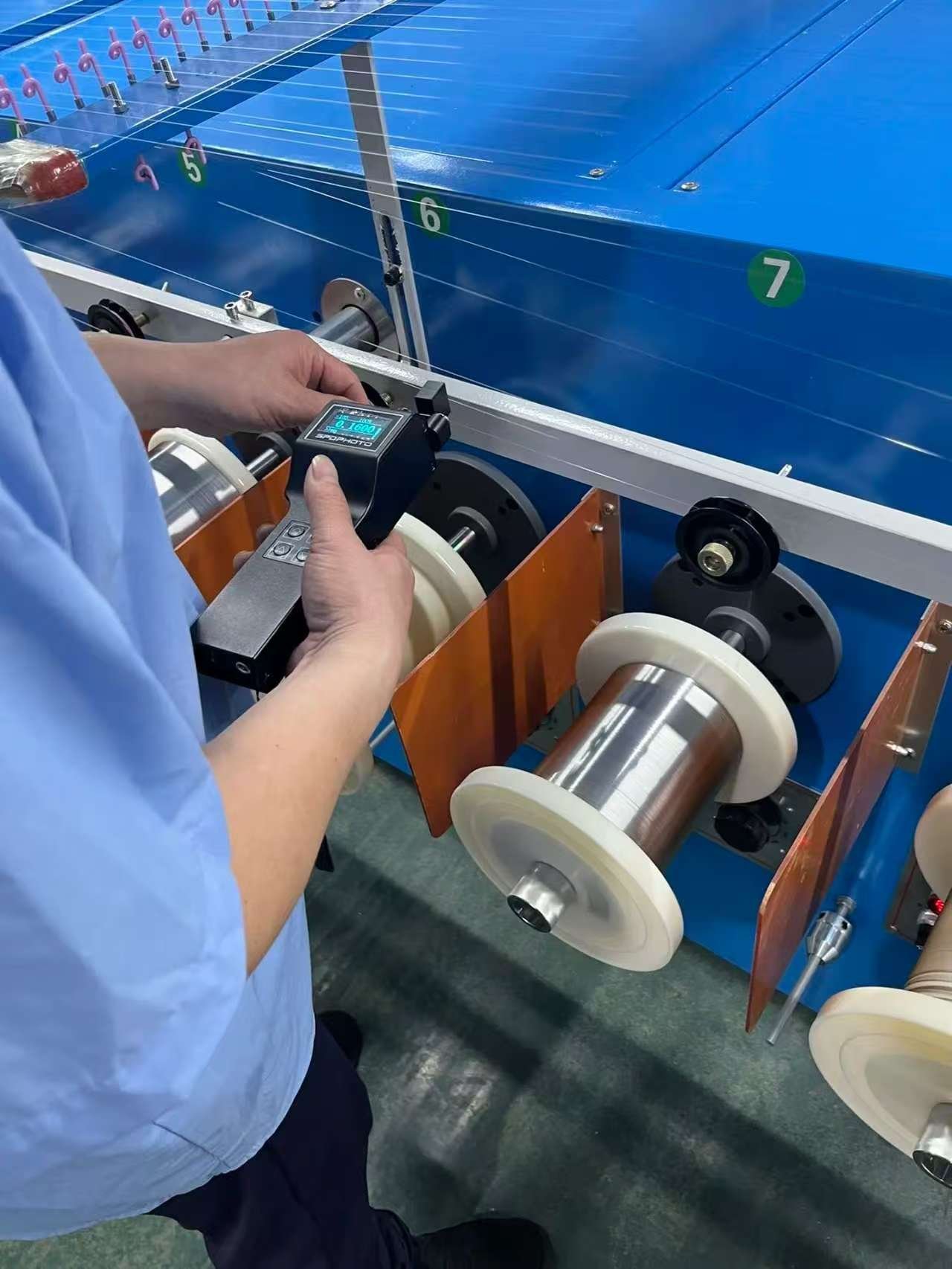
The heart of our factory is the wire drawing process. This is where a thick steel rod is transformed into a fine, precise wire. It’s a process that demands both powerful machinery and a delicate touch.
The Role of Automated Machinery
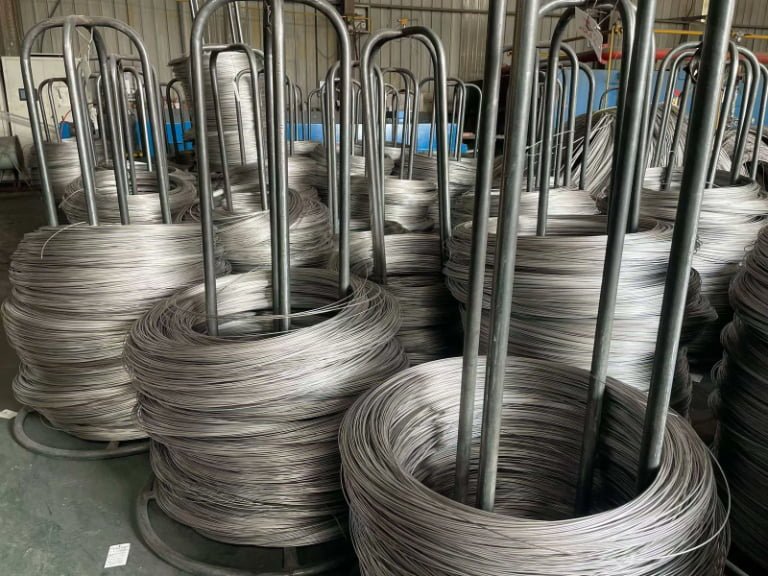
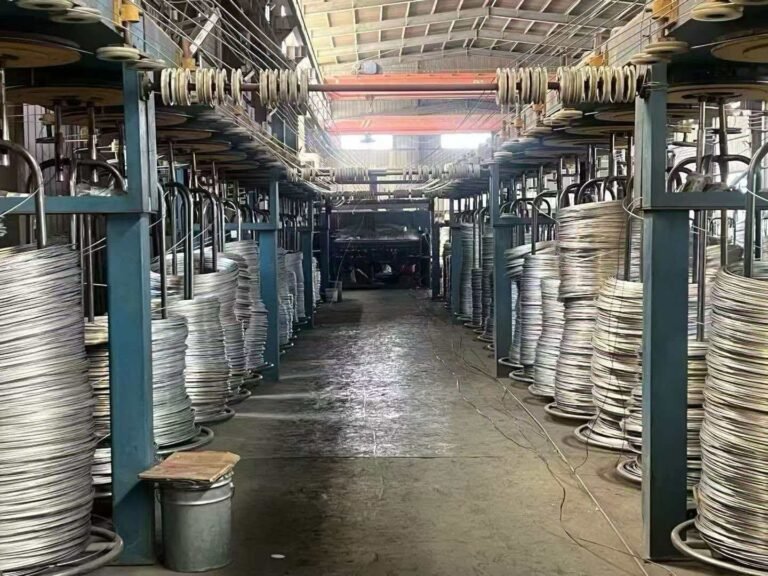
Our 10 production lines are highly automated. The steel rod is pulled through a series of dies, each one slightly smaller than the last. This cold drawing process gradually reduces the wire’s diameter while increasing its strength. Sensors along the line continuously measure the diameter, feeding data back to the central controller in real time. If any deviation is detected, the system makes micro-adjustments instantly. This automation is key to achieving the incredibly tight diameter tolerance of ±0.01mm that our customers require. It allows us to produce thousands of meters of wire with a consistency that would be impossible to achieve by hand.
The Human Element in Quality Control
But technology is only half the story. Each production line is supervised by a QC specialist with at least 8 years of experience. They don't just watch the monitors. They listen to the sound of the machines, feel the temperature of the wire, and perform manual spot checks with calipers. They can detect subtle issues that a sensor might miss. This hands-on expertise is priceless.
| Quality Check | Tool/Method | Standard (Example) |
|---|---|---|
| Diameter | Laser Micrometer & Calipers | ±0.01mm |
| Tensile Strength | Tensile Testing Machine | ≥450MPa |
| Surface Finish | Visual & Microscopic Inspection | No cracks, smooth finish |
What Are the Final Checks Before a 201 Steel Wire Order is Shipped?
Your order is produced, but is it truly ready? The final steps of testing and packaging are just as critical as production. We conduct a final, rigorous inspection and use specialized packaging to protect your investment.
Before shipping, every order undergoes a final inspection. We check 100% of key indicators and use ISO 2859 sampling for others. We perform tests like the 96h salt spray test. Finally, we package the wire with moisture-proof and anti-rust materials.
After the wire is drawn, spooled, and treated, it moves to the final inspection area. This is our last chance to ensure that everything is perfect before it leaves our factory. We take this responsibility very seriously. Our final inspection is not just a quick look. It's a systematic verification process.
Final Performance Verification
We perform a 100% check on the most critical indicators for the order, like wire diameter and spool weight. For other properties, we use the ISO 2859 sampling standard to select random samples from the batch for destructive testing. This gives us a statistically valid confirmation of the entire batch's quality. These tests confirm the wire's real-world performance.
| Final Test | Purpose | Our Standard |
|---|---|---|
| Tensile Strength Test | Measures breaking force. | ≥450MPa |
| 96h Salt Spray Test | Checks corrosion resistance. | Pass, no significant rust. |
| Fatigue Life Test | For spring wire, checks durability. | Up to 10 million cycles. |
Packaging for Protection
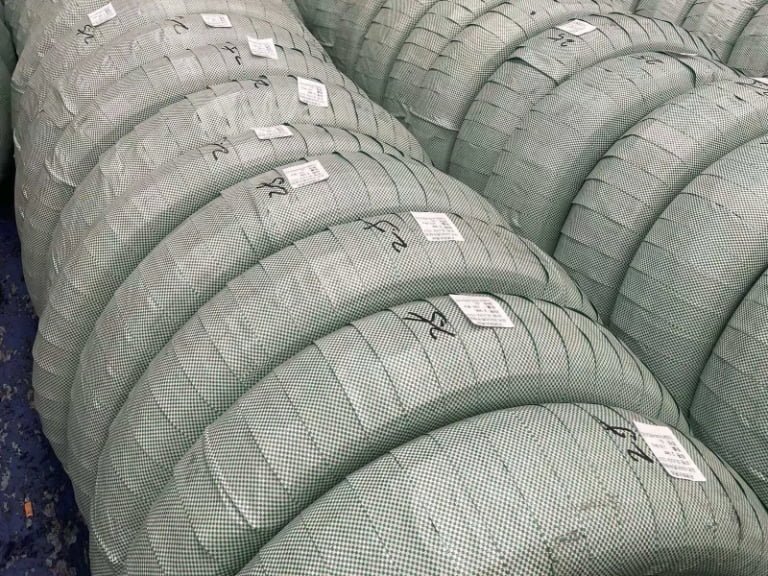
Once the wire passes all tests, it's time for packaging. This is especially important for our international clients. We know the wire might travel thousands of miles and sit in various climates. To protect it, we use multi-layer, moisture-proof, and anti-rust packaging materials. Each spool is carefully wrapped and secured on pallets to prevent any damage during transit. When a customer unboxes our wire, we want it to be in the exact same pristine condition as when it left our inspection bay. This final step is our promise of quality delivered to your door.
Conclusion
A normal day is about strict processes and teamwork, especially when things go wrong. This focus ensures we deliver quality 201 steel wire on time, every time.