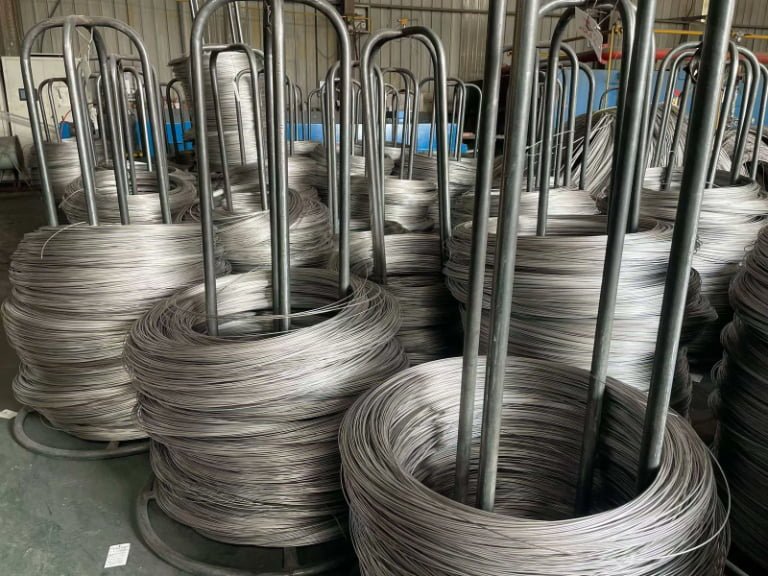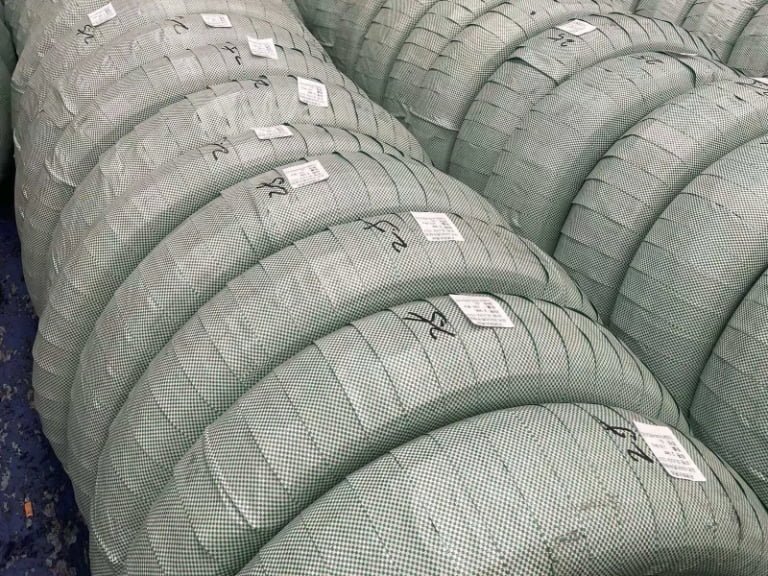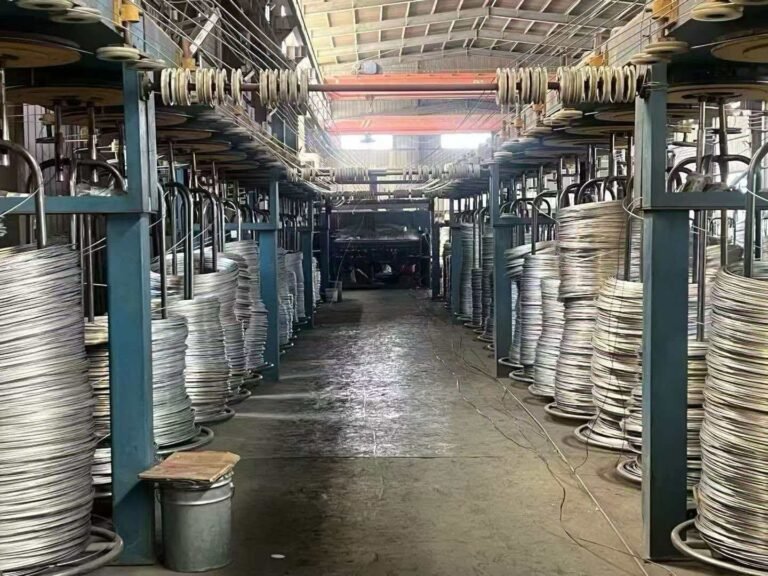



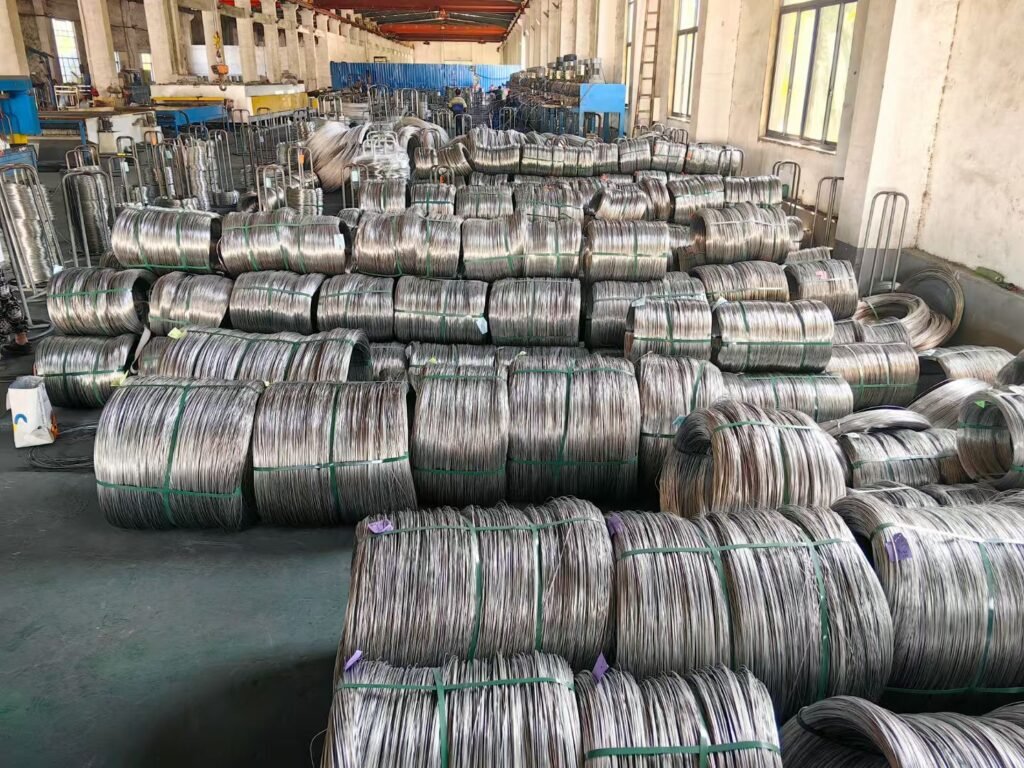
Worried about inconsistent 201 stainless steel wire? Poor quality can derail your projects. Our family factory’s 20-year-old quality control process guarantees reliability with every single shipment.
We use a rigorous, three-step quality control process honed over 20 years. This includes spectral analysis, tensile strength testing, and salt spray tests. This ensures our 201 stainless steel wire is perfect for demanding applications like global infrastructure projects and builds lasting trust.
Many clients ask me, "Since you're a family factory, how does your quality control really compare to the big corporations?" I always smile because the answer is both personal and technical. As a mother of two, I often say that I watch our production lines with the same intense focus I have when I watch my children do their homework. Every single detail matters immensely. For us, this isn't just business; it's our family's name and reputation on the line with every coil of wire we ship. Our 20-plus years of experience aren't just a number; they represent two decades of refining our processes until quality control became second nature, a habit ingrained in every person on our team. It all comes down to a blend of personal dedication and technical precision. Let me walk you through how our family heritage and our meticulous testing methods work together to deliver a product you can trust completely.
How Do Precision Testing and Family Heritage Ensure Reliability for Global Infrastructure?
Sourcing wire for critical infrastructure is stressful. A weak batch could cause project failure. Our combination of family dedication and precision testing ensures the reliability your projects demand.
We combine our family's 20-year commitment with strict technical checks. Every batch of 201 wire undergoes spectral analysis, tensile strength tests, and corrosion resistance checks. This guarantees it meets the demanding standards required for large-scale infrastructure projects, especially in challenging environments.
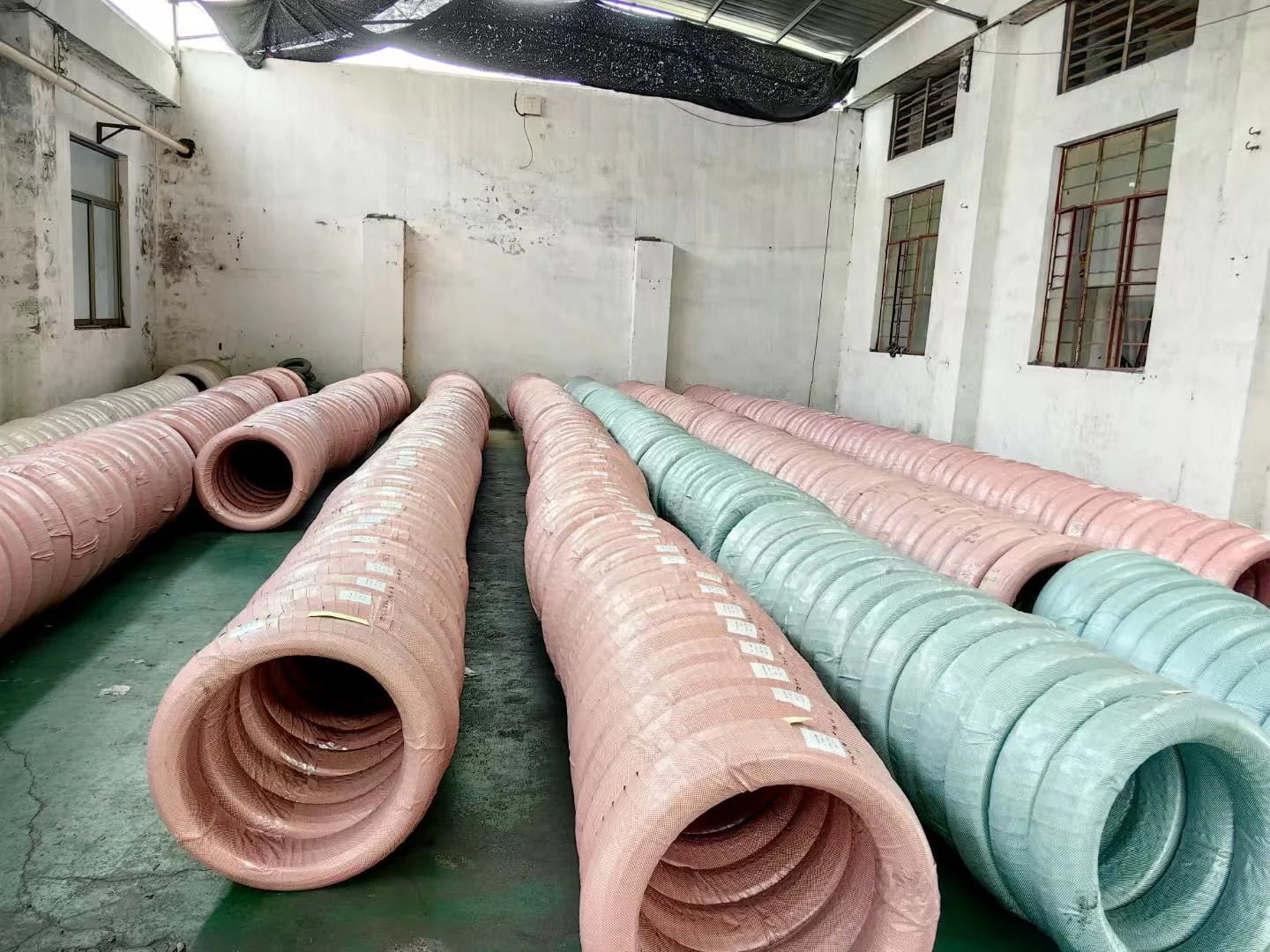
I believe that in the world of international trade, we aren't just selling a product; we are building trust. That trust is forged from consistency and reliability, which is why our quality control is the heart of our factory. This is especially true for our 201 stainless steel wire, a material frequently used in large-scale infrastructure projects across the globe, particularly in Africa. These projects demand a unique balance of strength, durability, and cost-effectiveness. Our family's 20-year legacy is built on understanding and delivering on these exact needs. The entire process is built on a foundation of personal accountability. We know that a single bad shipment can damage a relationship forever. That’s why we developed what we call our "three gates" of quality assurance. It’s a non-negotiable gauntlet that every batch of 201 wire must pass before it's worthy of our name and your project. This system is our promise, a tangible representation of our commitment that has allowed us to stand out in the highly competitive wire mesh hub of Anping.
Gate 1: Spectral Analysis for the Perfect Chemical Foundation
Everything starts with the raw material. Before we even begin the drawing process, we take samples from every incoming batch of raw steel. These samples are subjected to a rigorous spectral analysis. We use a spectrometer to get a precise reading of the material's chemical composition. For 201 stainless steel, this is incredibly important. Unlike 304 stainless steel which relies heavily on expensive nickel for its properties, 201 steel achieves its strength through a carefully balanced mix of other elements, primarily manganese and nitrogen. We look for what we call the "golden ratio" of these elements. The right amount of manganese and nitrogen strengthens the steel's austenitic structure, giving it impressive hardness and tensile strength at a more economical price point. If the analysis shows that the composition is even slightly off from our strict internal standards, we reject the entire batch of raw material. There are no exceptions. This first gate ensures that the very foundation of your wire is sound and perfectly formulated for the strength your infrastructure projects demand. It prevents problems before they can ever begin.
Gate 2: The Universal Tensile Test for Real-World Strength
Once the material is confirmed to be of the highest quality, we begin the manufacturing process. However, a perfect chemical recipe is only half the story. The wire must also prove its physical strength. This is where our second gate comes in: the universal tensile strength test. We take finished wire samples from the production line and put them into a machine that does one thing: it pulls the wire from both ends with immense force until it snaps. This test measures the exact amount of force the wire can withstand before breaking, which is its tensile strength. For infrastructure projects, this is not just a number on a spec sheet; it's a critical measure of safety and reliability. A fence post wire needs to withstand tension, and a construction tie wire needs to hold components together under stress. We test our wire to meet the specific standards required by our clients, often exceeding the general requirements. For example, for wire destined for major African infrastructure, we ensure it meets a tensile strength of at least 450 MPa. This test provides tangible proof that our wire will perform as expected in the real world, under real-world stress.
Gate 3: Corrosion Resistance and Final Human Inspection
The final gate is a two-part process that verifies the wire's long-term durability and perfect finish.
First, we conduct a 96-hour salt spray test. Samples are placed inside a sealed chamber that bombards them with a dense, salty mist, simulating years of exposure to a harsh, corrosive environment like a coastal region or an industrial zone. After 96 hours, the wire must show no significant signs of rust. This test is vital because it proves the wire's passivation layer is effective and will protect the steel from the elements long after it's installed.
Second, after all the machines have given their approval, our most experienced QC staff perform a final manual inspection. With over eight years of experience each, their eyes and hands can detect subtle imperfections that machines might miss. They check for a uniform diameter, a smooth surface free of scratches or blemishes, and overall consistency. This human touch is the final seal of approval. It’s our family’s personal guarantee on top of all the technical data.
This comprehensive three-gate system, refined over two decades, is our core strength. It's how we ensure that every meter of 201 stainless steel wire we produce is something we are proud to put our name on.
| Quality Control Gate | Test Method | Purpose | Standard |
|---|---|---|---|
| Gate 1: Material | Spectral Analysis | To verify the chemical composition, ensuring the "golden ratio" of manganese and nitrogen for strength. | Must meet strict internal standards for elemental composition. |
| Gate 2: Strength | Universal Tensile Test | To measure the wire's breaking point and confirm its mechanical strength for demanding applications. | Must meet or exceed project-specific tensile strength (e.g., ≥450MPa). |
| Gate 3: Durability | 96-Hour Salt Spray Test & Manual Inspection | To confirm corrosion resistance and check for any surface imperfections. | Pass 96h test with no significant corrosion; visually perfect finish. |
Conclusion
In short, our 20-year-old quality process combines personal dedication and strict, multi-stage testing. This is how we build trust and deliver 201 stainless steel wire you can depend on.
FAQ
Q: What specific quality tests does your 201 stainless steel wire undergo? A: Every batch undergoes chemical composition analysis (spectroscopy), tensile strength testing, and surface finish inspection to ensure it meets international infrastructure standards.
Q: How does your 201 wire maintain consistency over large orders? A: With over 20 years of production experience, we use automated drawing processes and strict raw material sourcing to ensure uniform wire diameter and mechanical properties.
Q: Do you provide a Mill Test Certificate (MTC) with your shipments? A: Yes, we provide full MTC documentation for every shipment, detailing the chemical elements and physical test results of your 201 stainless steel wire.