


For many buyers of 201 stainless steel fine wire, the Mill Test Certificate is an unfamiliar document. But learning to read its key data points can help importers verify quality, avoid production problems, and build trust with their own customers. Here is how one Alexandria wholesaler turned the MTC into a competitive advantage.
Mohamed learned to read MTC reports after a bad batch cost him time and money. Buyers like him, who want to understand what the numbers on a mill test certificate mean for their production, can find detailed specifications on our product page: https://mfgwiremesh.com/metal-wire/201-stainless-steel-wire/.
Are you confused by Mill Test Certificates? All those numbers can be overwhelming, and you might risk accepting a bad batch of material. I will show you what really matters.
To read an MTC, you should focus on three key figures. First, check the diameter tolerance (like ±0.01mm) for precision. Second, look at the tensile strength (MPa) for durability. Finally, verify the elongation (%) to make sure the wire won't break during processing. These numbers confirm the product's quality.
I learned this lesson the hard way many years ago. A story from a partner recently reminded me of this. Mohamed, a wholesaler in Alexandria, got a call from his client. The client had just received a shipment of 0.13mm 201 stainless steel wire. He was holding the Mill Test Certificate, or MTC, and was completely lost. He told Mohamed his old suppliers never gave him this document. He was worried about this new paper filled with English terms and technical numbers. Mohamed's story made me think about my own journey. I used to just check the weight and look at the wire. Now, I know the real value is in the data. Let me break down what Mohamed told his client, which is what I now tell all my partners.
Why is Diameter Tolerance the First Thing to Check on an MTC?
Is wire breaking on your machine? An inconsistent wire diameter might be the cause, leading to production delays and waste. Checking the tolerance on your MTC prevents this problem.
Diameter tolerance, shown as something like 2.0mm ±0.03mm, reveals the precision of the manufacturing process. A smaller tolerance number means higher consistency. This gives you a more reliable wire that performs predictably in your machines, which reduces downtime and material waste.
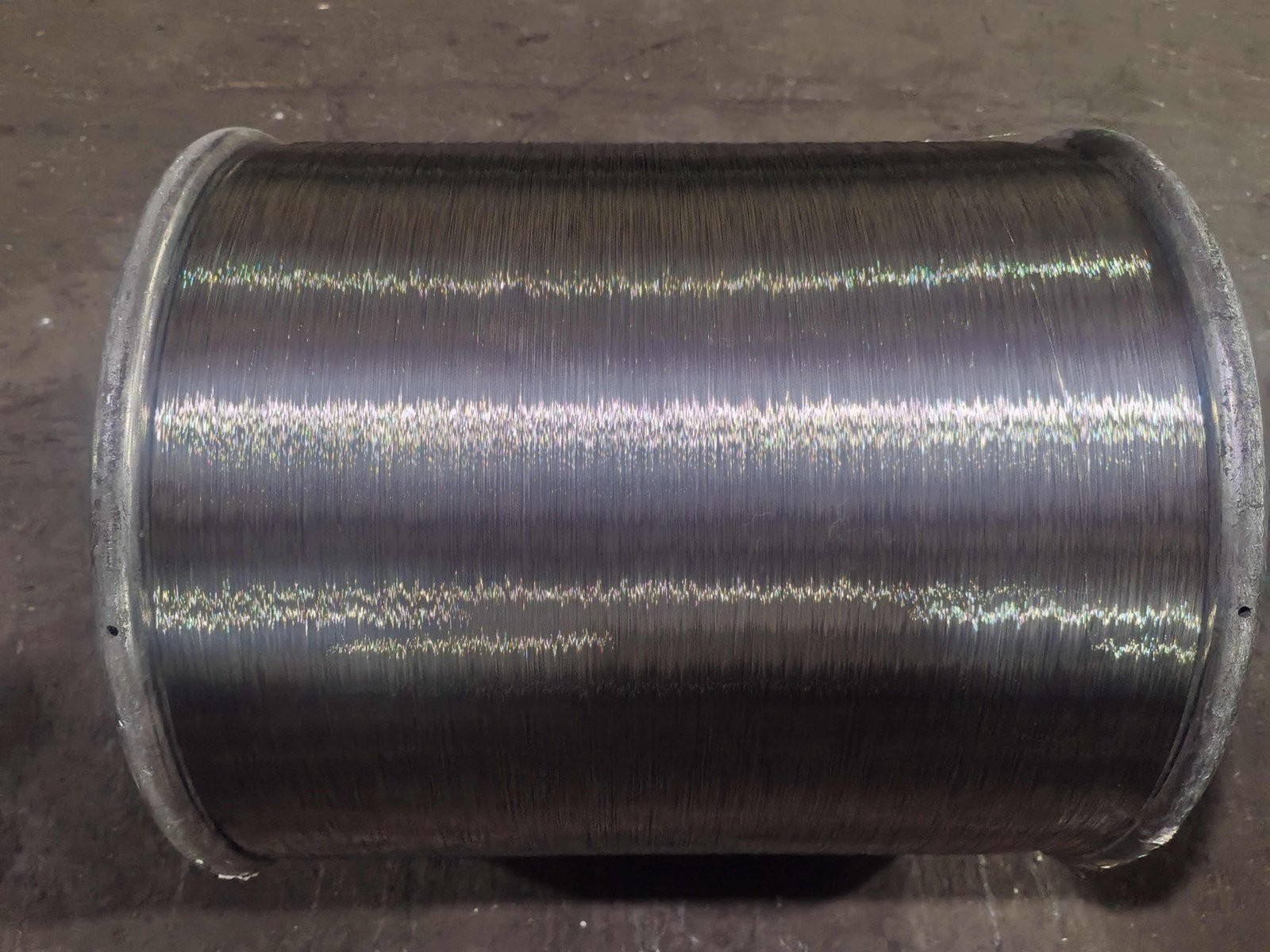
Mohamed told me he also learned about MTCs from a bad experience. He once received a large batch of wire. It looked perfect, and the weight was correct. But when he put it on his customer’s machine, the wire kept snapping. Production stopped again and again. He was frustrated and his customer was angry. So he took a sample of the wire to a lab for testing. The report came back with the answer. The wire's diameter was not consistent. Some parts were too thick, and other parts were too thin. The MTC from his original supplier would have shown this, but he never asked for it.
What Does Tolerance Tell You?
The diameter tolerance on an MTC is your first checkpoint for quality. It tells you how much the actual wire diameter can vary from the specified size. For example, our own standard for many wires is a tolerance of ±0.01mm. This is very small. It means we use advanced automatic cold drawing machines and have very strict quality control. A supplier that can hold a tight tolerance is a supplier that has invested in good equipment and processes.
Real-World Impact of Tolerance
A tight tolerance is not just a number on a page. It has a direct impact on your production and final product.
| Aspect | Loose Tolerance (e.g., ±0.05mm) | Tight Tolerance (e.g., ±0.01mm) |
|---|---|---|
| Production | Frequent machine jams, wire breakage, downtime. | Smooth, continuous operation with fewer stops. |
| Material Waste | Higher scrap rate due to inconsistent performance. | Minimal waste, maximizing your material usage. |
| Final Product | Inconsistent quality. For mesh, this means uneven apertures. For springs, it means variable performance. | Uniform and reliable product quality every time. |
From that day on, Mohamed always checks the diameter tolerance first. It's the fastest way to know if the supplier's process is precise and reliable.
How Does Tensile Strength Affect Your Final Product?
Is your final product failing under stress? The wire's tensile strength might be wrong for your application. This can lead to poor performance or breakage during manufacturing.
Tensile strength, measured in Megapascals (MPa), shows how much force a wire can handle before it breaks. It is a balancing act. If it's too low, a product like a cleaning ball won't hold its shape. If it's too high, the wire gets brittle and can snap during production.
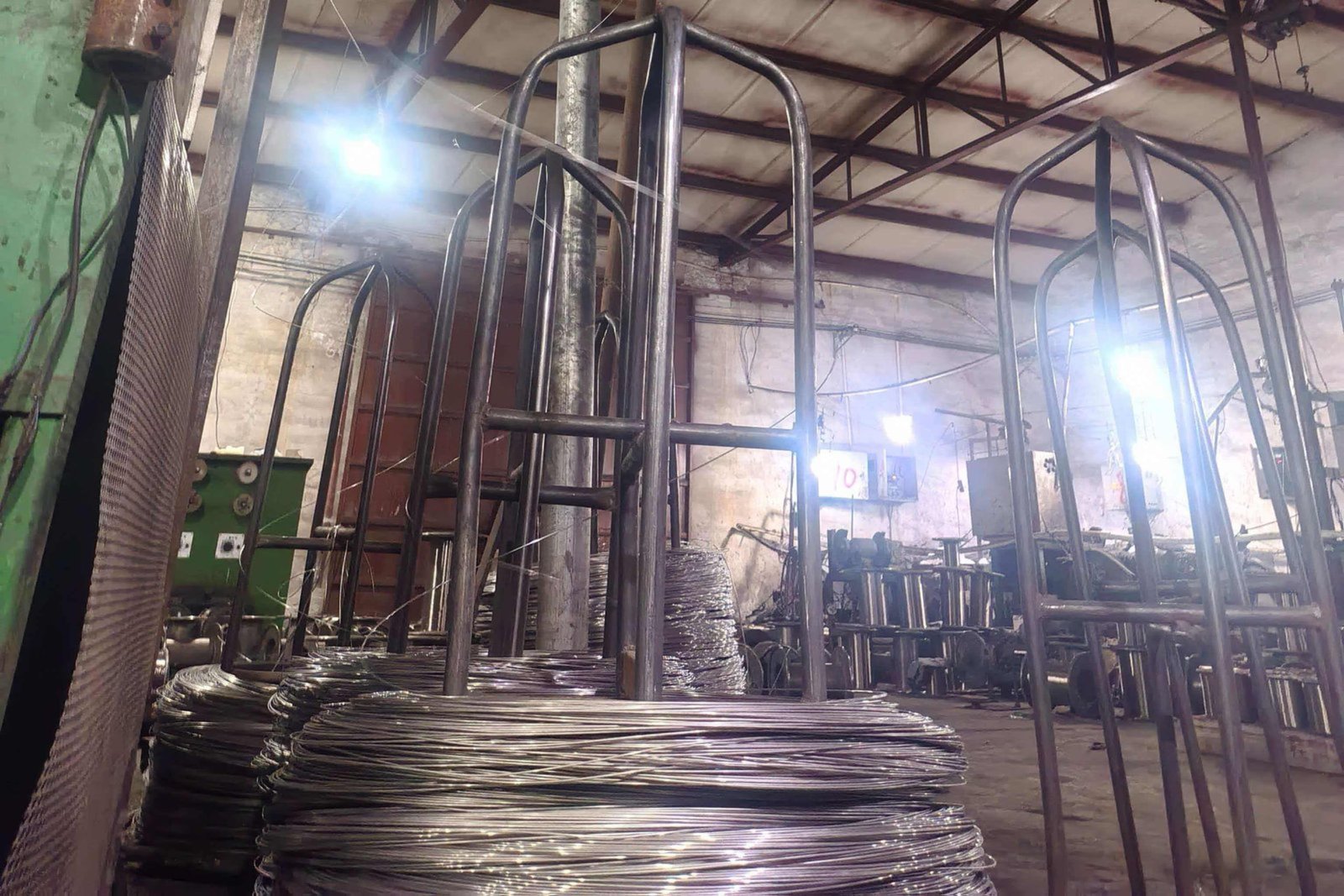
Mohamed explained this to his client using the example of scouring pads, or cleaning balls. His client's 201 stainless steel wire was used for this exact purpose. Mohamed told him that if the tensile strength is too low, the finished cleaning ball will feel soft and mushy. It won't spring back into shape after being used, so customers will think it's poor quality. But if the tensile strength is too high, the wire becomes too hard. The machines that wind the wire into a ball will struggle, and the wire might snap during the process. This creates waste and slows down the production line. It's not about being "strong" or "weak". It's about being "right".
Finding the Right Balance
Tensile strength is not a "higher is better" measurement. The ideal MPa depends entirely on what you are making. A supplier needs to understand your application to provide the right material. This is where customization is key. We often work with clients to define the perfect mechanical properties for their specific needs, whether it's for springs, filters, or electrical components.
Application-Specific Strength
Different products need different strengths. A wire that is perfect for one job can be completely wrong for another.
| Application | Typical Tensile Strength (MPa) | Why it Matters |
|---|---|---|
| Scouring Pad Wire | 500-700 MPa | Needs to be formable but also springy and durable. |
| Spring Wire | >1500 MPa | Must withstand millions of cycles of stress without deforming. High fatigue life is critical. |
| Weaving Wire (for mesh) | 450-650 MPa | Needs to be strong enough to create a durable mesh but soft enough to be woven without breaking. |
| Binding Wire | <500 MPa | Must be soft and easy to bend and tie by hand. |
When you look at the tensile strength on an MTC, compare it to the requirements of your application. If you're not sure, ask your supplier. A good partner should be able to tell you the ideal range and deliver material that matches it perfectly, just like Mohamed did for his client.
What Does Elongation Percentage Really Mean for Your Wire?
Are you frustrated with wire snapping during re-drawing or weaving? Poor elongation is likely the cause, costing you time and material. This is a hidden quality killer that you can spot on an MTC.
Elongation, shown as a percentage, measures how much a wire can stretch before it snaps. A higher elongation percentage means the wire is more ductile and forgiving. This is very important for processes like re-drawing, weaving, or bending, as it prevents breakage and helps production run smoothly.
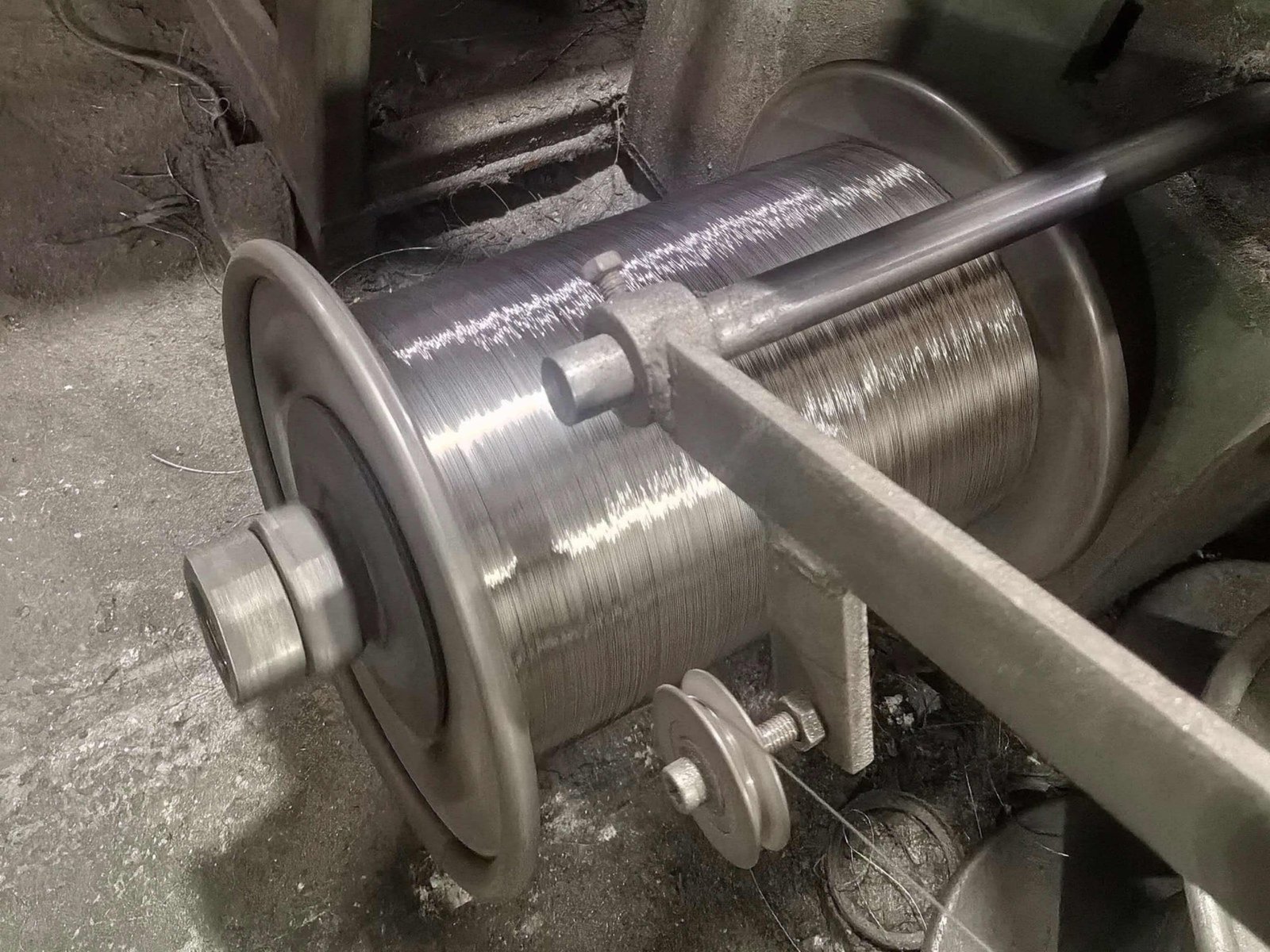
The third number Mohamed taught his client to check was elongation. He explained it very simply. "Imagine you are pulling on a piece of taffy," he said. "Good taffy stretches for a long time before it snaps. That's high elongation. Old, brittle taffy snaps right away. That's low elongation." He told his client that wire for weaving mesh or for re-drawing into an even thinner diameter needs to be like good taffy. It needs to stretch and adapt without breaking. If the elongation percentage on the MTC is too low, the wire will be brittle. It will snap when you try to bend it, shape it, or pull it through a die. This is especially true for complex weaving patterns or when making products with sharp bends.
A Measure of Ductility
Elongation is the technical term for a material's ductility, or its ability to deform under tensile stress. This property comes from the material's chemical composition and, just as importantly, the annealing process. Precision annealing heats and cools the metal in a very controlled way to achieve specific properties. A high elongation value on an MTC is proof that the manufacturer has control over their heat treatment processes. It ensures the wire has the right internal structure to be workable.
Why It Matters in Processing
For any process that changes the shape of the wire, elongation is critical.
| Process | Low Elongation Risk | High Elongation Benefit |
|---|---|---|
| Weaving Mesh | Wire snaps on the loom, especially at the edges or in complex weaves. | Wire smoothly forms into the mesh pattern without breaking, allowing for higher speeds. |
| Re-drawing Wire | Wire breaks inside the drawing die, causing costly downtime to re-thread the machine. | Wire can be drawn to finer diameters successfully with a lower risk of failure. |
| Forming/Bending | Wire cracks or fractures at sharp bends, creating weak points in the final part. | Wire can be bent into complex shapes for custom parts, like filter elements or clips, without damage. |
After Mohamed's explanation, his client understood. He wasn't just buying a coil of wire based on price anymore. He was buying a specific set of performance characteristics. He saw the MTC not as a confusing document, but as a guarantee of quality.
Conclusion
Mohamed's client was happy and referred him to a friend. Understanding the MTC builds trust and ensures you get what you pay for, turning a supplier into a true partner.
Mohamed's ability to explain MTC data helped him earn customer referrals. Read more quality control and factory guides on our blog https://mfgwiremesh.com/blog/ or reach out via https://mfgwiremesh.com/contact/.
We provide full MTC (Mill Test Certificate) and Certificate of Origin with every shipment.
If you are sourcing 201 stainless steel fine wire for scourer production, redrawing, or weaving, we are happy to provide a specification-based quotation. Contact us via WhatsApp: +86 15383180672.
FAQ:
Q1: What are the three most important data points on an MTC report for stainless steel fine wire? A1: The three key data points are diameter tolerance, tensile strength, and elongation. Diameter tolerance shows the precision of the drawing process, expressed as a range like ±0.03mm. Tensile strength, measured in MPa, indicates how much force the wire can withstand before breaking. Elongation, expressed as a percentage, shows how far the wire can stretch before failure. For scourer production, tensile strength determines ball resilience. For redrawing and weaving, elongation is critical for preventing breakage during processing.
Q2: Why do some Egyptian buyers not receive MTC reports from their previous suppliers? A2: Some suppliers do not provide MTC reports because their production quality is inconsistent batch to batch. Without a report, buyers cannot verify whether the wire meets the promised specifications. Mohamed learned this lesson after receiving a batch that looked fine visually but had out-of-tolerance diameter, causing frequent breakage on his client's machines. He now treats the MTC as mandatory documentation and has taught his customers to read it.
Q3: How can understanding MTC data help wholesalers build customer trust? A3: Mohamed's client was initially confused by the MTC report because no previous supplier had provided one. After Mohamed explained the three key data points, the client not only kept ordering from him but also referred him to other buyers. In a market where many suppliers compete on price alone, the ability to provide and explain quality documentation becomes a differentiator. Buyers who understand what they are purchasing are more likely to remain loyal.